01
Consultation
Technical needs assessment



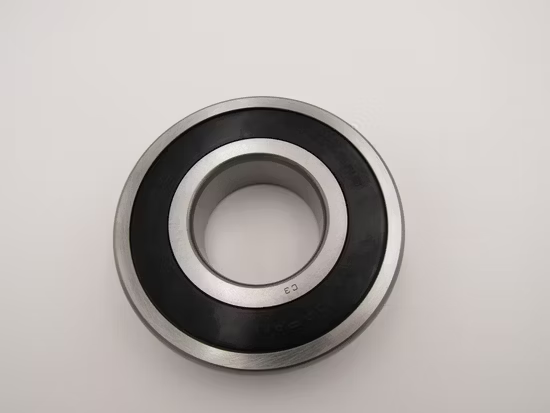


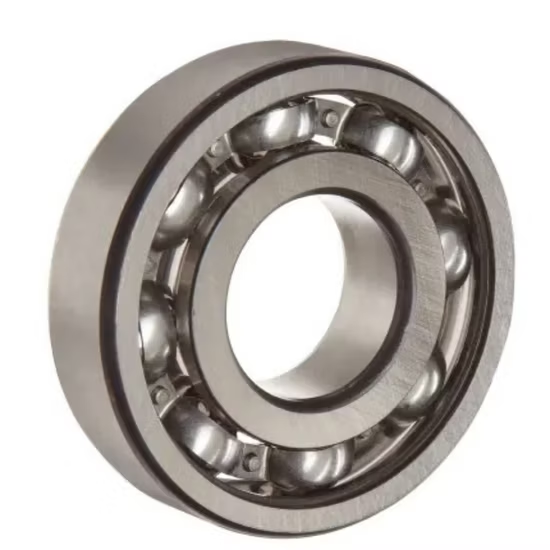
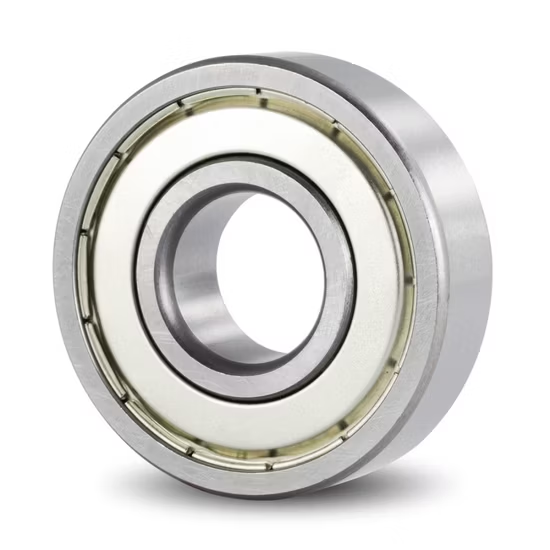
6010-2RS Deep Groove Ball Bearing delivers reliable radial load support with GCr15 steel construction and pre-lubricated internals.
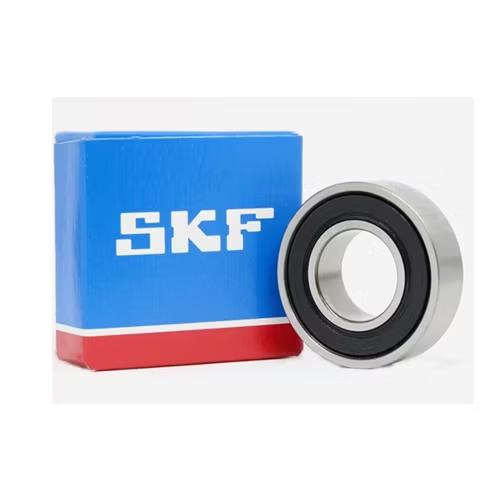
Unified Multi-Brand Sourcing — Consolidate your 6010-2RS deep groove ball bearing requirements across major international manufacturers through a single authorized distribution channel.
| Parameter | Value |
|---|---|
| Designation | 6010-2RS |
| Bearing Type | Deep Groove Ball Bearing |
| Material | GCr15 Bearing Steel |
| Seal Type | 2RS (Double Contact Rubber Seal) |
| Precision Class | P0, P6, P5, P4, P2 |
| Lubrication | Pre-Lubricated |
| Number of Rows | Single Row |
| Customization | Available |
| Origin | Shanghai |
| Industry | Typical Applications |
|---|---|
| Electric Motors | Rotor shaft support and stator housing assemblies |
| Industrial Gearboxes | Input and output shaft radial load management |
| Material Handling | Conveyor drive pulleys and idler roller shafts |
| Fluid Machinery | Centrifugal pump impeller shafts and motor couplings |
Matching internal clearance to operational thermal expansion prevents catastrophic rotor lockups.
During my early years conducting quality inspections in Qingdao, I documented numerous instances where standard clearance bearings were installed into high-speed electric motors. As the shafts reached operational temperatures, the lack of thermal expansion allowance caused the internal clearance to vanish, leading to immediate thermal binding and烧毁 (burnout) of the motor windings. Sourcing a 6010-2RS deep groove ball bearing requires strict verification of the internal clearance suffix to ensure it aligns with the specific thermal profile of the equipment . Relying solely on the base designation without confirming the clearance class is a primary driver of premature field failures.
Selecting the correct configuration for a 6010-2RS deep groove ball bearing involves more than matching the bore and outer diameter. Our technical team reviews your specific radial loads, rotational speeds, and operating temperatures to recommend the optimal internal clearance and precision grade. This application-based selection review ensures the pre-lubricated grease and rubber seals perform reliably without generating excessive friction heat in continuous duty cycles.
Electric motors and industrial gearboxes subject deep groove ball bearings to sustained radial loads while exposing them to airborne particulates and moisture. The double contact rubber seals provide a tight physical barrier against contamination ingress, which is critical for maintaining the integrity of the factory-filled lubricant. However, this sealing arrangement introduces slight friction, meaning the internal clearance must be carefully calibrated to accommodate the heat generated by both the seal contact and the high-speed rotation .
The 2RS suffix indicates double contact rubber seals on both sides, designed to retain pre-lubrication and exclude dust or moisture in moderately contaminated environments. Unlike non-contact steel shields, these rubber lips maintain constant pressure against the inner ring, offering superior protection at the cost of slightly higher friction and lower limiting speeds. When paired with higher precision classes like P5 or P4, the bearing achieves the tight dimensional tolerances required to minimize vibration and acoustic noise in precision electric motor spindles. The GCr15 bearing steel construction provides the necessary core hardness and raceway wear resistance to sustain dynamic radial loading over extended service intervals.
Installing a bearing with incorrect internal clearance or mismatched precision tolerances inevitably leads to unplanned downtime and severe secondary damage. If the clearance is too tight for a high-temperature application, the rolling elements will skid and smear the raceways, rapidly deg*y, excessive clearance in a precision gearbox introduces unacceptable vibration levels, accelerating gear tooth wear and voiding equipment warranties. Adhering to the failure analysis frameworks outlined in ISO 15243 helps procurement engineers recognize that these catastrophic failures stem directly from specification mismatches during the sourcing phase .
We eliminate the risk of receiving counterfeit units with soft inner rings by providing full batch traceability to the manufacturer's production facilities. Our cross-reference process verifies that replacement units match the original equipment requirements for seal type, precision class, and internal clearance, rather than just the base 6010 number. We supply comprehensive documentation, including material test reports that confirm the GCr15 steel composition and dimensional inspection reports validating the specified precision grade. This rigorous verification protocol ensures that every mixed-brand order arrives with the exact technical attributes required for your specific machinery.
To ensure the selected bearing perfectly matches your machinery, please provide detailed operational parameters including radial and axial loads, continuous operating speeds, and expected thermal gradients. Sharing the original OEM equipment number allows our engineering team to perform a comprehensive cross-reference check, verifying that the internal clearance and precision suffixes align with the factory design. This technical review process guarantees that the proposed solution accounts for all application-specific variables before procurement is finalized.
Q: How can we verify the authenticity of the 6010-2RS bearings and avoid cloned QR codes?
A: We supply units with batch traceability that can be verified directly through the manufacturer's official mobile applications. Unlike superficial visual checks, this digital verification confirms the internal production data, ensuring the GCr15 material and precision grades match the documentation provided, effectively eliminating the risk of counterfeit products with substandard metallurgy entering your maintenance inventory.
Q: What cross-reference checks are critical beyond the base 6010 designation?
A: Procurement must verify the internal clearance class, precision grade, and seal type to prevent field failures. A base number match is insufficient if a standard clearance unit replaces a C3 requirement in a high-temperature motor. Our technical team reviews these specific suffixes against your operational parameters to ensure the replacement bearing handles the exact thermal expansion and speed requirements of your equipment.
Q: When should we choose 2RS rubber seals over ZZ steel shields for this application?
A: The 2RS rubber seals are optimal for environments with significant moisture, fine dust, or where maintenance-free operation is mandatory, as they provide a tight contact barrier. However, if the application involves extremely high rotational speeds where seal friction could generate excessive heat, non-contact ZZ steel shields might be more appropriate. We evaluate your specific speed and contamination profile to recommend the correct sealing arrangement.
Q: How do we select the correct precision class for electric motor applications?
A: Standard P0 precision is generally sufficient for typical industrial motors, but high-efficiency or variable frequency drive motors often require P6 or P5 grades to minimize acoustic noise and vibration. For ultra-precision spindle applications, P4 or P2 classes are necessary to maintain strict runout tolerances. Provide your motor's vibration and noise specifications so we can align the precision class accordingly.
Our 5-step process ensures every order is engineered, validated, and supported for optimal performance.
Technical needs assessment
Custom specifications
Free samples for $50k+
Pre-shipment inspection
On-site & predictive
Our certified engineers respond within 24 hours with detailed technical specifications, pricing, and lead time information.