01
Consultation
Technical needs assessment

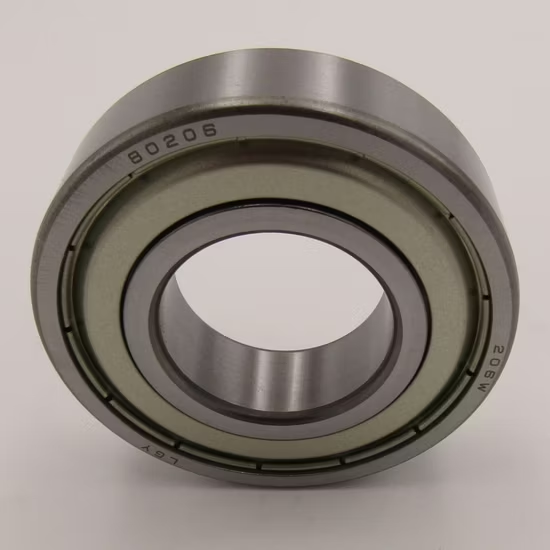
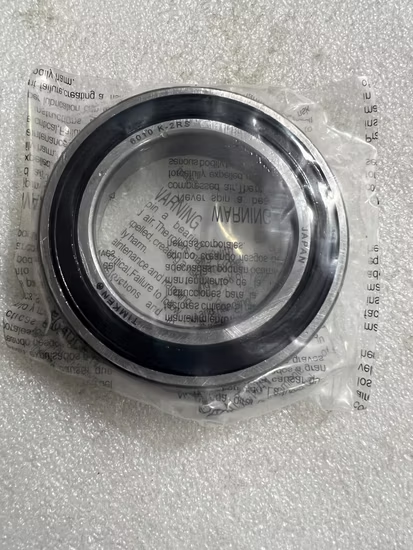
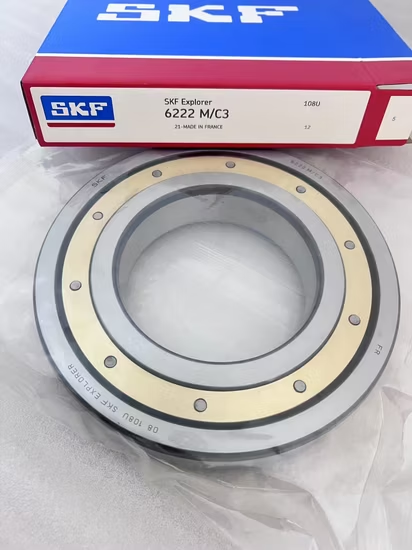
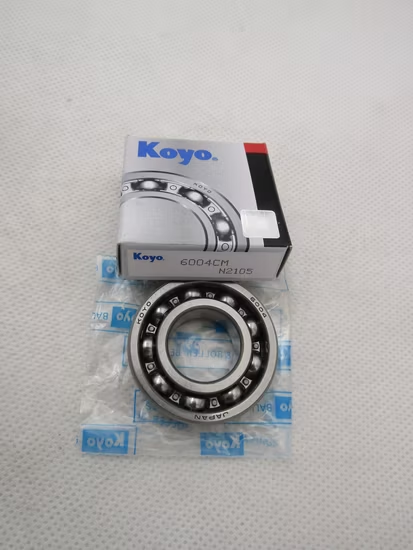
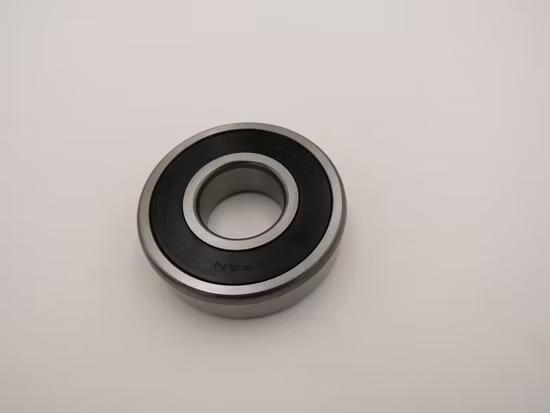
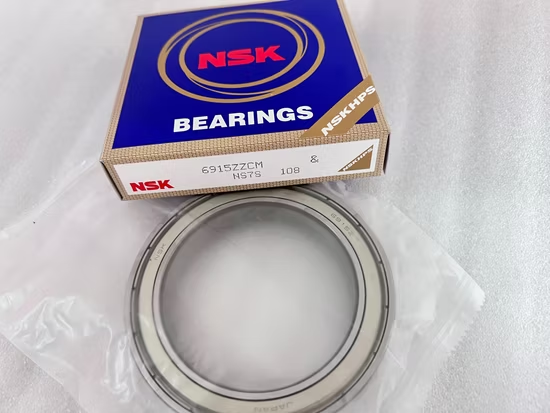
6008 Deep Groove Ball Bearing P4 P5 P6 — engineered for printing press parts and precision electric motors.
Multi-brand authorized supply — Procure SKF, FAG, and NSK equivalents for your 6008 requirements in a single consolidated shipment without juggling multiple vendors.
| Parameter | Value |
|---|---|
| Designation | 6008 |
| Bearing Type | Deep Groove Ball Bearing |
| Material | Chrome Steel (stainless steel variants available upon request) |
| Seal or Shield Type | Open, Rubber Seals, Iron Seals |
| Precision Class | P4, P5, P6 (ISO Class 4, 5, 6) |
| Quality Level | Z1V1, Z2V2, Z3V3, Z4V4 |
| Feature | Low Noise |
| Customization | Cross-brand interchange and specific clearance matching |
Note: The 'p' suffix occasionally appears in legacy catalogs for this series but remains unverified; always confirm exact internal geometry with the manufacturer's current documentation.
| Industry | Typical Applications |
|---|---|
| Printing & Packaging | Printing press main shafts, impression cylinders, precision paper feed rollers |
| General Industrial | High-speed electric motors, centrifugal pumps, conveyor drive gearboxes |
Precision and clearance suffixes dictate survival in high-speed press applications.
I have dismantled printing press main shafts that seized during high-speed runs simply because a standard precision grade was installed where a P4 or P5 was strictly required. The base designation matched the OEM manual perfectly, but ignoring the internal clearance and precision suffixes led to severe thermal binding and catastrophic cage failure under operational heat. Sourcing the correct 6008 deep groove ball bearing demands verifying the complete suffix string, not just the first four digits. A significant share of premature failures in precision machinery stems directly from these overlooked cross-reference errors .
Selecting the right tolerance band ensures the 6008 deep groove ball bearing maintains rotational accuracy under the dynamic loads of printing equipment. P6 suffices for general conveyor drives, but printing press impression cylinders demand P5 or P4 to prevent microscopic runout that ruins print registration. We review your specific speed and load parameters to recommend the exact precision class, preventing the costly trial-and-error approach that plagues standard procurement channels.
High-speed printing shafts generate substantial friction heat, making internal clearance selection critical for operational stability. A standard CN clearance will quickly vanish as the inner ring expands, causing the rolling elements to skid and overheat. Selecting a C3 clearance provides the necessary thermal expansion room, while the choice between rubber seals for dust exclusion and iron shields for lower friction heat dictates the lubrication retention strategy .
The Z1V1 through Z4V4 designations define the acoustic and vibrational performance limits of the bearing. In a quiet printing environment, a Z4V4 grade ensures the lowest possible noise emission and vibration amplitude, which is crucial for preventing chatter marks on printed materials. These quality levels reflect the internal geometric optimization and surface finish of the raceways, directly correlating to the low noise feature required for sensitive automated machinery.
Installing a bearing with mismatched internal geometry leads to unplanned downtime and severe secondary damage. When a standard grade is forced into a high-speed spindle, the resulting thermal seizure often destroys the housing and the shaft itself. According to ISO 281 fatigue life calculations, operating a bearing outside its intended precision and clearance envelope drastically reduces its operational lifespan . This cascading failure voids equipment warranties and halts production lines for days.
We eliminate the risk of receiving counterfeit products with soft inner rings by providing full batch traceability for every 6008 unit shipped. Our cross-reference process specifically checks for the P4/P5 precision and C3 clearance combinations that generic suppliers frequently overlook. Because we hold authorized distribution across all major international brands, we can fulfill mixed-brand requirements for your entire maintenance inventory in one order. Every shipment includes dimensional inspection reports to verify the exact tolerance class before it reaches your workshop.
To ensure the selected configuration perfectly matches your machinery, provide our engineering team with your exact radial and axial loads, operating speeds, and thermal environment. If you are replacing an existing unit, share the OEM equipment number and the full designation printed on the old bearing for a precise cross-reference check. We will calculate the L10 life and recommend the optimal seal and clearance combination to maximize your uptime.
Q: Why must cross-referencing align clearance and precision suffixes?
A: Matching only the base number ignores the internal geometry required for specific thermal and speed conditions. A standard clearance bearing installed in a high-speed press will thermally bind, while a standard precision grade will cause vibration. Aligning all suffixes ensures the replacement handles the exact operational stresses of the original design.
Q: How do P4, P5, and P6 relate to ABEC standards?
A: These ISO precision classes correspond closely to ABEC 7, ABEC 5, and ABEC 3, respectively. P4 offers the tightest dimensional and running accuracy tolerances, making it essential for high-speed printing press spindles where minimal runout is critical for maintaining strict print registration and preventing vibration.
Q: When should I choose rubber seals over iron shields?
A: Rubber seals provide superior exclusion of fine paper dust and liquid contaminants common in printing environments, but they generate slightly more friction heat. Iron shields offer lower friction and higher speed capability but only block larger particles. The choice depends on the specific contamination level and speed requirements of your application.
Q: How do I verify the authenticity of the received units?
A: Every bearing we supply features a unique QR code that links directly to the manufacturer's official verification app. Scanning this code confirms the batch number, production date, and origin, instantly exposing counterfeit products that rely on cloned packaging and soft, out-of-spec inner rings.
Q: What is the difference between CN and C3 internal clearance?
A: CN is standard clearance suitable for normal temperatures and speeds. C3 provides greater internal radial clearance, which is necessary when the inner ring runs significantly hotter than the outer ring. This extra space prevents the bearing from seizing as the shaft expands thermally during high-speed printing operations.
Our 5-step process ensures every order is engineered, validated, and supported for optimal performance.
Technical needs assessment
Custom specifications
Free samples for $50k+
Pre-shipment inspection
On-site & predictive
Our certified engineers respond within 24 hours with detailed technical specifications, pricing, and lead time information.