01
Consultation
Technical needs assessment

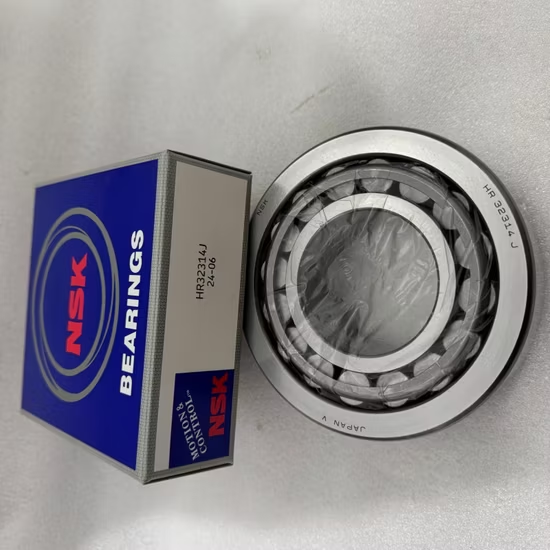
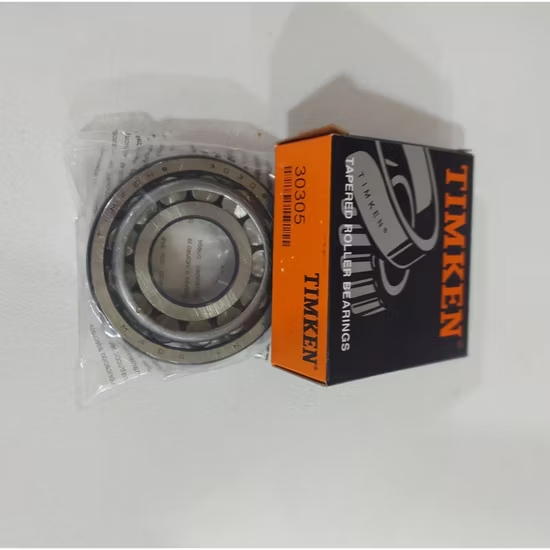
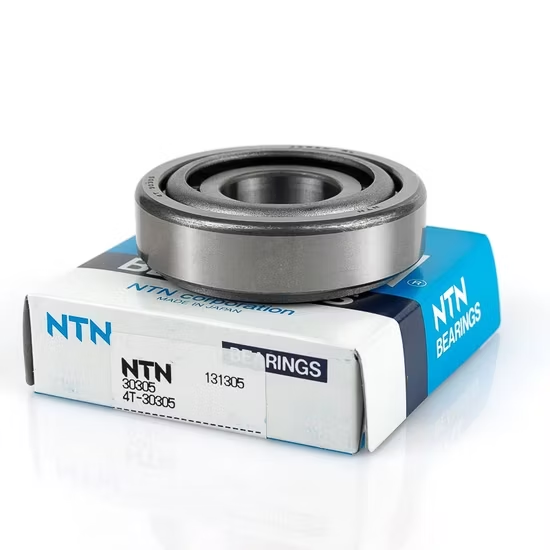
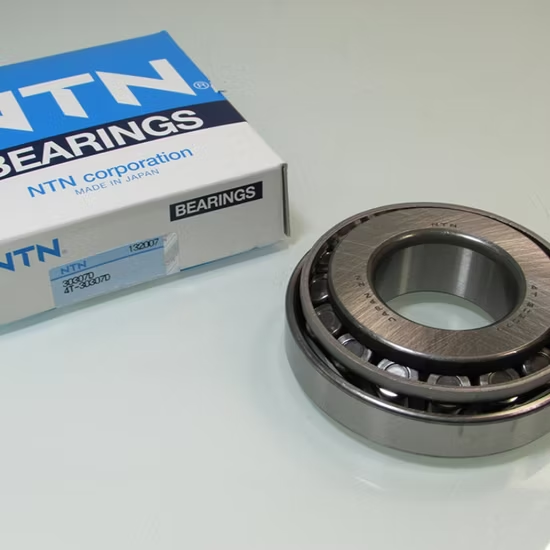
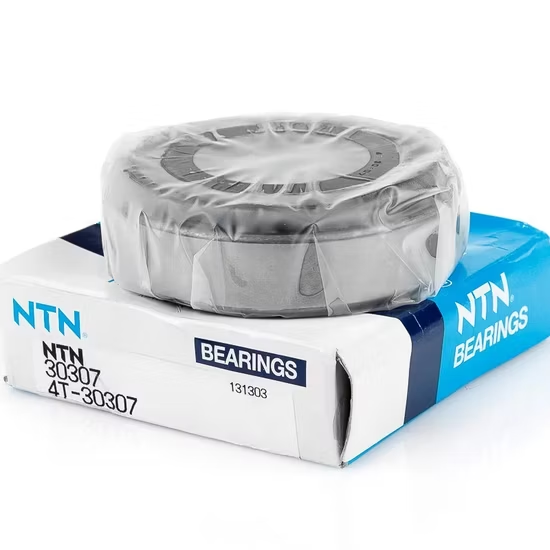
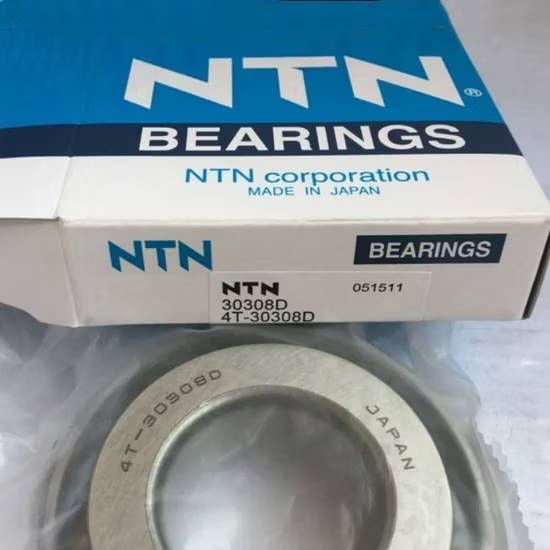
30311 Tapered Roller Bearing 55×120×31.5 mm P4 — engineered for demanding drivetrain and industrial gearbox applications.
Full Brand Authorization Coverage — sourcing the 30311 tapered roller bearing alongside mixed SKF, FAG, or NSK requirements in a single consolidated shipment eliminates multi-vendor coordination.
| Parameter | Value |
|---|---|
| Designation | 30311 |
| Bearing Type | Tapered Roller Bearing |
| Bore Diameter (d) | 55 mm |
| Outside Diameter (D) | 120 mm |
| Width (T) | 31.5 mm |
| Precision Class | P4 |
| Material | GCr15 High Carbon Chromium Bearing Steel |
| Cage Material Options | Pressed Steel, Machined Brass, or Polyamide |
| Industry | Typical Applications |
|---|---|
| Industrial Gearboxes | Heavy-duty reduction gear pinion shafts and output stages |
| Automotive & Heavy Vehicles | Truck drive axles, wheel hub assemblies, and differential carriers |
| Building Material Shops | Conveyor drive pulleys and aggregate crusher main shafts |
Thermal binding in high-speed shafts often traces back to overlooked dimensional tolerances rather than material fatigue.
When replacing standard components in industrial gearboxes, procurement teams frequently match the base number while ignoring the precision grade. I have seen catastrophic seizures in Latin American mining crushers where standard P0 grade bearings were forced into high-speed pinion shafts. The slight dimensional deviations caused excessive internal friction, generating heat that outpaced the lubricant's thermal limits . Specifying a 30311 tapered roller bearing with P4 precision ensures the strict running accuracy required to keep friction and heat generation under control in demanding power transmission setups.
Tapered roller bearings are engineered to handle combined radial and axial loads simultaneously. The 30311 tapered roller bearing utilizes a specific internal contact angle that distributes heavy radial forces from gear meshing while securely locating the shaft axially. This dual-load capability makes it the standard choice for bevel gear intersections and heavy-duty wheel hubs where load vectors constantly shift during operation.
In aggregate crushing and truck axle applications, the bearing faces severe shock loads and contaminated environments. Fine particulate ingress accelerates abrasive wear on the raceways, while heavy shock loads can cause brinelling on the contact surfaces. Proper lubrication is critical; the chosen grease must maintain its film strength under high pressure without washing out during exposure to moisture or extreme temperature fluctuations . Furthermore, the initial mounting preload must be meticulously adjusted to prevent both excessive play and thermal binding during continuous operation.
The defining feature of this configuration is the P4 precision class, which imposes significantly tighter tolerances on bore diameter, outside diameter, and running accuracy compared to standard commercial grades. This strict control minimizes vibration and ensures uniform load distribution across all rolling elements at higher rotational speeds. The core material, GCr15 high carbon chromium bearing steel, provides deep hardenability and excellent resistance to contact fatigue. Depending on the specific cage requirement, the bearing is available with pressed steel cages for general durability, machined brass cages for high-vibration resistance, or polyamide cages for reduced friction and quieter operation.
Overlooking the precision suffix during cross-referencing leads to severe operational consequences. Installing a standard tolerance bearing in a P4-designated housing results in misalignment, uneven load sharing, and premature spalling. This unplanned downtime halts entire production lines, voids equipment warranties, and causes catastrophic damage to adjacent shafts and seals. Adhering strictly to ISO 492 tolerance standards prevents these cascading mechanical failures and protects the overall reliability of the drive system.
Our authorized distribution network guarantees that every 30311 tapered roller bearing originates directly from the manufacturer's production facilities, completely bypassing grey market channels. We perform strict cross-reference alignment, verifying not just the base number but also the P4 precision grade and internal geometry to prevent field failures. Every shipment includes comprehensive batch traceability, allowing your maintenance team to verify authenticity and metallurgical properties before installation. This rigorous vetting process eliminates the risk of soft inner rings and cloned QR codes that plague unauthorized suppliers.
To ensure optimal performance, please provide your specific operating parameters, including radial and axial load magnitudes, rotational speed, and operating temperature ranges. Our engineering team will utilize this data to calculate the L10 life and verify the P4 precision suitability for your application. If you are replacing an existing component, share the OEM equipment number or the exact cross-reference designation so we can validate the internal geometry and confirm the correct cage material option.
Q: Why is the P4 precision class critical when cross-referencing the 30311 tapered roller bearing?
A: Standard P0 grade bearings have wider dimensional tolerances that cause excessive vibration and heat in high-speed gearboxes. The P4 class ensures strict running accuracy and tighter bore tolerances, which are essential for maintaining proper gear mesh alignment and preventing premature thermal failure in precision power transmission applications.
Q: How do I verify the authenticity of the GCr15 material and P4 precision upon delivery?
A: Every shipment includes a material test report confirming the high carbon chromium steel chemistry and a dimensional inspection report validating the P4 tolerances. You can also scan the QR code on the packaging using the manufacturer's official app to verify the batch traceability and confirm the product originated from authorized facilities.
Q: What cage material should I specify for high-vibration crusher applications?
A: For heavy shock loads and high-vibration environments like aggregate crushers, a machined brass cage is highly recommended. Brass cages offer superior structural integrity and resistance to cage fatigue compared to pressed steel or polyamide variants, ensuring reliable roller guidance under severe mechanical stress.
Q: How does operating temperature affect the internal clearance of this tapered roller bearing?
A: Elevated operating temperatures cause the inner ring and shaft to expand more than the outer ring and housing, which reduces the internal clearance. Proper mounting adjustment must account for this thermal expansion to prevent the bearing from binding under load, which would otherwise generate excessive friction and lead to rapid lubricant degradation.
Our 5-step process ensures every order is engineered, validated, and supported for optimal performance.
Technical needs assessment
Custom specifications
Free samples for $50k+
Pre-shipment inspection
On-site & predictive
Our certified engineers respond within 24 hours with detailed technical specifications, pricing, and lead time information.