01
Consultation
Technical needs assessment



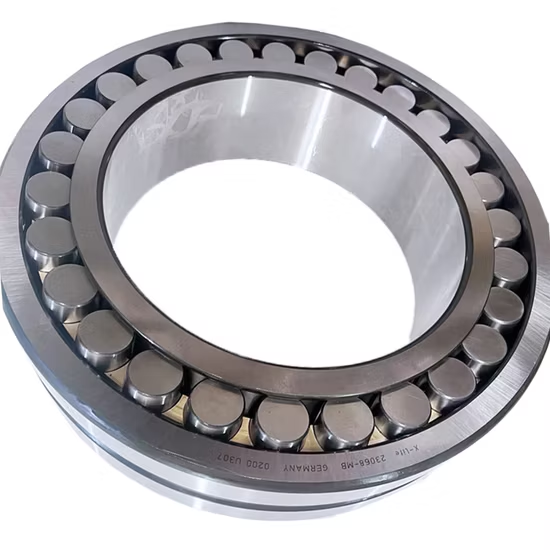
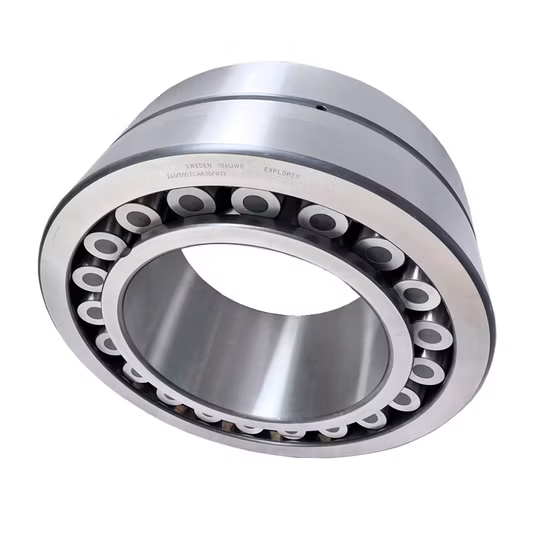


23224 23224K 23226 23226K 23228 23228K 23224e 23226e 23228e 23224ew 23226ew 23228ew Spherical Roller Bearings — designed for heavy-duty vibrating screens and crushers.
Multi-brand authorized coverage — sourcing mixed SKF, FAG, and NSK equivalents for your 23224, 23226, and 23228 requirements in a single consolidated shipment.
| Parameter | Value |
|---|---|
| Designation | 23224 23224K 23226 23226K 23228 23228K 23224e 23226e 23228e 23224ew 23226ew 23228ew |
| Bearing Type | Spherical Roller Bearing |
| Bore Type | Cylindrical and Tapered (1:12) |
| Origin | Germany, Japan, Sweden, Malaysia, China |
| HS Code | 8482500090 |
Note: Suffixes 'e' and 'ew' are unverified and require manufacturer catalog confirmation prior to dispatch.
| Industry | Typical Applications |
|---|---|
| Mining and Crushing | Vibrating screen exciter mechanisms, jaw crusher pitman shafts |
| Steel and Metallurgy | Continuous caster guide rolls, rolling mill work roll necks |
| Automotive and Heavy Vehicle | Heavy-duty wheel bearings, articulation joints |
Matching the base number is only the first step; ignoring the bore type and internal clearance invites catastrophic field failures.
I have spent years conducting failure analysis in African mining sites, where I witnessed 23228K units seize completely inside high-temperature ore crushers. The root cause was rarely the steel itself, but rather a procurement error where standard CN clearance was installed instead of the required C3, leaving no room for thermal expansion . When you source a 23224 23226 23228 spherical roller bearing, overlooking the K-suffix tapered bore or the specific cage design transforms a routine replacement into an unplanned shutdown.
Selecting the correct 23224 23226 23228 spherical roller bearing requires looking past the basic designation to verify the exact internal geometry. Our technical review process ensures that the clearance class, cage material, and bore configuration perfectly match your equipment's operational reality, preventing the premature cage failures that plague mismatched replacements.
Vibrating screens and crushers subject these components to severe shock loads and continuous high-frequency vibrations. Elevated operating temperatures drastically reduce the effective internal clearance, making the selection of C3 or C4 clearance classes mandatory to prevent thermal binding. Furthermore, heavy contamination from ore dust demands robust sealing solutions or external sealing arrangements to protect the rolling elements and maintain lubrication integrity .
The distinction between a standard cylindrical bore and a K-suffix 1:12 tapered bore fundamentally alters the mounting procedure and the resulting internal clearance. Tapered bores require precise locknut tightening or hydraulic driving to achieve the correct radial internal clearance reduction. Additionally, verifying the cage design—such as confirming an E-type reinforced cage for high-vibration applications—ensures the bearing can withstand the intense accelerations found in exciter mechanisms without structural fatigue.
Installing a cylindrical bore bearing in a housing designed for a tapered adapter sleeve leads to immediate slippage and fretting corrosion on the shaft. Conversely, ignoring the required clearance class causes the rollers to skid under load, generating excessive heat and rapid raceway spalling. These misapplications result in catastrophic damage to adjacent machinery components and void any manufacturer warranty, turning a minor spare parts purchase into a massive financial liability .
We do not just ship boxes; we validate the exact suffix requirements for your specific 23224, 23226, or 23228 application. Our cross-reference protocol checks bore type, clearance, and cage material simultaneously, eliminating the risk of receiving a base-matched but internally incompatible unit. By maintaining authorized multi-brand coverage, we consolidate your mixed-brand requirements into a single, fully traceable shipment, backed by rigorous pre-dispatch dimensional inspections.
To ensure absolute compatibility, please provide your equipment's OEM part numbers alongside the specific operating parameters, including radial and axial loads, rotational speed, and ambient temperature. This data allows our engineering team to perform a thorough cross-reference check and validate the L10 life calculation, ensuring the selected configuration meets your exact reliability targets.
Q: What is the practical difference between standard and K-suffix tapered bores?
A: Standard cylindrical bores press directly into housings or onto shafts, while K-suffix bearings feature a 1:12 tapered bore designed to mount on adapter sleeves or tapered shafts. This tapered design allows for precise adjustment of the internal radial clearance during installation, which is critical for optimizing performance in heavy-load applications.
Q: How do you verify the authenticity of multi-brand spherical roller bearings?
A: Every unit we supply features full batch traceability and can be verified using the manufacturer's official mobile application via QR codes. We also provide a Certificate of Conformity and country-of-origin documentation, ensuring that the 23224, 23226, or 23228 units you receive are genuine products from authorized production facilities.
Q: Why is matching the clearance suffix critical during cross-referencing?
A: Internal clearance dictates how the bearing behaves under thermal expansion and heavy loads. Installing a standard CN clearance in a high-temperature crusher where C3 is required will cause thermal binding and rapid seizure. We verify these suffixes to ensure the internal geometry matches the equipment's thermal and mechanical demands.
Q: What causes premature failure in vibrating screen applications?
A: Vibrating screens generate high-frequency accelerations that can fracture standard cages. Failures often stem from selecting a bearing without the appropriate reinforced cage design or incorrect clearance. Proper suffix validation ensures the internal components can withstand the intense vibratory forces without structural fatigue.
Q: How should unverified suffixes like 'e' or 'ew' be handled?
A: Suffixes that are not universally standardized across all brands require careful verification. We cross-reference these specific designations against the original manufacturer's catalog to confirm their exact internal design and dimensional variations before dispatch, preventing the installation of incompatible components.
Our 5-step process ensures every order is engineered, validated, and supported for optimal performance.
Technical needs assessment
Custom specifications
Free samples for $50k+
Pre-shipment inspection
On-site & predictive
Our certified engineers respond within 24 hours with detailed technical specifications, pricing, and lead time information.