01
Consultation
Technical needs assessment


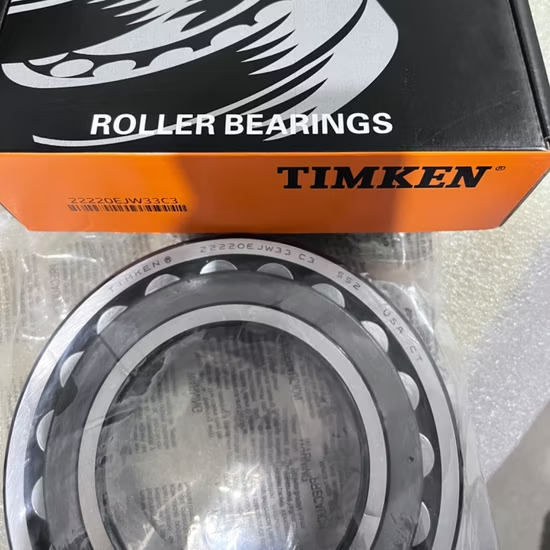
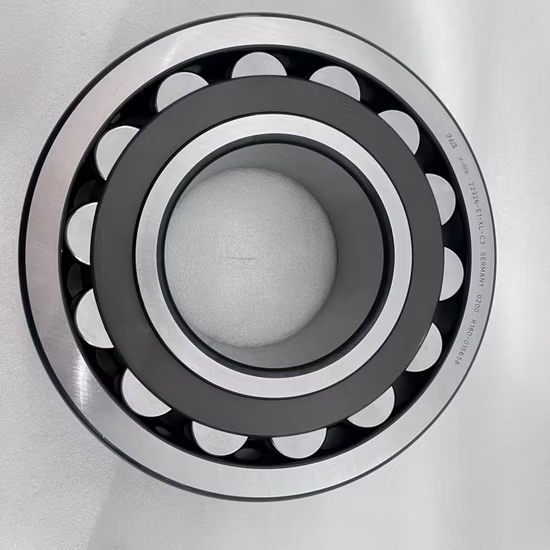
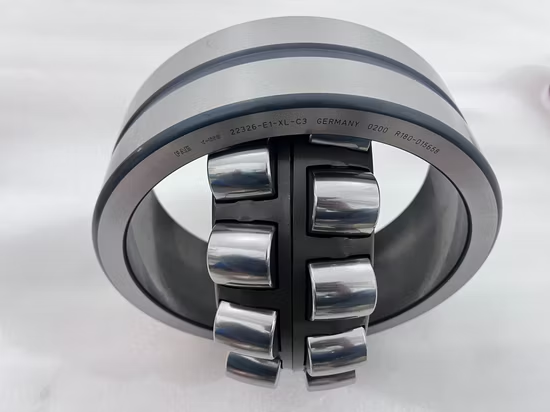


23222 Spherical Roller Bearing 110 mm Bore — Dimension series 32 optimizes internal geometry to effectively balance radial and axial composite loads. This design ensures reliable performance under heavy vibrations and shock conditions.
Full Batch Traceability — Every 23222 spherical roller bearing ships with manufacturer lot documentation linking directly to the original production run.
| Parameter | Value |
|---|---|
| Designation | 23222 |
| Bearing Type | Spherical Roller Bearing |
| Dimension Series | 32 |
| Bore Diameter (d) | 110 mm |
| Origin | Germany / Japan / Sweden / Malaysia / China |
| HS Code | 8482500090 |
| Industry | Typical Applications |
|---|---|
| Mining and Crushing | Vibrating screen shafts and jaw crusher eccentric mechanisms |
| Steel and Metallurgy | Continuous casting guide rolls and rolling mill gearboxes |
| Material Handling | Heavy-duty conveyor pulleys and bucket elevator drives |
Internal clearance and cage design dictate survival, not just the base designation.
Procurement teams frequently source replacements by matching the base number alone, overlooking critical suffix variations. When a standard clearance unit is installed in a vibrating screen where thermal expansion demands a C3 or C4 clearance, the internal preload spikes rapidly under operational heat. This leads to severe thermal binding, accelerated raceway wear, and eventual cage fracture. Sourcing a 23222 spherical roller bearing without verifying the exact internal geometry and clearance class against the original equipment specifications is a primary driver of unplanned downtime in heavy industry .
Selecting the correct variant requires aligning the internal design with the specific load profile and thermal environment of the machinery. The dimension series 32 geometry provides a robust cross-section capable of absorbing heavy radial loads combined with moderate axial displacement. By reviewing the exact application parameters, we ensure the supplied 23222 spherical roller bearing features the appropriate cage material and internal clearance to maintain the hydrodynamic lubrication film under severe operating conditions.
Equipment like vibrating screens and crushers subject components to intense cyclic shock loads and high-frequency vibrations that can fatigue standard cages. Simultaneously, friction and ambient heat cause the inner ring to expand more than the housing, effectively reducing internal clearance during operation. Proper lubrication practices and selecting a cage designed to withstand vibration-induced stress are critical to preventing premature skidding and surface spalling . Adequate radial clearance must be specified during procurement to compensate for these thermal gradients and heavy interference fits.
The base number only identifies the boundary dimensions; the suffixes define the operational limits. A brass cage (often designated with M or MB) offers superior resistance to vibration and sudden shock loads compared to pressed steel alternatives, making it preferable for crusher applications. Clearance classes such as C3 or C4 provide the necessary internal space to accommodate thermal expansion and heavy shaft interference fits without causing the rollers to bind. Furthermore, lubrication features like an annular groove and holes in the outer ring facilitate efficient relubrication in contaminated environments, extending service intervals significantly.
Installing a component with incorrect internal clearance or an unsuitable cage material inevitably leads to premature failure, voiding equipment warranties and causing catastrophic damage to adjacent shaft and housing components. The resulting unplanned downtime in a continuous process plant far exceeds the initial procurement savings of a mismatched part. Adhering to strict cross-referencing protocols and verifying dimensional tolerances per ISO 492 prevents these compounding operational losses .
We maintain authorized distribution channels across major international brands, allowing a single order to fulfill mixed-brand requirements without compromising documentation integrity. Our technical team strictly verifies that cross-referenced equivalents match not only the base dimensions but also the exact internal clearance, cage material, and lubrication features required by the application. Every shipment includes comprehensive batch traceability and material test reports, eliminating the risk of counterfeit units with soft inner rings. We provide application-based selection reviews to ensure the chosen variant withstands the specific load, speed, and temperature profiles of your machinery.
To ensure precise alignment with your machinery requirements, please provide the specific radial and axial load profiles, operational speeds, and ambient temperature ranges. Sharing the original equipment manufacturer part numbers or detailed housing dimensions allows our engineering team to perform a comprehensive cross-reference review and L10 life calculation. This technical validation ensures the selected configuration perfectly matches the mechanical and thermal demands of your application.
Q: Why must internal clearance and cage material be verified when cross-referencing a 23222 bearing?
A: Matching only the base number ignores critical internal variations. Installing a standard clearance unit in a high-heat application causes thermal binding, while a weak cage fails under vibration. Verifying these suffixes ensures the replacement handles the specific thermal expansion and shock loads of the application, preventing premature catastrophic failure.
Q: How can I verify the authenticity of the 23222 spherical roller bearing upon delivery?
A: Authenticity is confirmed by scanning the packaging QR code using the manufacturer's official mobile application, which validates the unique batch identity. Additionally, cross-referencing the physical unit's laser markings against the provided Certificate of Conformity and material test reports ensures the component is a genuine, traceable product.
Q: What are the common failure modes in vibrating screens, and how does correct selection prevent them?
A: Vibrating screens induce high-frequency cyclic loads that fatigue standard cages and cause roller skidding. Selecting a variant equipped with a heavy-duty machined brass cage and appropriate internal clearance absorbs these shock loads effectively, maintaining the lubrication film and significantly extending the operational service life under intense vibration.
Q: How do you handle cross-brand interchange when the original OEM part has a long lead time?
A: We identify authorized equivalents from other major brands that perfectly match the original boundary dimensions, internal geometry, clearance class, and cage design. This strict alignment ensures the substitute integrates seamlessly into the existing housing and shaft tolerances without requiring mechanical modifications or compromising reliability.
Q: What are the temperature control requirements when mounting this bearing using induction heating?
A: Induction heating must be strictly monitored to prevent overheating, which can alter the heat treatment and reduce the hardness of the bearing steel. Using automated heaters with temperature limits ensures the inner ring expands sufficiently for a smooth slide fit onto the shaft while preserving the material's structural integrity and dimensional stability.
Our 5-step process ensures every order is engineered, validated, and supported for optimal performance.
Technical needs assessment
Custom specifications
Free samples for $50k+
Pre-shipment inspection
On-site & predictive
Our certified engineers respond within 24 hours with detailed technical specifications, pricing, and lead time information.


