01
Consultation
Technical needs assessment


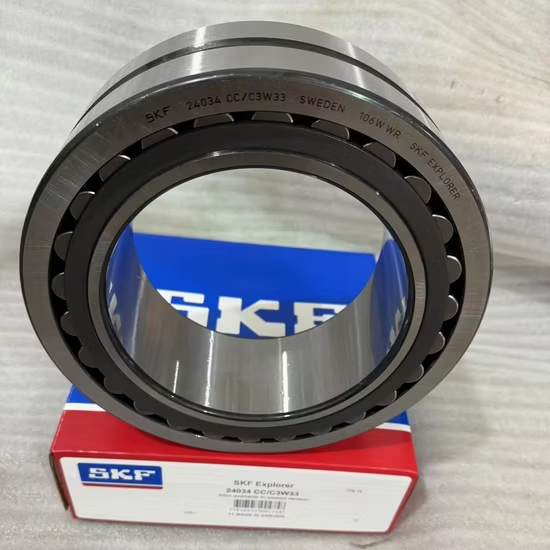
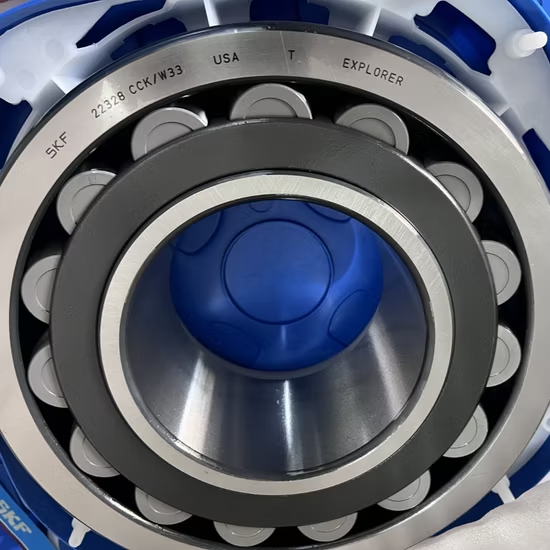
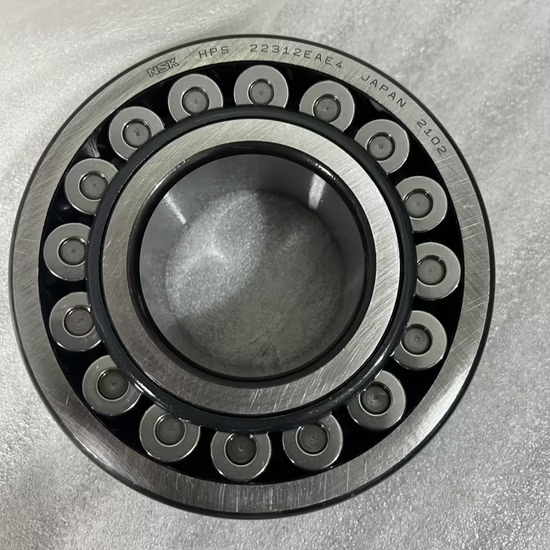
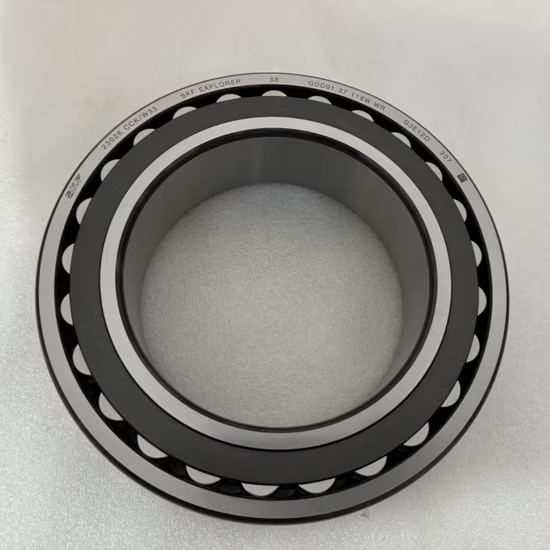

22320 Spherical Roller Bearing — 100 mm bore, dimension series 23, engineered for heavy radial and combined loads with self-aligning capability that accommodates shaft deflections in vibrating screens, crushers, and steel mill equipment.
Every shipment includes dimensional and running accuracy inspection reports alongside batch traceability records for complete pre-installation verification.
Multi-Origin Batch Traceability — Every 22320 spherical roller bearing ships with verifiable lot documentation linking directly to the manufacturer's production facilities, eliminating soft inner ring counterfeits.
| Parameter | Value |
|---|---|
| Designation | 22320 |
| Product Type | Spherical Roller Bearing |
| Bore Diameter (d) | 100 mm |
| Outside Diameter (D) | 215 mm |
| Width (B) | 73 mm |
| Bearing Type | Spherical Roller Bearing |
| Feature | Low Noise, High Speed, Long Service Life |
| Origin | Germany / Japan / Sweden / Malaysia / China |
| Industry | Typical Applications |
|---|---|
| Mining and Crushing | Vibrating screen exciter mechanisms, jaw crusher eccentric shafts |
| Steel and Metallurgy | Continuous caster roll segments, rolling mill gear drives |
| Industrial Gearboxes | Heavy-duty reduction gearbox低速 shafts, mixer drive assemblies |
A matching base designation does not guarantee operational survival under heavy thermal loads.
Procurement teams often source a 22320 spherical roller bearing based solely on the base number, overlooking critical internal clearance and cage design suffixes. In heavy-duty environments like cement plants or mining operations, installing a standard CN clearance where C3 or C4 is required leads to rapid thermal expansion. As the shaft and housing heat up, the internal clearance vanishes, causing the rolling elements to bind and the cage to collapse . This exact scenario has caused entire production lines to seize, turning a routine replacement into a massive unplanned downtime event.
Selecting the correct 22320 spherical roller bearing requires looking past the outer dimensions to evaluate the internal geometry and cage construction. Our technical review process cross-references the exact equipment requirements, ensuring the selected variant handles the specific combination of heavy radial loads and shock impacts typical in vibrating screens and crushers. By verifying the cage material and internal profile against the application's vibration frequency, we prevent premature fatigue and ensure reliable service life.
Heavy-duty machinery generates significant friction heat, making clearance selection a critical survival factor for the bearing. When operational temperatures rise, standard clearance classes quickly diminish, necessitating C3 or C4 internal clearances to accommodate thermal expansion without inducing preload. Furthermore, the choice between brass and pressed steel cages directly impacts how the bearing retains lubricant and withstands high-frequency vibrations . Proper seal selection also plays a vital role in keeping abrasive mining dust out while retaining the correct grease fill.
The base number 22320 identifies a dimension series 23 spherical roller bearing with a 100 mm bore, but the suffixes dictate its actual field performance. The cage material suffix determines its speed limits and vibration resistance; a machined brass cage (such as M or MA variants) is essential for high-vibration screens, whereas pressed steel cages (J) suit general industrial gearboxes. Internal clearance suffixes like C3 or C4 provide the necessary thermal expansion room for hot-running applications, preventing the catastrophic binding seen when standard CN clearance is mistakenly installed. Precision and seal suffixes further refine the fit, ensuring the bearing matches the exact shaft and housing tolerances required by the OEM.
Ignoring suffix details during procurement inevitably leads to premature failure and catastrophic damage to surrounding machinery components. When a bearing fails due to incorrect clearance or inadequate cage strength, the resulting shaft scoring and housing deformation require extensive re-machining and extended line stoppages. According to failure analysis frameworks like ISO 281 and ISO 15243, a significant share of these premature failures are misclassified as manufacturing defects when they are actually the result of application mismatch . The true cost extends far beyond the replacement part, encompassing lost production revenue and emergency freight expenses.
We provide authorized coverage across all major international brands, allowing you to consolidate mixed-brand requirements into a single, fully traceable order. Our cross-reference process strictly aligns clearance, cage material, and precision suffixes, preventing the dangerous substitution of a base-number match that lacks the correct internal design. Every batch is verified through official brand apps, ensuring the inner ring hardness and material integrity meet genuine specifications. We also conduct application-based selection reviews, analyzing your specific load, speed, and temperature parameters to confirm the chosen variant will survive the actual operating environment.
To ensure the selected bearing perfectly matches your machinery, please provide the specific radial and axial load values, operating speeds, and expected thermal ranges. Supplying the OEM equipment number or the exact designation currently installed allows our engineering team to perform a precise cross-reference and L10 life calculation. Detailing the environmental conditions, such as dust ingress or moisture exposure, helps us confirm the optimal seal and cage configuration for your application.
Q: Why is cross-referencing more than just matching the base 22320 number?
A: Matching only the base number ignores critical internal differences. A standard clearance bearing will bind and fail in a high-heat application that requires C3 or C4 clearance. Similarly, using a pressed steel cage in a high-vibration screen instead of a machined brass cage leads to rapid cage fracture. We verify clearance, cage, and precision to ensure exact operational compatibility.
Q: How can I verify the authenticity of the supplied bearings?
A: Every bearing we supply features full batch traceability and can be verified using the official brand application via QR codes. This digital verification confirms the manufacturing origin and material batch, effectively eliminating the risk of receiving counterfeit products with soft inner rings that pass casual visual inspection but fail under heavy loads.
Q: What clearance class should I select for heavy-duty vibrating equipment?
A: Vibrating screens and crushers generate significant friction heat and shaft deflection. Standard CN clearance is typically insufficient and risks thermal binding. C3 or C4 internal clearances are generally required to accommodate thermal expansion and maintain the necessary operational gap between the rolling elements and the raceways during continuous heavy-duty operation.
Q: Which mounting practices are recommended for this 100 mm bore bearing?
A: For a 100 mm cylindrical bore, induction heating is the preferred mounting method. The inner ring must be heated evenly to expand sufficiently for a smooth slide onto the shaft seat without damaging the raceway. Post-mounting, it is crucial to measure the remaining internal clearance to ensure the thermal expansion room specified by the C3 or C4 suffix has not been compromised.
Our 5-step process ensures every order is engineered, validated, and supported for optimal performance.
Technical needs assessment
Custom specifications
Free samples for $50k+
Pre-shipment inspection
On-site & predictive
Our certified engineers respond within 24 hours with detailed technical specifications, pricing, and lead time information.


