01
Consultation
Technical needs assessment

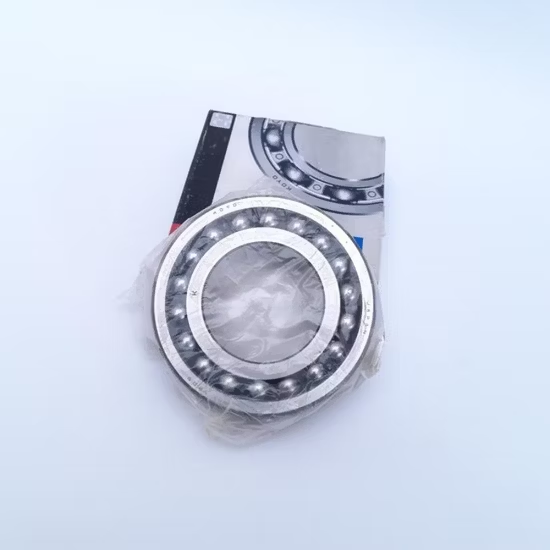


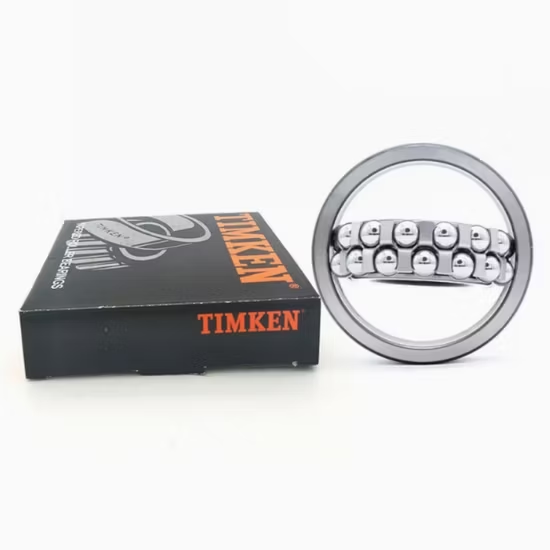
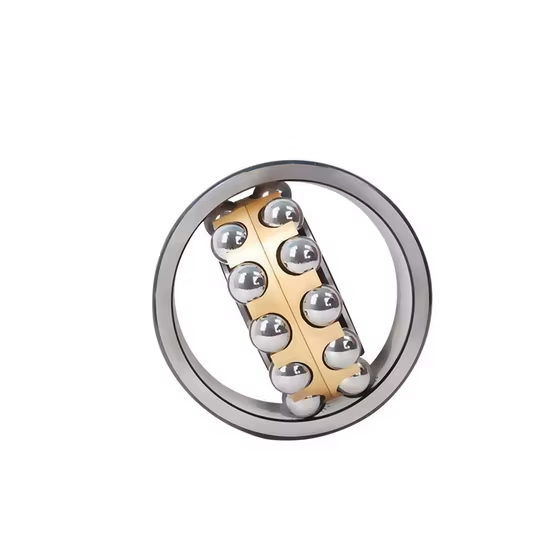
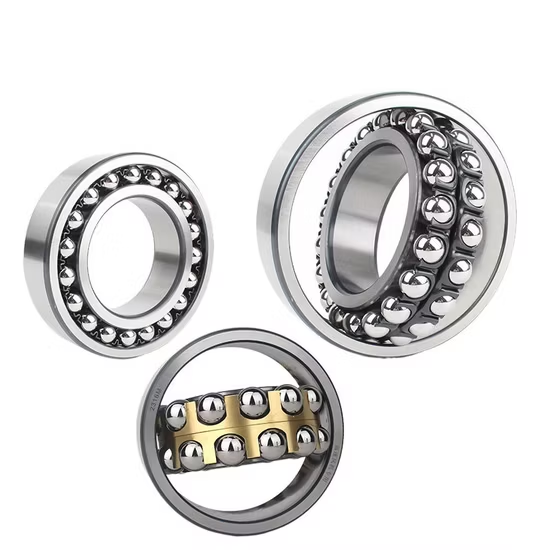
1310 1311 1312 1313 1314 1315 1316 1317 1318 1319 1320 Self-Aligning Ball Bearings accommodate shaft misalignment in electric motors and gearboxes.
Authenticity via official apps — Every 1310 to 1320 self-aligning ball bearing shipped includes scannable QR codes linking directly to the manufacturer's verification portal.
| Parameter | Value |
|---|---|
| Designation | 1310 1311 1312 1313 1314 1315 1316 1317 1318 1319 1320 |
| Product Type | Self-Aligning Ball Bearing |
| Bearing Style | Open, Rubber Seals, Iron Seals |
| Bore Type | Cylindrical or Tapered 1:12 (K suffix) |
| Origin | Germany, Japan, Sweden, Malaysia, China |
| HS Code | 848210 |
Note: Suffixes such as 2RS, Atn, Aktn, and Ktn are unverified and require manufacturer catalog confirmation for exact variant decoding.
| Industry | Typical Applications |
|---|---|
| Material Handling | Conveyor pulley shafts experiencing continuous belt misalignment |
| Agricultural Machinery | Harvester drive shafts exposed to heavy dust and crop debris |
| Electric Motors | Cooling fan assemblies requiring tolerance to thermal shaft deflection |
| Textile Machines | Spindle drives operating under high-speed vibration conditions |
Matching the base number is only the beginning of a reliable procurement process.
Purchasing teams often approve orders based solely on the primary designation, assuming internal configurations are standardized across all suppliers. In reality, ignoring specific clearance classes, cage materials, or sealing variants leads to rapid thermal binding or catastrophic cage fragmentation under load . I have witnessed entire crushing circuits halt because a standard open bearing was installed where a specialized tapered-bore variant with a specific cage design was strictly required.
Securing the correct 1310 1311 1312 1313 1314 1315 1316 1317 1318 1319 1320 self-aligning ball bearing requires looking past the outer dimensions to evaluate the internal geometry against actual operating stresses. Our engineering team reviews your specific load profiles and misalignment angles to ensure the selected bearing style and internal clearance will not compromise the equipment's operational integrity. This prevents the all-too-common scenario where a technically correct base number fails prematurely due to an incompatible internal configuration.
Shaft deflection and housing misalignment are inherent in heavy-duty material handling and agricultural equipment, demanding a bearing that accommodates angular errors without transferring destructive edge stresses to the raceways. When these systems operate in dusty or moist environments, the choice between open, rubber-sealed, or iron-shielded configurations becomes critical for retaining lubrication and excluding contaminants . Furthermore, fluctuating operational temperatures dictate strict clearance selections to prevent the internal rolling elements from seizing as the shaft expands during continuous duty cycles.
The K suffix designates a 1:12 tapered bore, an essential feature for mounting these bearings securely on adapter sleeves in heavy-duty applications where axial positioning and tight interference fits are mandatory. Selecting the appropriate cage material—whether pressed steel for standard speeds or specialized designs for high-vibration environments—directly influences the bearing's ability to withstand shock loads without fracturing. Internal clearance classes, such as C3 or C4, provide the necessary thermal expansion room for applications running at elevated temperatures, whereas standard CN clearance is reserved for stable, low-heat environments.
Relying on superficial cross-references that ignore internal design variations routinely results in unplanned downtime and severe collateral damage to adjacent shafts and housings. When a bearing fails due to an incorrect clearance or cage mismatch, the resulting secondary damage often voids equipment warranties and necessitates complete assembly replacements rather than simple component swaps . These hidden costs easily eclipse any initial savings gained from sourcing unverified or loosely matched replacement parts.
Sourcing from our authorized network guarantees that every 1310 to 1320 series unit arrives with verifiable batch traceability, eliminating the risk of counterfeit rings with substandard metallurgy. We align cross-references based on exact clearance, cage, and precision suffixes, ensuring that a requested K-suffix unit is not silently substituted with a standard cylindrical bore. Our application-based selection review catches misalignment and thermal expansion variables early, while our mixed-brand consolidation allows procurement teams to fulfill complex maintenance schedules through a single, fully documented shipment.
To ensure optimal performance and longevity, please provide your specific radial and axial load data, operational speeds, and expected temperature ranges for a comprehensive L10 life calculation. If you are replacing existing hardware, sharing the exact OEM equipment number allows our engineering team to perform a rigorous cross-reference check against original factory specifications. This technical collaboration ensures the selected configuration perfectly matches your unique installation constraints and environmental conditions.
Q: How do cross-reference errors in clearance and cage material cause field failures?
A: Overlooking these details often leads to thermal binding if the clearance is too tight for the operating temperature, or cage fragmentation if the material cannot withstand specific vibration frequencies. A base number match does not guarantee internal compatibility, resulting in rapid, unplanned equipment shutdowns and severe secondary damage to the surrounding mechanical assemblies.
Q: What are the official methods for batch traceability and QR authenticity verification?
A: Each unit is marked with a unique traceability code that links directly to the manufacturer's production records. Procurement and maintenance teams can scan the QR code using the brand's official mobile application to instantly verify the bearing's authenticity, origin, and technical specifications, effectively eliminating the risk of installing counterfeit components.
Q: When should I choose rubber seals versus iron shields for my application?
A: Rubber seals provide superior exclusion of fine dust and moisture but generate higher friction, making them ideal for moderate-speed, high-contamination environments. Iron shields offer lower friction and are better suited for higher-speed applications where the primary concern is retaining grease and blocking larger particulate debris rather than sealing against liquid ingress.
Q: What are the mounting requirements for bearings with a tapered bore?
A: Bearings with the K suffix require mounting on adapter sleeves or tapered shaft journals. Installers must carefully control the drive-up distance or use hydraulic nuts to achieve the correct interference fit, followed by measuring the residual internal clearance to ensure the bearing is not over-tightened, which would cause immediate operational binding.
Q: How do clearance classes impact thermal expansion in self-aligning ball bearings?
A: Standard CN clearance is suitable for normal temperature environments, but applications generating significant heat require C3 or C4 clearances. These larger internal gaps accommodate the differential thermal expansion between the shaft and the housing, preventing the rolling elements from seizing and ensuring smooth rotation under elevated thermal loads.
Our 5-step process ensures every order is engineered, validated, and supported for optimal performance.
Technical needs assessment
Custom specifications
Free samples for $50k+
Pre-shipment inspection
On-site & predictive
Our certified engineers respond within 24 hours with detailed technical specifications, pricing, and lead time information.