01
Consultation
Technical needs assessment

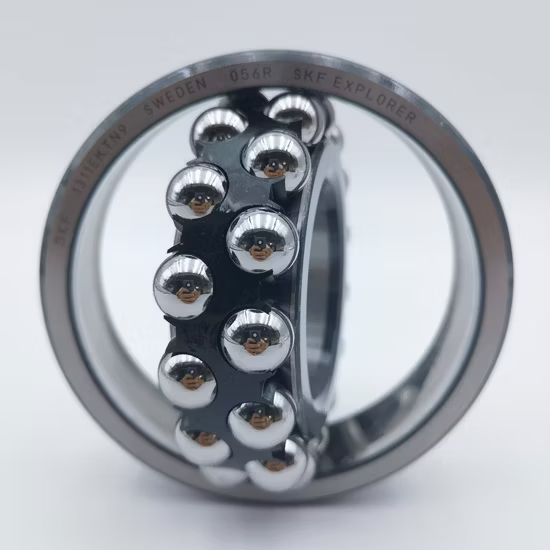
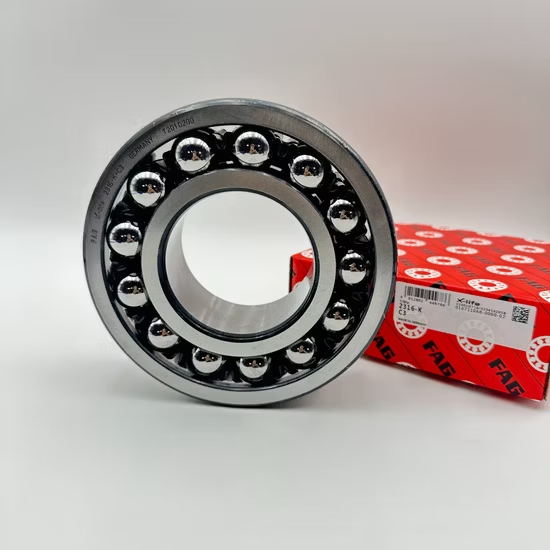
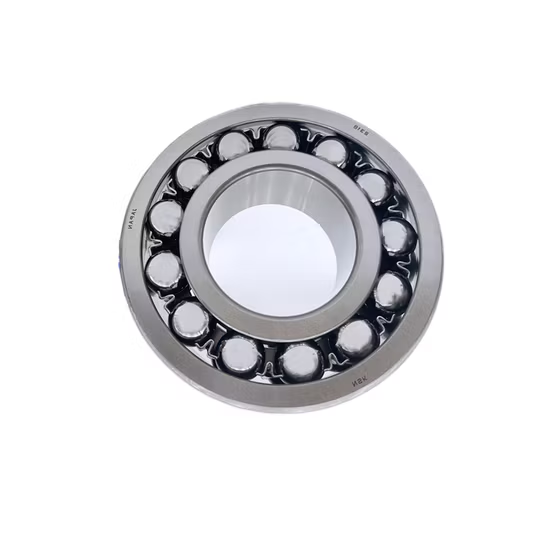
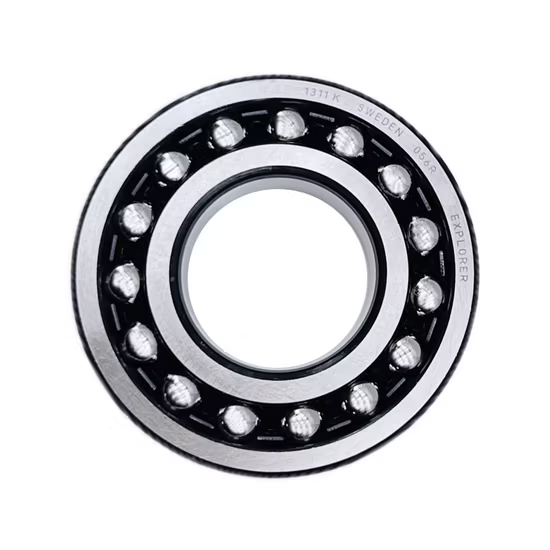
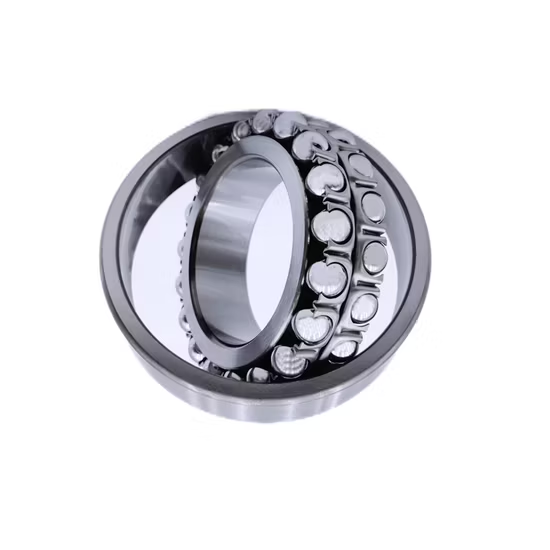
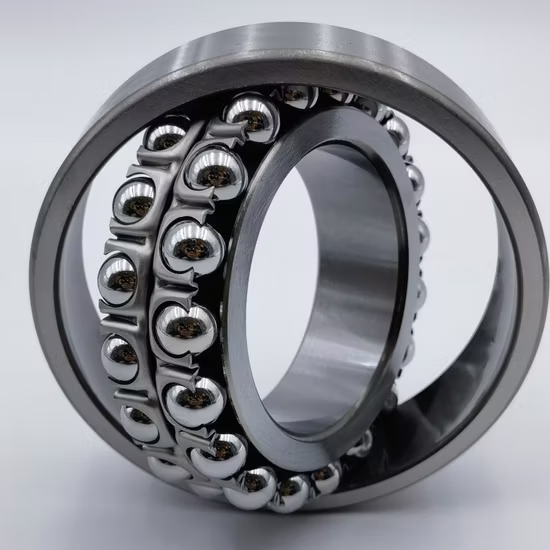
1204 1205 1206 1207 1208K 1209 1210 1305 1306 1307 1308 1309 1310 Self-Aligning Ball Bearings accommodate shaft misalignment in textile machinery and conveyors.
Full Batch Traceability — Every 1200 1300 series self-aligning ball bearing 1208K we supply includes verifiable lot documentation directly from the manufacturer's production facilities.
| Parameter | Value |
|---|---|
| Designation | 1204 1205 1206 1207 1208K 1209 1210 1305 1306 1307 1308 1309 1310 |
| Bearing Type | Self-Aligning Ball Bearing |
| Series Dimension | 12xx (Narrow), 13xx (Wide) |
| Bore Type | Cylindrical, Tapered 1:12 (K suffix) |
| Seal or Shield Type | Open, Rubber Seals, Iron Seals |
| Origin | Germany, Japan, Sweden, Malaysia, China |
| Industry | Typical Applications |
|---|---|
| Textile Machinery | High-speed spinning frames and yarn winding mechanisms requiring misalignment tolerance |
| Material Handling | Conveyor belt pulleys and roller shafts subject to housing deflection |
| Electric Motors | Rotor shafts experiencing thermal expansion and minor mounting errors |
Selecting a 1200 1300 series self-aligning ball bearing 1208K based solely on the base designation often leads to catastrophic thermal binding in textile machinery.
Internal clearance and seal friction dictate survival, not just the outer dimensions.
I once inspected a spinning frame where the inner ring seized completely onto the shaft. The maintenance team had replaced the original unit with a standard clearance variant, ignoring the thermal expansion generated by the high-speed yarn winding process . When procurement focuses only on the base number, they overlook the critical suffix combinations that manage heat and contamination, resulting in unplanned downtime that halts the entire production line.
Textile environments demand components that can handle continuous high-speed rotation while accommodating slight shaft deflections. The 1200 1300 series self-aligning ball bearing 1208K provides the necessary angular adjustment to prevent edge loading on the raceways. Our technical team reviews the specific radial loads and operating speeds of your spinning frames to ensure the selected variant maintains optimal contact stress distribution.
The ambient temperature on a textile factory floor fluctuates, and the friction from high-speed rotation generates significant internal heat. If the internal clearance is too tight, the thermal expansion of the shaft will eliminate the operational gap, leading to premature failure. Furthermore, airborne cotton fibers and lubricant mist easily penetrate inadequate sealing arrangements . Choosing between rubber seals for maximum protection or iron shields for lower friction requires a careful balance of the specific machine's contamination exposure and speed limits.
The K suffix indicates a tapered bore with a 1:12 taper, which is essential for secure mounting on adapter sleeves in applications where axial positioning and residual clearance must be precisely controlled during installation. The 12xx series represents a narrow dimension profile suitable for compact textile spindles, while the 13xx wide series offers higher load capacity for heavier conveyor pulleys. Understanding the distinction between open, rubber-sealed, and iron-shielded variants ensures that the friction torque does not exceed the motor's capacity while still keeping microscopic textile dust out of the raceway.
Installing a standard clearance bearing in a high-temperature textile application eliminates the necessary thermal expansion gap. This leads to excessive preload, rapid cage wear, and eventual seizure, which can damage the expensive precision shafts of the spinning frame. According to failure analysis frameworks, a significant share of premature failures stems from these initial selection errors rather than material defects . The resulting unplanned downtime and secondary equipment damage far outweigh the initial procurement savings.
We do not just ship the base number; we verify the exact suffix combination required for your specific thermal and load conditions. Our cross-reference matching ensures that if a specific 1208K variant is unavailable, the replacement matches the exact internal geometry and clearance class, not just the outer dimensions. We provide batch traceability for every unit, allowing your quality team to verify the origin and material certifications directly through official brand applications. This eliminates the risk of receiving counterfeit units with soft inner rings that fail under high-speed textile loads.
To ensure the selected self-aligning ball bearing matches your exact operational demands, please provide the radial and axial loads, operating speeds, and ambient temperature ranges of your textile machinery. If you are replacing an existing unit, share the OEM equipment number or the exact designation printed on the current bearing, including all suffixes. Our engineering team will use this data to perform a cross-reference check and verify the L10 life calculation for your specific application.
Q: How do I choose between rubber seals and iron shields for textile machinery?
A: Rubber seals provide superior protection against cotton dust and lubricant mist but generate higher friction heat. Iron shields offer lower friction for high-speed spindles but allow fine particles to enter. We evaluate your specific spindle speed and contamination levels to recommend the optimal sealing configuration for your equipment.
Q: What is the mounting difference for the K suffix tapered bore?
A: The K suffix indicates a 1:12 tapered bore designed to be mounted on an adapter sleeve. This allows for precise axial positioning and the ability to adjust the internal radial clearance during installation by measuring the drive-up distance or the reduction in clearance, which is critical for high-speed textile applications.
Q: Why does matching the base designation fail if internal clearance is overlooked?
A: The base number only defines the outer dimensions. If a standard clearance bearing is used where a C3 clearance is required for thermal expansion, the shaft expansion will eliminate the internal gap. This causes extreme friction, thermal binding, and eventual seizure, destroying both the bearing and the shaft.
Q: How can I verify the authenticity of multi-brand bearing batches?
A: Every batch we supply includes verifiable lot documentation. You can scan the QR codes on the packaging using the manufacturer's official mobile application to confirm the origin, production date, and authenticity, effectively ruling out counterfeits with soft inner rings that fail under load.
Our 5-step process ensures every order is engineered, validated, and supported for optimal performance.
Technical needs assessment
Custom specifications
Free samples for $50k+
Pre-shipment inspection
On-site & predictive
Our certified engineers respond within 24 hours with detailed technical specifications, pricing, and lead time information.