01
Consultation
Technical needs assessment

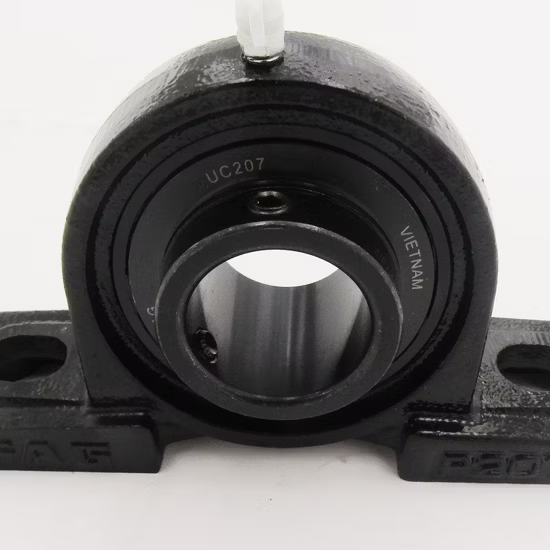
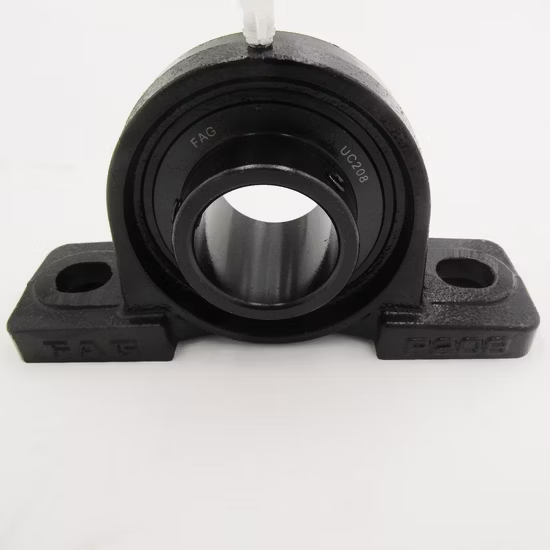
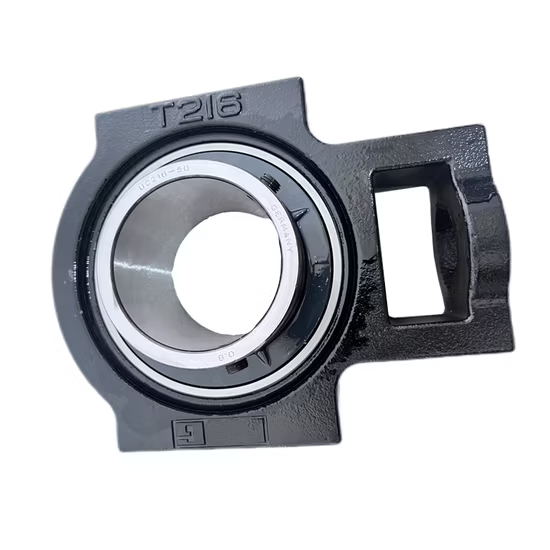
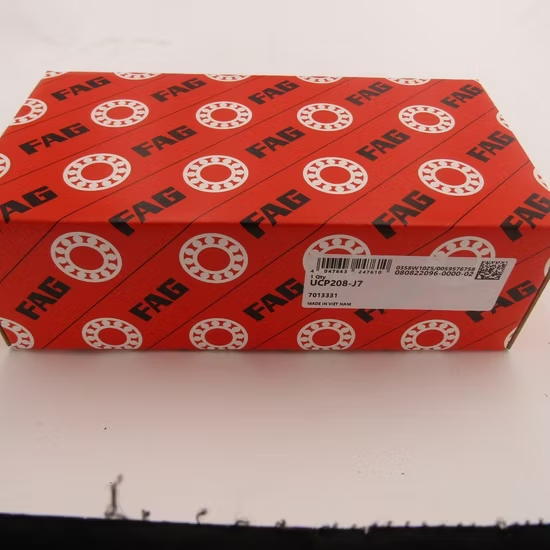
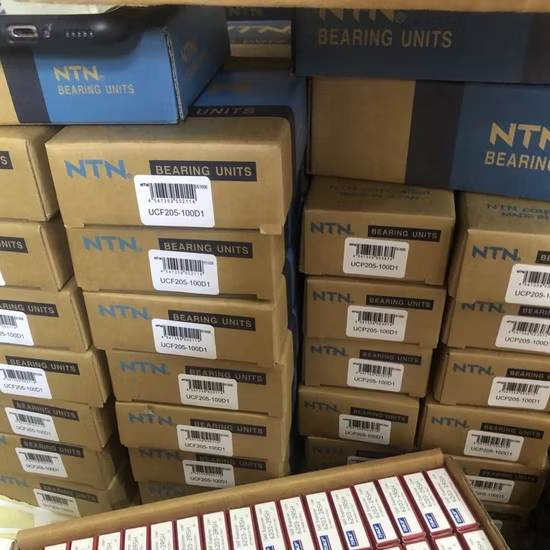
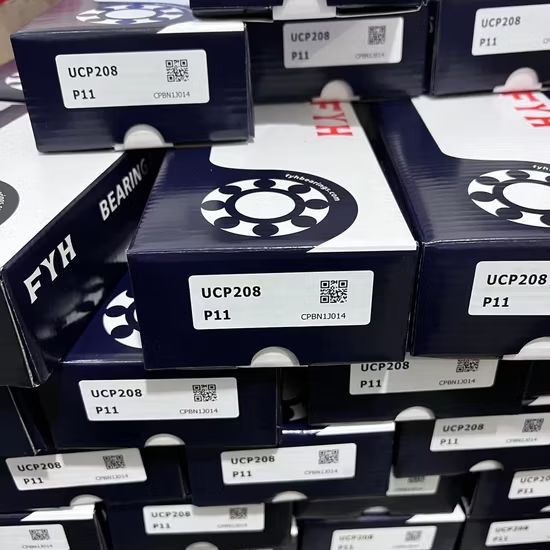
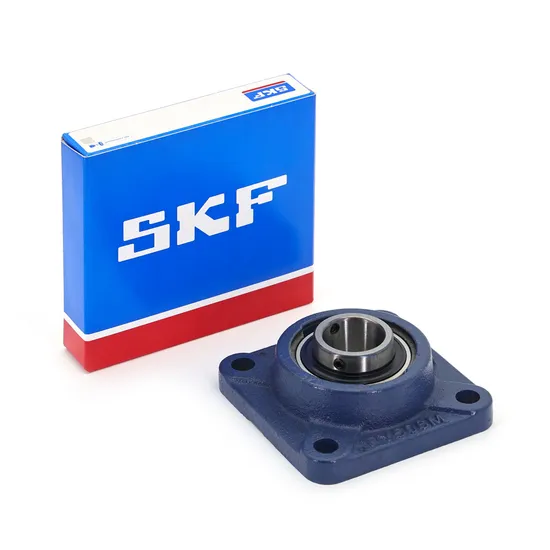
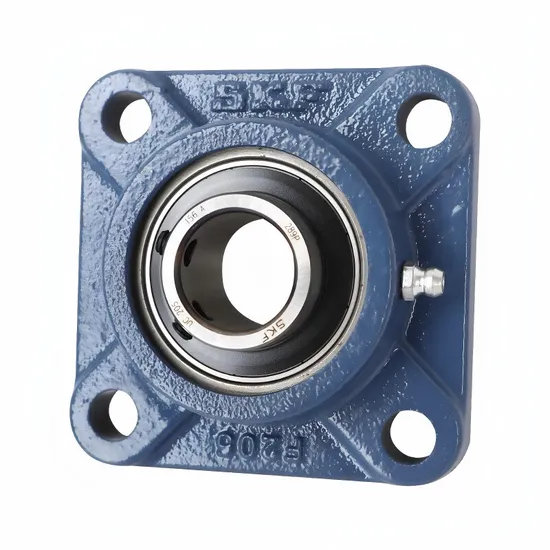
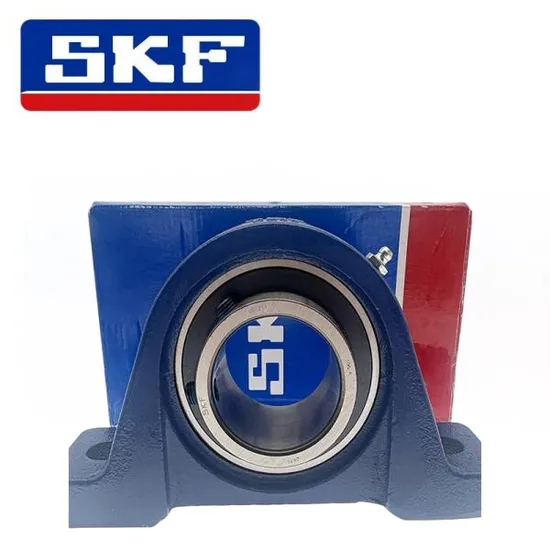
UCP315-48 Pillow Block Unit features a cast iron P-type housing delivering reliable structural support and shock resistance for agricultural machinery and conveyor systems.
Complete Brand Authorization — A single procurement cycle covers mixed-brand requirements for this agricultural unit without coordinating multiple vendors.
| Parameter | Value |
|---|---|
| Designation | UCP315-48 |
| Product Type | Pillow Block Unit |
| Bearing Type | Insert Bearing with Cast Iron Housing |
| Housing Material | Cast Iron |
| Bearing Block Model | P (Pillow Block) |
| Rows Number | Single |
| Feature Options | Corrosion Resistant, High Temperature, High Speed variants |
| Origin Options | Germany, Japan, Sweden, Malaysia, China |
| Customization | Clearance, precision, and seal configurations |
Note: The specific dimensional breakdown for the 315-48 suffix is unverified and requires manufacturer catalog confirmation prior to final integration.
| Industry | Typical Applications |
|---|---|
| Agricultural Machinery | Harvester rotor shafts, tractor PTO driveline supports, planter metering drives |
| Material Handling | Belt conveyor tail pulleys, bucket elevator bottom shafts, screw feeder bearings |
| General MRO | Industrial fan shaft supports, vibrating screen drive mechanisms |
Matching the base number while ignoring internal clearance and seal configurations guarantees field failure under thermal cycling.
Purchasing teams often approve a UCP315-48 pillow block bearing supplier based solely on the base designation, assuming the internal geometry is universal. In reality, installing a standard CN clearance unit in a harvester rotor shaft that experiences significant daytime temperature swings leads to thermal binding. The internal components expand, eliminating the operational clearance and causing the bearing to seize mid-harvest. Furthermore, overlooking the specific seal type means dust ingress rapidly degrades the grease, turning a minor oversight into a catastrophic line stoppage .
Selecting the correct UCP315-48 pillow block bearing supplier involves looking past the catalog number to evaluate the actual operating environment. Agricultural drives subject the housing to heavy shock loads from uneven terrain and debris impact. We verify that the cast iron P-block housing provides the necessary structural rigidity and vibration damping, while ensuring the internal insert bearing is matched with the appropriate sealing arrangement to keep abrasive particulates out of the raceway.
The operational reality for these units involves extreme contamination and fluctuating temperatures. Fine crop dust and moisture demand robust sealing solutions; a standard non-contact shield will fail quickly, whereas a multi-lip contact seal maintains integrity despite higher friction. Temperature variations dictate the clearance class, as thermal expansion from friction and ambient heat must be accommodated to prevent preload buildup. Proper greasing intervals and selecting the correct base oil viscosity are equally critical to maintain a protective film under heavy radial loads .
The UCP designation confirms a pillow block configuration with a cast iron housing, designed for horizontal shaft mounting and moderate misalignment compensation. The insert bearing inside typically utilizes a deep groove raceway to handle combined radial and light axial loads common in conveyor and agricultural drives. Depending on the specific manufacturer, the unit may feature an eccentric locking collar or set screw locking mechanism to secure the shaft. Selecting the right cage material and seal variant from the available options ensures the unit survives the specific shock and contamination profile of the application.
Substituting a visually similar unit without verifying the exact shaft tolerance and internal clearance results in unplanned downtime and premature failure. When a replacement bearing operates with insufficient clearance, the rolling elements skid rather than roll, generating excessive heat and destroying the raceway. This catastrophic damage often ruins the shaft and adjacent seals, escalating a simple component swap into a major drivetrain rebuild and voiding equipment warranties .
We prevent cross-reference errors by matching the exact clearance, cage material, and seal suffixes, not just the base UCP315-48 designation. Our inventory provides batch traceability to the manufacturer, ensuring every cast iron housing and insert bearing meets original equipment specifications. We review application parameters like load and temperature to recommend the correct internal geometry, eliminating the guesswork that causes thermal binding. Furthermore, our cross-brand interchange expertise ensures that if your primary brand is unavailable, the alternative we supply maintains identical dimensional and performance characteristics.
To ensure precise specification matching, provide the radial and axial load profiles, operating speeds, and ambient temperature ranges for your equipment. Share the original OEM equipment number or the exact suffix configuration currently in use so we can perform a comprehensive cross-reference review. Detailing the contamination level and washdown frequency allows our engineering team to recommend the optimal seal and clearance combination for your specific application.
Q: How do I determine the exact UCP model based on my equipment shaft and mounting surface?
A: You must measure the exact shaft diameter and the distance between the housing mounting bolt holes. The base number indicates the general series, but the suffix defines the precise bore size and locking mechanism. Providing these physical dimensions along with the OEM equipment number allows us to cross-reference the exact configuration required for your machinery.
Q: What are the common failure modes for pillow block bearings in agricultural environments?
A: The most frequent failures stem from abrasive dust ingress destroying the grease film and thermal expansion causing internal clearance loss. When fine crop dust bypasses inadequate seals, it acts as a lapping compound inside the raceway. Additionally, high ambient temperatures combined with friction can cause standard clearance bearings to bind and seize under load.
Q: What installation dimensions must be checked during a cross-brand interchange?
A: Beyond the basic bore and outside diameter, you must verify the housing base length, bolt hole spacing, and the distance from the mounting base to the shaft centerline. Differences in these casting dimensions will cause misalignment or prevent the unit from bolting onto the existing foundation, even if the internal insert bearing is a perfect functional match.
Q: What tools and heating methods are recommended for mounting these cast iron housings?
A: Induction heaters are preferred for expanding the inner ring of the insert bearing if it requires a tight interference fit, avoiding localized hot spots from open flames. For the cast iron housing itself, standard mechanical presses or hydraulic pullers should be used. Never strike the cast iron housing directly with a steel hammer, as it can fracture the brittle material.
Our 5-step process ensures every order is engineered, validated, and supported for optimal performance.
Technical needs assessment
Custom specifications
Free samples for $50k+
Pre-shipment inspection
On-site & predictive
Our certified engineers respond within 24 hours with detailed technical specifications, pricing, and lead time information.