01
Consultation
Technical needs assessment

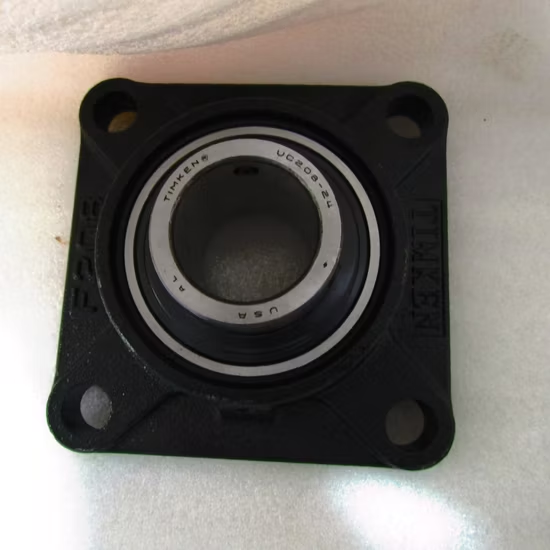
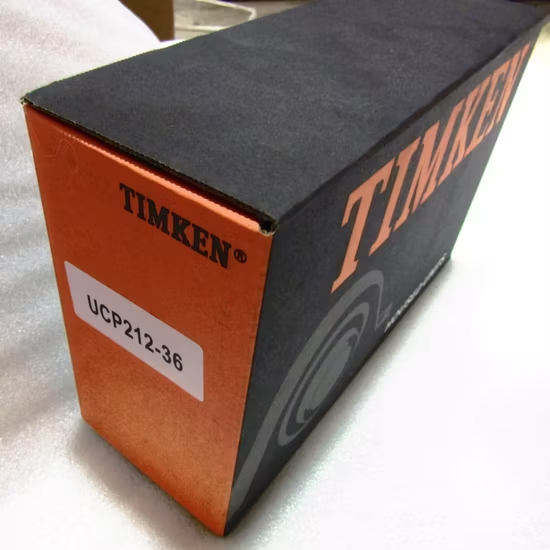
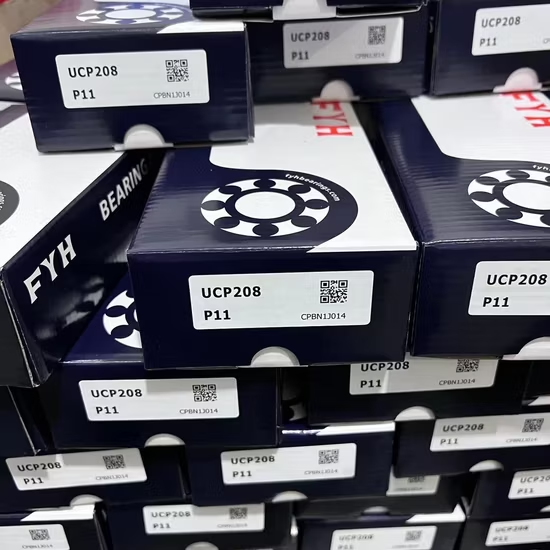
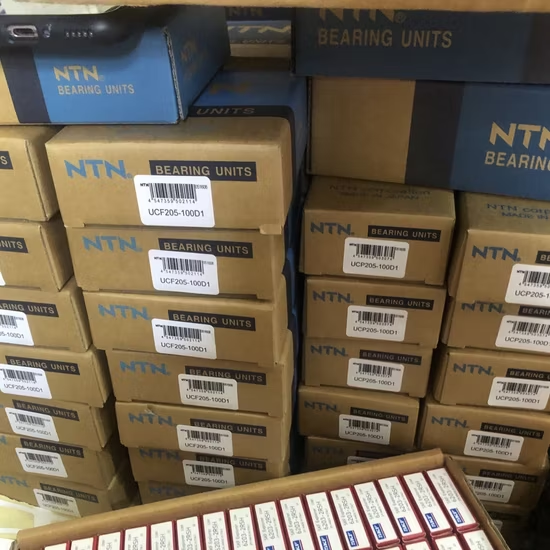
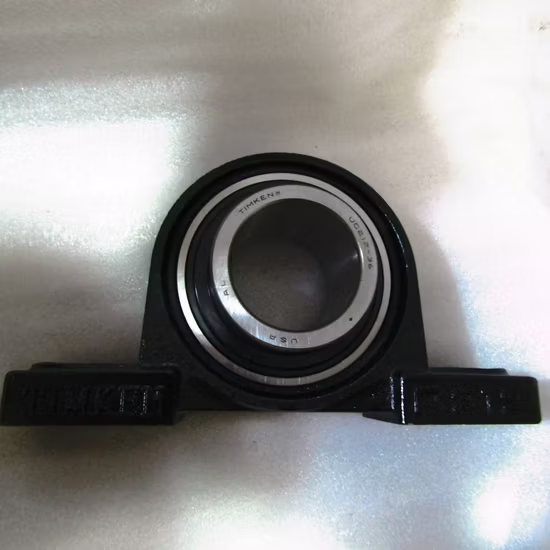
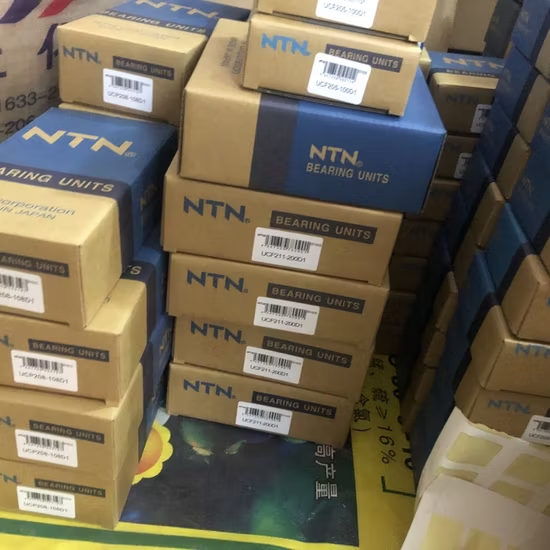
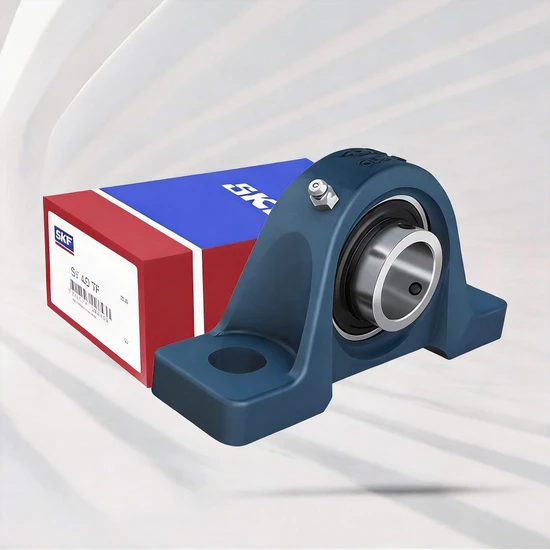
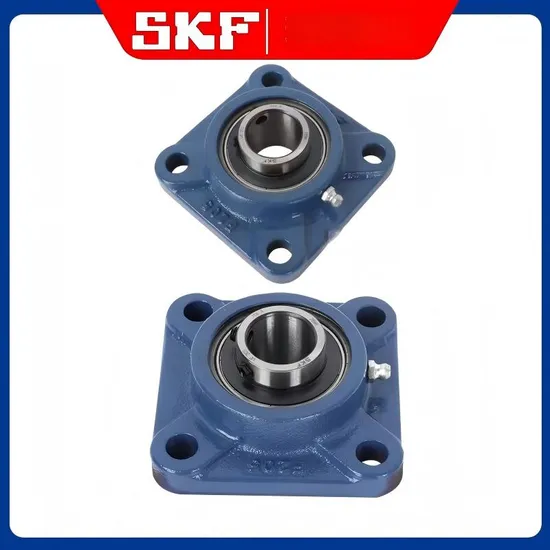
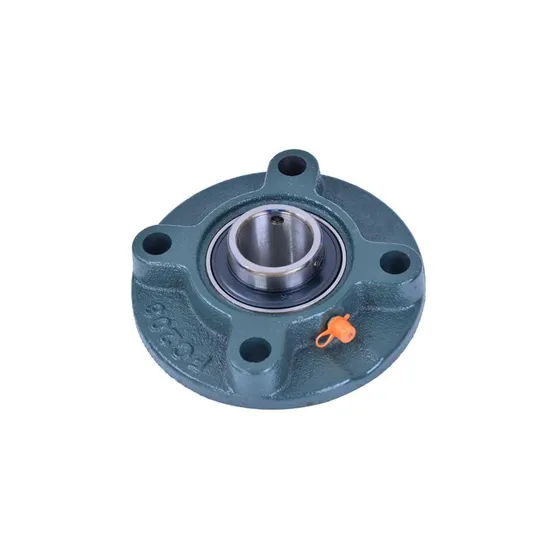
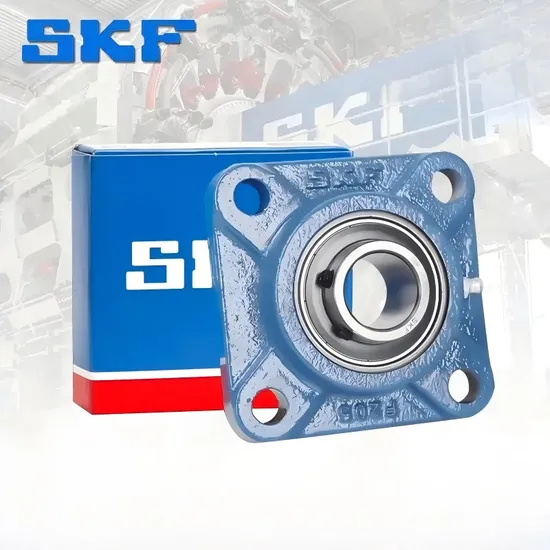
Ucf318 Pillow Block Unit 90 mm Bore — square flange housing with cast iron construction for medium-duty applications.
Verified Authenticity Guaranteed — Scan the QR code via official brand apps to confirm the exact batch origin of every Ucf318 unit before installation.
| Parameter | Value |
|---|---|
| Designation | Ucf318 |
| Bearing Type | Pillow Block Unit (Insert Bearing with Square Flange Unit) |
| Bore Diameter (d) | 90 mm |
| Dimension Series | Medium duty (3 series) |
| Rows Number | Single |
| Raceway | Deep Groove Raceway |
| Housing Material | Cast Iron |
| Feature Options | Available in corrosion resistant, high temperature, or high speed variants |
| Origin | Germany / Japan / Sweden / Malaysia / China |
| HS Code | 8483200000 |
| Industry | Typical Applications |
|---|---|
| Material Handling | Heavy-duty conveyor belt drive pulleys and transfer rollers |
| Agricultural Machinery | Combine harvester grain augers and rotary tiller gearboxes |
| Textile Manufacturing | High-speed yarn winding spindles and loom beat-up mechanisms |
| General MRO | Industrial exhaust fan shaft supports and bulk material screw conveyors |
Ignoring internal clearance and seal suffixes turns a perfect dimensional fit into a premature field failure.
In my years covering Southeast Asian facilities, I have seen countless square flange units seize simply because the procurement team matched the base number but overlooked the thermal expansion requirements. When a standard clearance insert is forced into a high-heat conveyor application, the internal gaps close up, leading to catastrophic thermal binding. This exact mismatch accounts for a significant share of unplanned downtime in material handling plants . Sourcing a genuine Ucf318 pillow block bearing requires looking far beyond the outer dimensions to ensure the internal geometry survives the actual operating environment.
A reliable Ucf318 pillow block bearing must bridge the gap between catalog specifications and the harsh realities of continuous material transport. We evaluate your specific radial loads, shaft deflection expectations, and ambient temperatures to recommend the precise clearance class and sealing arrangement. This application-based selection review ensures the deep groove raceway maintains optimal load distribution without suffering from edge-stressing under heavy belt tension.
Agricultural and textile environments subject these units to severe contamination and fluctuating thermal cycles. High dust levels demand robust sealing configurations that prevent abrasive ingress without generating excessive friction heat. When operating near heat sources, the internal clearance must accommodate shaft expansion to prevent the rolling elements from skidding. Proper lubrication intervals and the correct grease viscosity are equally critical to wash out contaminants and maintain a protective film across the raceway .
The UCF prefix designates an insert bearing housed within a square flange unit, providing a rigid, four-bolt mounting footprint ideal for perpendicular surfaces. The "3" series indicates a medium-duty dimension profile, offering a thicker outer ring and larger rolling elements compared to standard light-duty alternatives. This 90mm bore configuration relies on a deep groove raceway to handle combined radial and axial loads efficiently. Depending on the specific suffix configuration, the insert may feature set screw locking or eccentric collar mechanisms to secure the shaft while allowing for minor misalignment compensation during operation.
Overlooking a single suffix character frequently results in catastrophic damage to the surrounding machinery. Installing a standard cage variant in an application that demands a high-temperature machined brass cage will cause the retainer to deform and jam under thermal stress. Such premature failures not only void equipment warranties but also trigger extended production halts while maintenance crews extract the damaged shaft and housing. Aligning the exact internal design with the operational envelope is the only way to avoid these compounding maintenance costs.
Our multi-brand authorization allows you to consolidate mixed-brand requirements into a single, fully traceable shipment. We strictly verify cross-reference equivalencies by matching the internal clearance, cage material, and precision grade, rather than just swapping base numbers. Every batch is backed by manufacturer traceability, ensuring you receive the exact sealing and locking configuration your equipment requires. Our technical team conducts pre-shipment application reviews to catch dimensional or suffix discrepancies before the units leave the warehouse.
To ensure the selected unit perfectly matches your machinery, please provide the exact radial and axial load profiles, operational speeds, and ambient temperature ranges. Sharing the original OEM equipment number allows our engineering team to perform a comprehensive cross-reference check, verifying that the clearance and sealing suffixes align with the factory design. This technical validation guarantees the replacement unit will deliver the expected service life under your specific operating conditions.
Q: How does the UCF square flange design differ from UCP or UCFL series in mounting applications?
A: The UCF series utilizes a four-bolt square flange that provides a highly rigid, perpendicular mounting surface, ideal for heavy-duty conveyor frames. In contrast, UCP pillow blocks mount parallel to the shaft via a two-bolt base, while UCFL units use a two-bolt oval flange for lighter, space-constrained applications. Selecting the correct housing style ensures proper load transfer to the machine structure.
Q: What parameters must align during a cross-reference check for this medium-duty unit?
A: A valid cross-reference must match the base dimension, internal clearance class, cage material, and sealing type. Simply matching the 90mm bore and outer diameter is insufficient; installing a standard clearance insert in a high-heat application will cause thermal binding. We verify all suffix elements to ensure the replacement unit behaves identically to the original specification.
Q: How should the locking mechanism be handled during assembly to prevent inner ring distortion?
A: Whether the insert uses set screws or an eccentric collar, the locking mechanism must be torqued to the manufacturer's exact specifications. Over-tightening set screws can distort the inner ring, disrupting the deep groove raceway geometry and causing premature rolling element wear. Proper tightening secures the shaft while preserving the internal clearance required for smooth operation.
Q: What housing and seal modifications are recommended for high-temperature or corrosive environments?
A: For elevated temperatures, the unit should feature a high-temperature cage and specialized seals that resist thermal degradation without increasing friction. In corrosive or washdown environments, selecting a housing and insert treated with specific corrosion-resistant coatings prevents structural weakening. Matching these material options to the environmental exposure ensures long-term reliability.
Q: How can I verify the authenticity and batch origin of the received units?
A: Every genuine unit features a unique identification mark that can be scanned using the manufacturer's official mobile application. This QR verification confirms the exact production batch, origin facility, and material certifications. We also supply comprehensive documentation, including dimensional inspection reports, to provide full transparency before the unit is mounted.
Our 5-step process ensures every order is engineered, validated, and supported for optimal performance.
Technical needs assessment
Custom specifications
Free samples for $50k+
Pre-shipment inspection
On-site & predictive
Our certified engineers respond within 24 hours with detailed technical specifications, pricing, and lead time information.