01
Consultation
Technical needs assessment

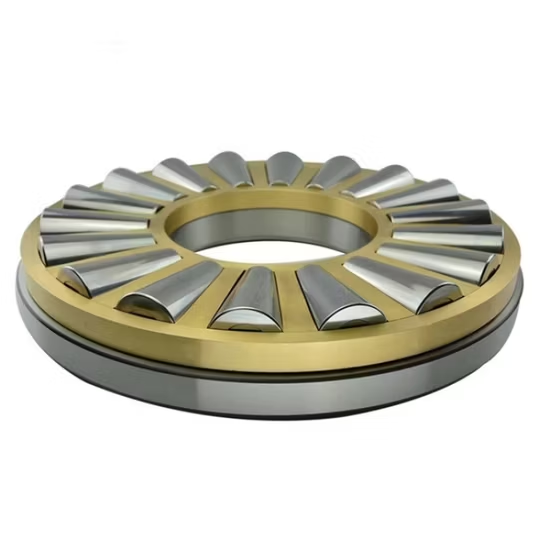
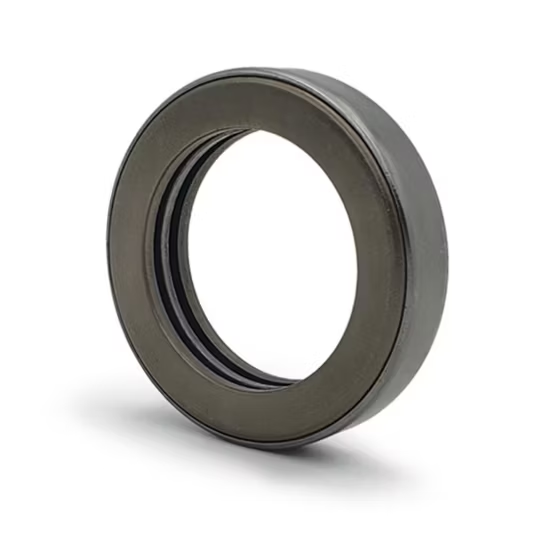
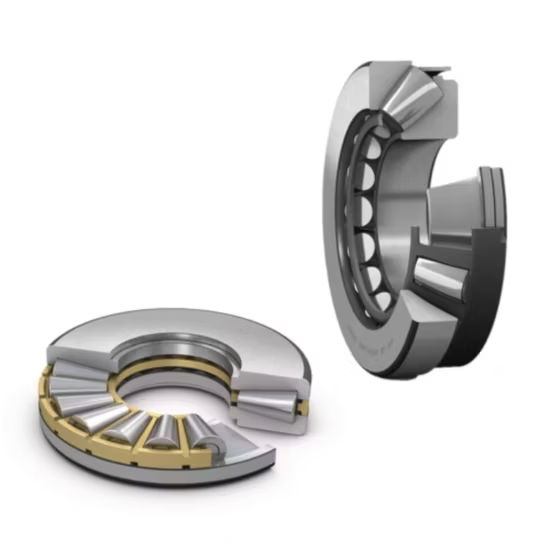


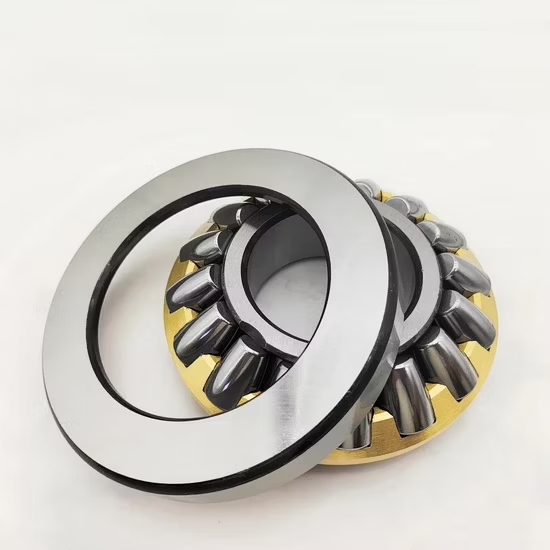
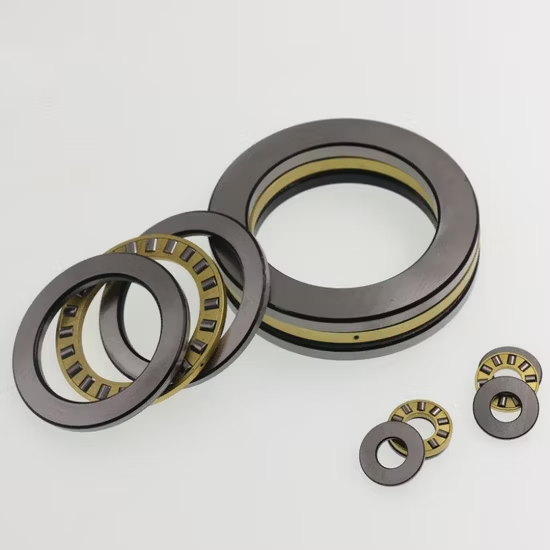
T311 Thrust Tapered Roller Bearing — engineered to accommodate heavy axial loads and maintain high rigidity in demanding industrial applications.
Unified Multi-Brand Sourcing — Consolidate T311 and cross-referenced variants from multiple international manufacturers into a single purchase order without juggling separate supply chains.
| Parameter | Value |
|---|---|
| Designation | T311 |
| Bearing Type | Thrust Tapered Roller Bearing |
| Cross-Reference | T411, T441, T451, T511, T520 |
| Origin | Germany / Japan / Sweden / Malaysia / China |
| HS Code | 8482500090 |
| Industry | Typical Applications |
|---|---|
| Mining and crushing | Gyratory crusher main shaft thrust arrangements |
| Heavy-duty gearboxes | Extruder screw thrust support mechanisms |
| Material handling | Bucket elevator head pulley shaft assemblies |
| Marine drives | Propeller shaft thrust block configurations |
Internal geometry and clearance suffixes dictate survival under heavy axial loads.
Procurement teams often approve replacements based solely on the base designation, assuming a T311 thrust roller bearing from any brand will perform identically. I have witnessed the catastrophic aftermath of this assumption in Latin American mining operations, where a misapplied clearance class on a similar T-series thrust bearing led to thermal binding, cage disintegration, and complete shaft seizure within hours of startup . When the internal contact angle or cage material deviates from the original equipment requirement, the bearing cannot dissipate the frictional heat generated by extreme axial forces, turning a routine maintenance swap into an unplanned shutdown.
Selecting the correct T311 thrust roller bearing requires looking past the catalog number to evaluate the specific axial load profile and operating temperature of the machinery. Our engineering review process cross-references the base designation against OEM equipment numbers to verify that the internal contact angle and roller profiling match the original design intent. This prevents the dangerous scenario where a standard duty bearing is inadvertently installed in a high-shock environment, ensuring the selected variant handles the specific thrust demands of the application.
Heavy-duty crushing equipment subjects thrust arrangements to severe shock loads and significant temperature fluctuations that directly impact internal clearance. If the selected bearing lacks the appropriate clearance class to accommodate thermal expansion from the shaft and housing, the rollers will skew and bind as the machinery reaches operating temperature. Proper lubrication selection is equally critical; heavy axial loads require high-viscosity oils with extreme pressure additives to maintain the elastohydrodynamic film between the rollers and raceways . Without adequate film thickness, metal-to-metal contact accelerates surface fatigue and spalling.
The structural integrity of a thrust tapered roller bearing under heavy loads relies heavily on the cage design and material selection. Machined brass cages are typically preferred for high-load, low-to-medium speed applications because they offer superior strength and vibration damping compared to stamped steel alternatives. Conversely, stamped steel cages reduce rotational mass and are suitable for higher-speed, lower-load configurations. Equally important is the clearance class; while standard clearance might suffice for ambient temperature operations, applications involving significant heat generation or tight interference fits demand increased internal clearance to prevent operational binding.
Ignoring suffix variations during cross-referencing inevitably leads to premature failure and catastrophic damage to adjacent drivetrain components. A bearing that matches the base number but features an incorrect internal geometry will fail to distribute the axial load evenly across the roller profile, causing localized stress concentrations. According to ISO 281 frameworks for calculating dynamic load ratings, such misalignments drastically reduce the calculated L10 life, resulting in unplanned downtime and voided equipment warranties . The financial impact extends far beyond the replacement part, encompassing lost production and extensive teardown labor.
Sourcing thrust bearings across multiple international brands requires rigorous verification to prevent the installation of counterfeit components with soft inner rings. We validate every T-series shipment through official manufacturer applications, ensuring the batch traceability matches the physical QR codes on the packaging. When cross-referencing to equivalents like the T411 or T511, our technical team verifies that the substitute matches the original in clearance, cage material, and precision class, not just the basic dimensions. This comprehensive alignment guarantees that the replacement performs reliably under the exact same operational stresses as the factory-installed unit.
To ensure the selected thrust arrangement meets your operational demands, please provide the specific axial and radial load profiles, operating speeds, and ambient temperature ranges. Sharing the OEM equipment number or the exact dimensional constraints of the housing allows our engineering team to perform a comprehensive L10 life calculation and verify cross-reference compatibility. This technical data enables us to recommend the optimal clearance class and cage material, delivering a solution engineered for your specific machinery rather than a generic catalog substitute.
Q: How can I verify the authenticity of the T311 thrust roller bearing upon delivery?
A: Authenticity is confirmed by scanning the QR code on the packaging using the specific manufacturer’s official mobile application. This digital check links the physical item to the factory’s batch traceability database, verifying the production date, origin, and specifications. We also supply physical Certificates of Conformity and material test reports to cross-check the metallurgical data against your procurement requirements.
Q: Why do cross-referenced models like the T411 sometimes fail when the base dimensions match?
A: Base dimensions only define the physical envelope, ignoring critical internal variables like roller profiling, contact angles, and cage materials. If a cross-referenced model utilizes a stamped steel cage instead of the required machined brass variant, it may lack the structural rigidity needed for high-shock environments. Our technical review process aligns these internal design parameters to ensure the substitute performs identically under load.
Q: How does operating temperature influence the required clearance class for thrust bearings?
A: Elevated operating temperatures cause the shaft and housing to expand at different rates, which can reduce the internal clearance of the bearing. If standard clearance is used in a high-heat environment, thermal expansion may eliminate the internal gap entirely, leading to roller skewing and thermal seizure. Selecting an increased clearance class compensates for this thermal growth, maintaining the necessary operational gap at working temperatures.
Q: What is the primary selection difference between thrust tapered and thrust spherical roller bearings?
A: Thrust tapered roller bearings are engineered to handle exceptionally high, unidirectional axial loads with high rigidity, making them ideal for heavy shock applications like crushers. Thrust spherical roller bearings, conversely, accommodate combined axial and radial loads while tolerating significant shaft misalignment due to their spherical raceway design. The choice depends on whether the application demands maximum axial rigidity or tolerance for structural deflection.
Q: What initial visual inspections should be performed before mounting a thrust bearing?
A: Before mounting, inspect the shaft and housing washers for any transit damage, nicks, or corrosion on the precision-ground raceways. Verify that the cage is securely seated and that the rollers rotate smoothly without binding or excessive noise. Check the packaging seals to ensure the vapor-corrosion inhibitor has not been compromised, and confirm that the designation laser-etched on the bearing rings matches your procurement documentation exactly.
Our 5-step process ensures every order is engineered, validated, and supported for optimal performance.
Technical needs assessment
Custom specifications
Free samples for $50k+
Pre-shipment inspection
On-site & predictive
Our certified engineers respond within 24 hours with detailed technical specifications, pricing, and lead time information.