01
Consultation
Technical needs assessment

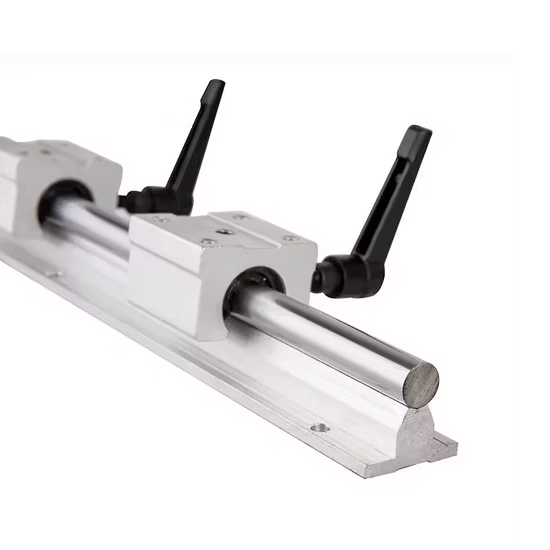
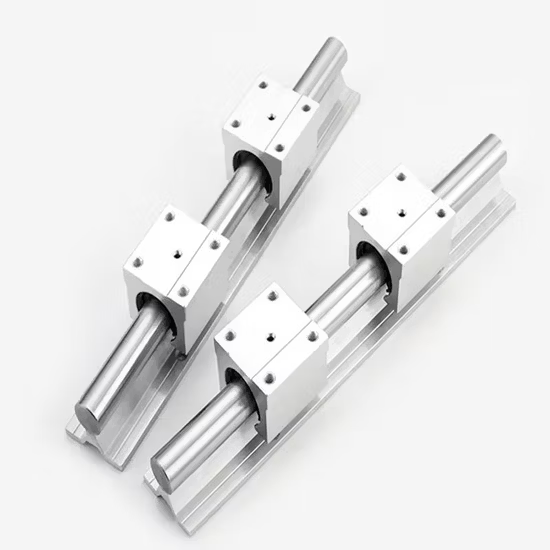
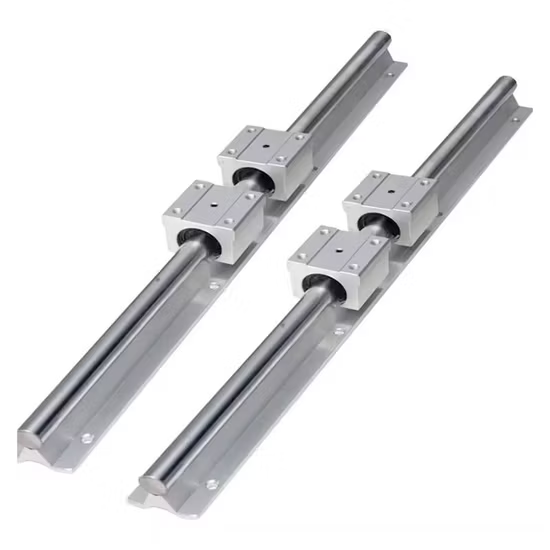
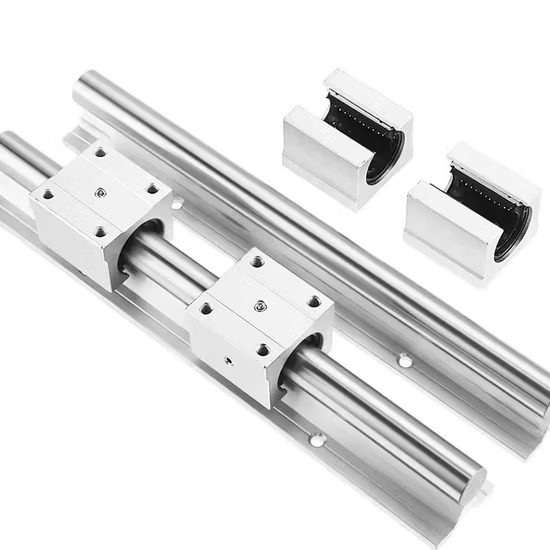
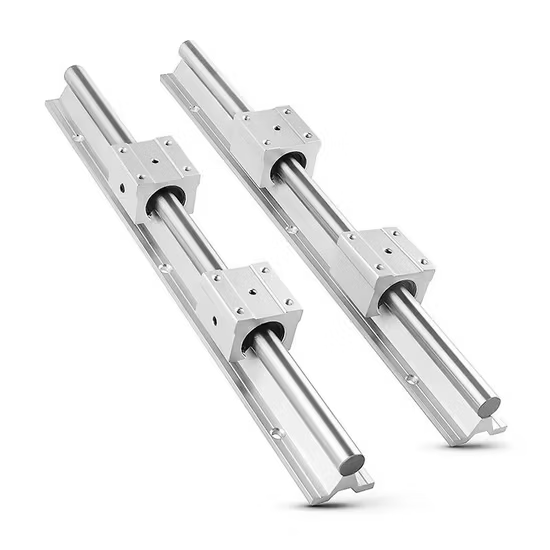
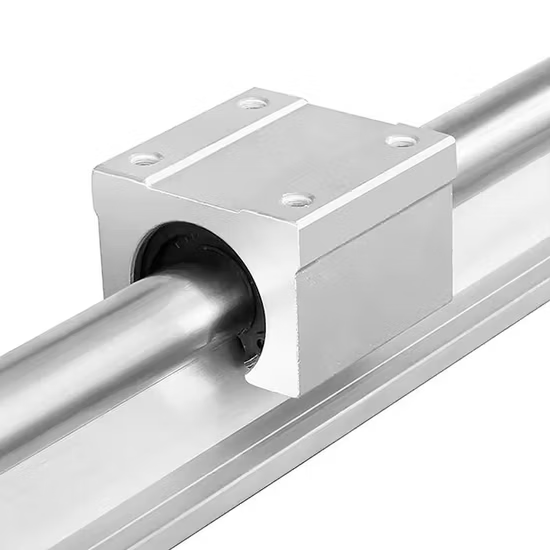
SBR10 Sbr12 Sbr16 Sbr20 Linear Guide Rail with Slide Block — polished stainless steel hollow profile rails delivering high corrosion resistance and smooth high-speed operation for medical and food processing automation.
Cross-Reference Alignment — Matching the SBR10 Sbr12 Sbr16 Sbr20 linear guide rail with slide block requires verifying shaft diameter, slider internals, and precision suffixes simultaneously to prevent binding.
| Parameter | Value |
|---|---|
| Designation | SBR10 Sbr12 Sbr16 Sbr20 |
| Product Type | Linear Guide Rail with Slide Block |
| Material Options | Stainless steel or standard bearing steel variants |
| Profile Type | Hollow Profile |
| Surface Treatment | Polished |
| Precision Rating | P0, P6, P5, P4, P2 |
| Feature | High Speed, Low Voice |
| Corrosion Resistance | High Corrosion Resistance |
| Length | Custom Length |
| Certification | CE, ISO 9001:2000, ISO 9001:2008, RoHS |
| Origin | Germany, Japan, Sweden, Malaysia, China |
| Industry | Typical Applications |
|---|---|
| Food Processing | Washdown conveyors, automated sorting arms, packaging sealing stations |
| Medical Equipment | MRI patient tables, automated laboratory liquid handlers, surgical robotic arms |
| Industrial Automation | High-speed pick-and-place gantries, cleanroom assembly fixtures, laser cutting beds |
Surface finish alone cannot prevent failure if the internal slider components lack matching corrosion resistance.
Procurement teams often specify polished stainless steel rails for food processing or medical applications, assuming the entire SBR10 Sbr12 Sbr16 Sbr20 linear guide rail with slide block assembly will survive harsh washdowns. However, if the internal slide block components, such as the recirculation caps or retaining clips, are made from standard carbon steel, localized galvanic corrosion occurs rapidly. This mismatch leads to pitting inside the slider, generating metallic debris that scores the polished rail surface and causes catastrophic jamming during high-speed reciprocation .
Selecting the correct SBR10 Sbr12 Sbr16 Sbr20 linear guide rail with slide block for hygienic environments demands more than checking the base designation. The hollow profile design reduces the overall moving mass, allowing faster acceleration in pick-and-place automation without overloading the drive motors. When sourcing these components, verifying that the slide block internals and end seals are fully compatible with the stainless steel rail prevents premature degradation during aggressive chemical cleaning cycles.
Automated gantries and medical positioning tables subject linear guides to continuous high-speed reciprocation and moment loads. The hollow profile construction maintains structural rigidity while minimizing inertia, but the internal ball recirculation paths must be precisely engineered to handle the transition forces. Inadequate lubrication retention or poorly matched internal clearances generate excessive friction heat, degrading the lubricant and increasing acoustic noise. Proper seal selection is critical to retain grease while excluding fine particulate matter common in packaging and assembly environments .
The SBR prefix identifies the supported round rail linear guide series, while the numerical suffixes 10, 12, 16, and 20 denote the nominal shaft diameter in millimeters. This diameter directly dictates the load-carrying capacity and the physical envelope of the mating slide blocks. The available precision ratings, ranging from P0 up to P2, define the dimensional tolerances and running accuracy of the assembly. Selecting a P4 or P2 class is essential for medical imaging tables requiring micron-level positioning, whereas P0 or P6 suffices for general material handling conveyors where extreme precision is unnecessary.
Substituting a slide block based solely on the rail diameter without verifying the internal ball circuit geometry or precision class leads to severe operational penalties. A mismatched block creates uneven load distribution across the recirculating elements, accelerating localized fatigue and spalling. According to failure analysis frameworks, this type of improper assembly matching results in unplanned downtime, voided equipment warranties, and secondary damage to the driven machinery .
Sourcing the SBR10 Sbr12 Sbr16 Sbr20 linear guide rail with slide block from an authorized multi-brand network ensures that cross-references account for internal slider geometry, not just external dimensions. We verify that the specified hollow profile and polished surface treatments are backed by genuine material test reports, preventing the installation of soft inner rings that fail under load. Our technical review aligns the precision suffix and seal type with your specific speed and contamination profile, eliminating the guesswork that causes field failures.
To ensure the SBR10 Sbr12 Sbr16 Sbr20 linear guide rail with slide block meets your exact operational demands, please provide the specific radial and moment loads, maximum traverse speeds, and environmental exposure details. Sharing the OEM equipment number or existing cross-reference designations allows our engineering team to verify internal slider compatibility and precision suffix alignment. This technical review guarantees that the selected hollow profile and material options will deliver reliable service life in your specific automation or medical application.
Q: How do I select the correct precision rating for my automation equipment?
A: The required precision rating depends on the positioning accuracy and speed of your application. For high-speed pick-and-place gantries or medical imaging tables requiring micron-level repeatability, P4 or P2 classes are necessary to minimize running error. For standard packaging conveyors or storage systems where extreme accuracy is not critical, P0 or P6 ratings provide a cost-effective solution while maintaining reliable load capacity and structural rigidity.
Q: What is the difference between stainless steel and standard bearing steel for these guides?
A: Stainless steel variants offer substantially higher corrosion resistance, making them mandatory for food processing washdown environments or medical equipment exposed to aggressive cleaning chemicals. Standard bearing steel provides higher load-carrying capacity and is suitable for dry, clean industrial automation settings. Selecting the correct material option ensures the slide block internals and rail surface survive the specific environmental contaminants present in your facility.
Q: Which parameters must align when cross-referencing different linear guide brands?
A: When cross-referencing, you must strictly align the nominal shaft diameter, the specific slide block internal geometry, and the precision suffix. Matching only the base SBR designation often overlooks differences in the recirculation cap design or seal friction, leading to thermal binding or premature wear. Verifying the exact length and mounting hole spacing is also critical to ensure drop-in replacement without modifying the machine base.
Q: How does the hollow profile design affect the performance of the linear guide?
A: The hollow profile construction significantly reduces the overall weight of the moving carriage assembly without compromising structural rigidity. This lower inertia allows automation equipment to achieve higher acceleration and deceleration rates, reducing cycle times and minimizing the load on drive motors. It is particularly advantageous in high-speed electronics manufacturing and packaging machinery where rapid, precise reciprocating movements are required.
Q: What are the lubrication requirements for linear guides in cleanroom applications?
A: Cleanroom and medical applications require specialized low-outgassing lubricants that do not release particulate matter during high-speed operation. Sealed slide blocks are typically pre-lubricated for life to prevent grease leakage, while open blocks require strict adherence to cleanroom-compatible greasing schedules. Providing your specific contamination control standards allows us to specify the correct seal type and factory lubrication to maintain ISO cleanroom classifications.
Our 5-step process ensures every order is engineered, validated, and supported for optimal performance.
Technical needs assessment
Custom specifications
Free samples for $50k+
Pre-shipment inspection
On-site & predictive
Our certified engineers respond within 24 hours with detailed technical specifications, pricing, and lead time information.