01
Consultation
Technical needs assessment



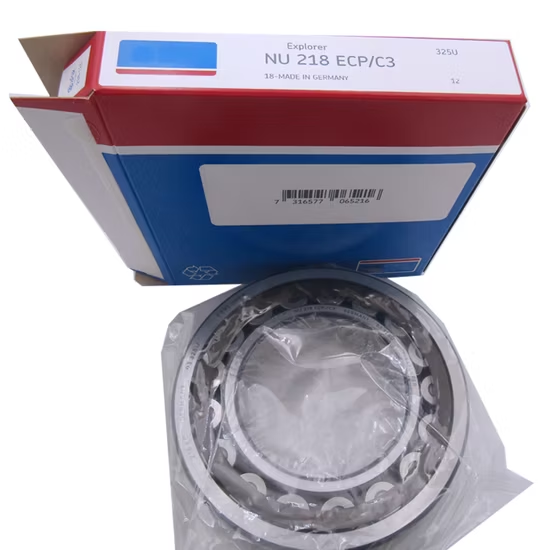


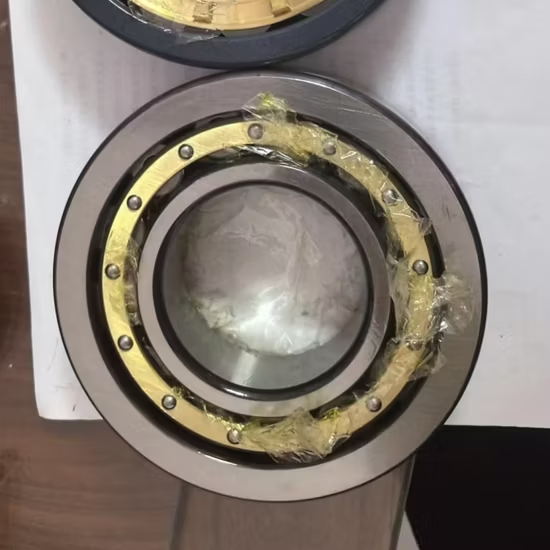
Nu 206 Ecm Cylindrical Roller Bearing — single-row design with two integral outer ring flanges and no inner ring flanges, accommodating axial displacement.
Official App QR Verification — Every Nu 206 Ecm cylindrical roller bearing ships with scannable batch codes linking directly to the manufacturer's authenticity database.
| Parameter | Value |
|---|---|
| Designation | Nu 206 Ecm |
| Bearing Type | Cylindrical Roller Bearing |
| Cage Material | Brass |
| Separable Design | Separated |
| Origin | Germany, Japan, Sweden, Malaysia, or China |
| HS Code | 8482500090 |
Note: While the Ecm suffix generally indicates a machined brass cage, exact internal design parameters for this and related unverified suffixes require specific manufacturer catalog confirmation.
| Industry | Typical Applications |
|---|---|
| Electric Motors | High-speed rotor shafts requiring low noise and thermal stability |
| Industrial Gearboxes | Heavy-duty transmission shafts subjected to high radial loads |
| Machine Tool Spindles | Precision rotating assemblies demanding rigid radial support |
| Mining and Crushing | Vibrating screen shafts and crusher eccentric mechanisms |
| Steel and Metallurgy | Continuous caster guide rolls and hot strip mill gear drives |
| Pumps | Heavy-duty centrifugal pump drive shafts handling high radial forces |
Matching the base number while ignoring the cage suffix is a direct path to catastrophic field failure.
Procurement teams often source replacements based solely on the basic designation, assuming any variant will fit the housing. I have seen entire production lines halted because a polyamide cage was swapped in where a machined brass cage was strictly required for thermal stability. When operating conditions push beyond standard limits, this粗放 substitution causes the cage to melt or fracture under high-speed friction . The resulting debris contaminates the lubricant, scoring the raceways and destroying the shaft.
Selecting the correct variant ensures the assembly survives the specific operational environment. The Nu 206 Ecm cylindrical roller bearing provides the necessary radial rigidity for heavy industrial drives. We review your exact load profiles and thermal conditions to confirm that the brass cage material and internal geometry align perfectly with the application, preventing premature wear in critical machinery.
Industrial gearboxes and motor shafts generate significant internal heat, which drastically alters the operating clearance. If the thermal expansion of the shaft and housing is not accommodated by the correct internal clearance class, the rolling elements will bind, generating even more friction and heat. High radial loads combined with misalignment demand a cage that maintains structural integrity without flexing. Proper lubrication flow is equally critical; the cage design must allow adequate oil or grease penetration to the contact zones to prevent metal-to-metal scoring .
The machined brass cage provides exceptional strength and damping characteristics, making it ideal for applications involving high speeds, heavy loads, or significant vibration. Unlike pressed steel or polyamide alternatives, brass maintains its structural rigidity at elevated temperatures and resists degradation from certain aggressive lubricants or refrigerants. The separable design of this single-row configuration, featuring two integral flanges on the outer ring and none on the inner ring, allows the inner ring to be mounted independently. This facilitates precise interference fitting on the shaft while simplifying final assembly and future maintenance inspections.
Relying on incomplete cross-references that ignore internal design variations leads to unplanned downtime and severe equipment damage. A mismatched cage material might survive initial testing but will inevitably fail under sustained operational stress, voiding equipment warranties and triggering costly emergency repairs. According to ISO 281 standards for dynamic load ratings, the actual service life drops exponentially when the internal geometry and cage guidance do not match the specific kinematic requirements of the application .
We prevent field failures by verifying that the cage material, clearance, and precision suffixes align perfectly with your specific machinery requirements. Our cross-brand interchange expertise ensures that equivalent replacements maintain the exact internal design, not just the basic outer dimensions. Every shipment includes full batch traceability, allowing your maintenance team to verify the origin and material certifications directly through official channels. We also provide application-based selection reviews to catch potential thermal or load mismatches before the components reach your facility.
To ensure the selected components meet your exact operational demands, please provide the specific radial and axial loads, operating speeds, and anticipated temperature ranges. Sharing the OEM equipment number or the exact installation space dimensions allows our engineering team to perform a comprehensive cross-reference and L10 life calculation. Detailing the environmental exposure, such as dust ingress or moisture, helps us confirm the optimal clearance and lubrication strategy for your machinery.
Q: How do the Nu and Nj flange designs affect axial load capacity?
A: The Nu design features two integral flanges on the outer ring and none on the inner ring, meaning it can only support radial loads and allows for slight axial displacement. In contrast, the Nj design has one integral flange on the inner ring, enabling it to accommodate limited axial loads in one direction. Selecting the correct configuration is critical for managing shaft expansion in gearboxes.
Q: What is the primary advantage of a machined brass cage over polyamide?
A: Machined brass cages offer superior structural rigidity, better heat dissipation, and higher resistance to vibration and aggressive lubricants. While polyamide cages are lighter and quieter, brass is essential for heavy-duty industrial gearboxes or high-temperature environments where polymer degradation could lead to sudden cage collapse and catastrophic bearing failure.
Q: How can I verify the authenticity of the received components?
A: Every package includes a unique QR code that links directly to the manufacturer's official verification application. Scanning this code confirms the batch number, production date, and origin, ensuring the components are genuine and protecting your machinery from the severe risks associated with counterfeit bearings featuring soft inner rings or cloned markings.
Q: Why is internal clearance critical for electric motor applications?
A: Electric motors generate significant internal heat during operation, causing the shaft to expand more than the housing. If the initial clearance is too tight, this thermal expansion will eliminate the operating clearance, causing the rolling elements to bind and overheat. Selecting the appropriate clearance class ensures optimal load distribution and prevents premature failure under continuous running conditions.
Our 5-step process ensures every order is engineered, validated, and supported for optimal performance.
Technical needs assessment
Custom specifications
Free samples for $50k+
Pre-shipment inspection
On-site & predictive
Our certified engineers respond within 24 hours with detailed technical specifications, pricing, and lead time information.