01
Consultation
Technical needs assessment

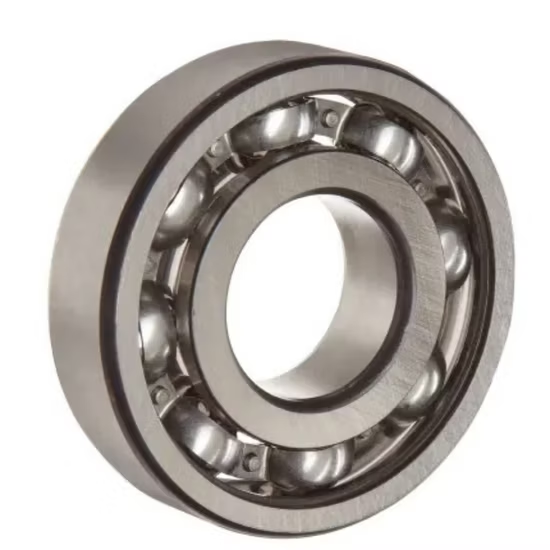


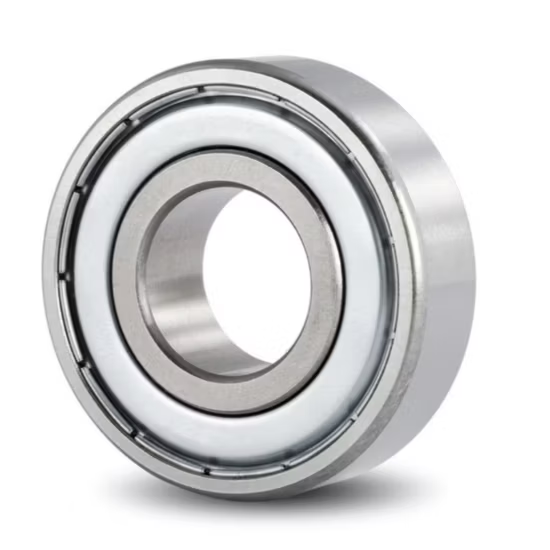
NSK 6000 Series 6200 Series 6300 Series Deep Groove Ball Bearings — versatile radial solutions for electric motors and industrial gearboxes.
Traceable NSK Batches — Every NSK 6000 6200 6300 series deep groove ball bearing ships with verifiable lot documentation linking directly to the manufacturer's production facilities.
| Parameter | Value |
|---|---|
| Designation | NSK 6000 Series 6200 Series 6300 Series |
| Bearing Type | Deep Groove Ball Bearing |
| Seal or Shield Type | Open, Rubber Seals, Iron Seals |
| Quality Level | Z1V1, Z2V2, Z3V3, Z4V4 |
| Origin | Germany / Japan / Sweden / Malaysia / China |
| HS Code | 848210 |
| Industry | Typical Applications |
|---|---|
| Electric Motors | Stator and rotor shaft support in high-speed induction and servo motors |
| Industrial Gearboxes | Input and output shaft radial support in helical and planetary reducers |
| General MRO | Conveyor pulley idlers, centrifugal pump drive shafts, and fan assemblies |
Counterfeit bearings with substandard metallurgy cause catastrophic rotor drag long before electrical components degrade.
Sourcing replacement parts for critical drive systems often involves navigating a market flooded with visually convincing clones. These counterfeit units frequently feature soft inner rings that deform under standard interference fits, leading to inner ring creep and severe shaft scoring. When procurement relies solely on base designation matching without verifying material hardness and dimensional tolerances, the resulting friction generates excessive heat. This thermal runaway not only destroys the bearing but also compromises the motor housing and rotor alignment .
Selecting the correct NSK 6000 6200 6300 series deep groove ball bearing requires balancing contamination exclusion against internal friction generation. Rubber seals provide excellent protection against dust and moisture ingress but introduce higher rotational drag, which can elevate operating temperatures in continuous-duty applications. Iron shields offer a non-contact alternative that minimizes friction while still deflecting larger particulates, making them ideal for high-speed electric motors where thermal management is critical. Open configurations allow for specialized external lubrication circuits in heavily loaded gearboxes.
Deep groove ball bearings primarily manage radial loads but also accommodate moderate axial thrust from misaligned couplings or helical gear meshing. In high-temperature environments like foundry exhaust fans or kiln drive motors, standard internal clearances will close up as the inner ring expands faster than the outer ring. Specifying the appropriate thermal clearance prevents the rolling elements from binding against the raceways. Furthermore, the choice between grease-filled sealed units and open bearings depends entirely on the maintenance schedule and the ambient contamination level of the facility .
The Z1V1 through Z4V4 quality classifications define the strictness of noise and vibration limits, with higher tiers required for precision appliances and sensitive medical equipment where acoustic emissions must be minimized. The sealing architecture dictates the maintenance lifecycle: rubber-sealed variants are pre-lubricated for life and must never be subjected to high-pressure washdowns that could force water past the lip, while iron-shielded versions rely on tight non-contact labyrinth gaps to retain grease without adding rotational torque. Understanding these suffix distinctions ensures the selected unit aligns perfectly with the equipment's acoustic and environmental demands.
Deploying unverified bearings in production machinery inevitably leads to unplanned downtime and secondary equipment damage. When a counterfeit bearing experiences premature fatigue spalling, the resulting metallic debris circulates through the lubricant, accelerating wear on adjacent gears and seals. This cascading failure mode voids equipment warranties and forces maintenance teams into emergency rebuilds. Adhering to standardized failure analysis frameworks highlights that material defects and dimensional inaccuracies are primary drivers of early lifecycle termination .
Our distribution model eliminates the guesswork from sourcing NSK 6000 6200 6300 series deep groove ball bearing units by enforcing strict channel controls. We address the rampant issue of cloned QR codes by providing direct access to official brand verification applications that validate the exact production batch. Cross-referencing is never limited to basic dimensions; we verify that the internal clearance and cage materials match the original equipment manufacturer's specifications. This technical scrutiny prevents the common error of installing standard clearance units in high-heat applications, ensuring every replacement performs exactly as engineered.
To ensure optimal performance, we require detailed operational parameters to validate your selection. Providing specific radial and axial load profiles, operating speeds, and ambient temperature ranges allows our technical team to confirm the appropriate internal clearance and quality level. If you are replacing an existing unit, sharing the original equipment manufacturer's part number enables us to perform a comprehensive cross-reference check, ensuring the seal type and precision grade perfectly match your machinery's design intent.
Q: How can I verify the authenticity of my NSK bearings upon delivery?
A: You can verify authenticity by scanning the QR code on the packaging using the official NSK brand application. This digital check confirms the production batch, manufacturing origin, and distribution path, effectively filtering out counterfeit products with cloned labels that only pass superficial visual inspections.
Q: What distinguishes the rubber seal from the iron shield in these series?
A: Rubber seals provide a physical contact barrier that excels at excluding fine dust and moisture, making them suitable for harsh environments. Iron shields maintain a small non-contact gap, which minimizes rotational friction and heat generation, making them the preferred choice for high-speed electric motor applications.
Q: Why is matching the Z-level quality grade critical for certain equipment?
A: The Z1V1 through Z4V4 grades dictate the strictness of noise and vibration limits during rotation. Selecting a higher grade is essential for precision equipment, medical devices, or quiet household appliances where excessive acoustic emissions or micro-vibrations could compromise the operational stability of the entire system.
Q: How do you ensure cross-reference accuracy beyond the base number?
A: Our technical review process examines the complete suffix string, not just the base 6000, 6200, or 6300 designation. We verify that the internal clearance, cage material, and sealing configuration align exactly with the original equipment requirements, preventing thermal binding or premature cage failure in the field.
Our 5-step process ensures every order is engineered, validated, and supported for optimal performance.
Technical needs assessment
Custom specifications
Free samples for $50k+
Pre-shipment inspection
On-site & predictive
Our certified engineers respond within 24 hours with detailed technical specifications, pricing, and lead time information.