01
Consultation
Technical needs assessment



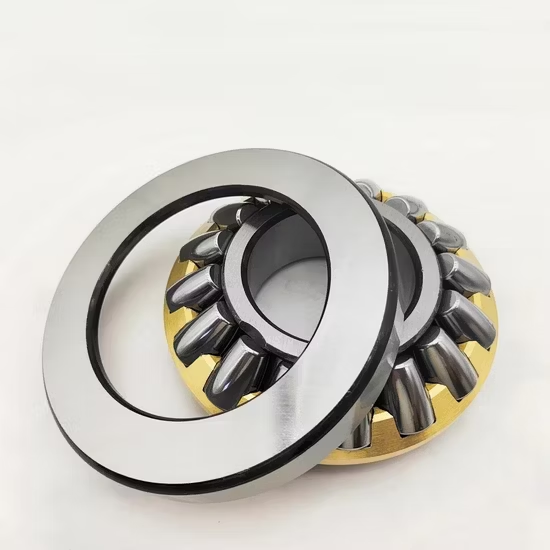
Mini Roller Thrust Bearing for Compact Hinges and Precision Instruments — single-row cylindrical structure for restricted spaces.
Verified via official apps — Every batch of these compact thrust units includes scannable QR codes linking directly to the manufacturer's authentication database.
| Parameter | Value |
|---|---|
| Product Type | Thrust Roller Bearing |
| Bore Diameter (d) | 8 mm / 10 mm / 12 mm / 15 mm options |
| Number of Rows | Single Row |
| Structure | Cylindrical or spherical thrust roller design options |
| Origin | Germany / Japan / Sweden / Malaysia / China options |
| HS Code | 8482500090 |
| Industry | Typical Applications |
|---|---|
| Hardware & Architectural | Heavy-duty door hinges and pivoting architectural panels |
| Industrial Machinery | Compact gearboxes and small-scale material handling pivots |
| Precision Equipment | Instrumentation gimbals and optical alignment mounts |
Matching the bore and outer diameter without verifying the internal cage material leads to rapid structural collapse under high-speed rotation.
I once inspected a batch of micro-thrust units where the cages were stamped from soft, non-standard alloys instead of the specified hardened steel or engineered polymers. Within weeks, the cages fragmented inside the hinge assemblies, causing complete mechanical lockup. When evaluating a mini roller thrust bearing supplier, procurement teams often focus solely on the 8 mm to 15 mm bore sizes, overlooking how cage geometry and material dictate survival in tight, high-friction spaces .
Selecting the correct configuration requires balancing the axial load capacity against the physical envelope of the housing. Our engineering review ensures that the chosen single-row design aligns perfectly with the specific oscillation frequency and thrust demands of your application, preventing edge-loading on the rollers.
In compact hinge mechanisms, heat dissipation is severely restricted, meaning any friction from misaligned rollers quickly degrades the lubricant. The axial loads are often combined with minor radial misalignments, which can cause severe edge stress on cylindrical profiles if the housing is not perfectly square. Selecting the appropriate cage material and clearance class is critical to prevent thermal binding when the assembly reaches its operational temperature .
The choice between a cylindrical structure and a spherical thrust roller design fundamentally alters how the assembly handles shaft deflection. Cylindrical profiles offer high axial rigidity for precise instrument gimbals, while spherical variants accommodate slight misalignments in heavy-duty architectural hinges. Material options are equally critical; components are available in standard bearing steel for general industrial use, or martensitic stainless grades for environments with high moisture exposure.
Installing a standard clearance unit in an application that experiences rapid temperature fluctuations often results in internal preload, accelerating fatigue and causing premature spalling on the raceways. According to ISO 281 frameworks, ignoring the dynamic equivalent load in oscillating applications drastically reduces the calculated L10 life. This unplanned downtime in critical material handling pivots frequently leads to catastrophic damage to the surrounding housing and voids equipment warranties .
We address the frequent cross-reference errors where base numbers match but the internal cage material is entirely wrong for high-speed hinges. Every shipment includes batch traceability to the manufacturer, ensuring you receive the exact structural configuration required for your specific load profile. Our team verifies the country-of-origin documentation to prevent the infiltration of cloned components with soft inner rings. Furthermore, we provide application-based selection reviews to resolve conflicts between cylindrical and spherical requirements before the order is finalized.
To ensure optimal performance, please provide the specific equipment model, housing dimensions, and the exact axial loads encountered during operation. Sharing the oscillation speed and environmental conditions, such as dust or moisture exposure, allows our engineering team to determine the precise material and structural configuration. This technical review guarantees that the final selection perfectly matches your operational parameters.
Q: How do I determine the exact standard designation for my hinge application?
A: Provide the housing envelope, axial load, and oscillation speed. Our engineering team uses these parameters to select the precise bore size, cage material, and structural profile. We then cross-reference these requirements against manufacturer catalogs to identify the exact designation that matches your operational constraints.
Q: What are common failure modes in high-speed pivot applications?
A: In compact pivots, inadequate heat dissipation often leads to lubricant degradation and cage fragmentation. If the cage material is mismatched for the rotational speed, the rollers can skew, causing rapid wear and eventual mechanical lockup. Proper clearance selection and material verification are essential to prevent these thermal and structural failures.
Q: How do cylindrical and spherical thrust roller designs differ in performance?
A: Cylindrical structures provide high axial rigidity and are ideal for precision instruments requiring strict alignment. Spherical thrust roller designs feature self-aligning capabilities, making them suitable for heavy-duty hinges where slight shaft deflections or housing misalignments are unavoidable. The choice depends entirely on the structural stability of your surrounding assembly.
Q: How can I source authentic replacements if the original OEM parts are discontinued?
A: Share the original equipment parameters and the obsolete designation with our team. We analyze the load, speed, and dimensional requirements to identify direct functional equivalents from our authorized brand network. This ensures you receive a genuine, fully traceable replacement that meets or exceeds the original performance specifications.
Our 5-step process ensures every order is engineered, validated, and supported for optimal performance.
Technical needs assessment
Custom specifications
Free samples for $50k+
Pre-shipment inspection
On-site & predictive
Our certified engineers respond within 24 hours with detailed technical specifications, pricing, and lead time information.