01
Consultation
Technical needs assessment

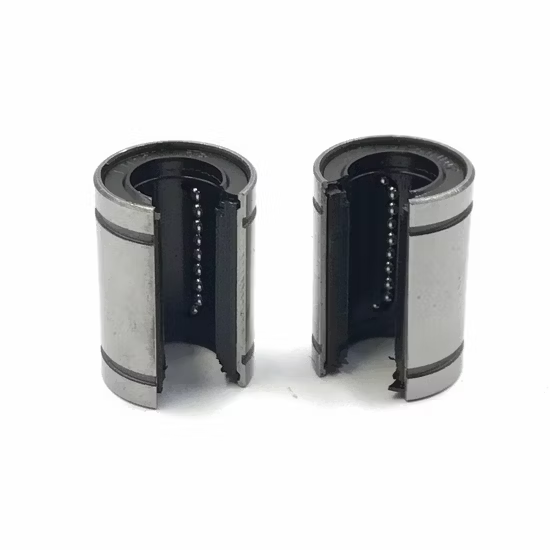

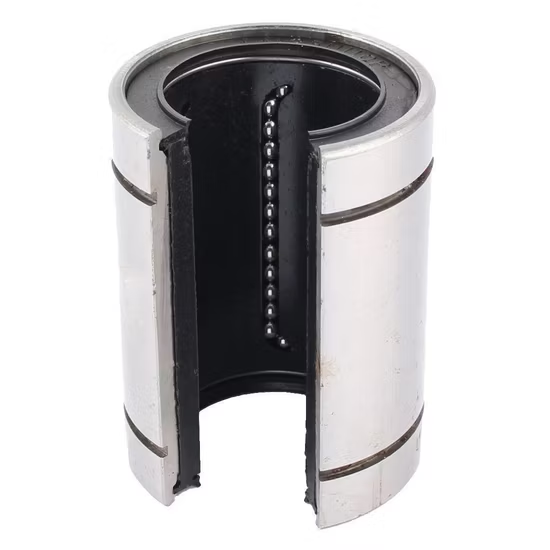
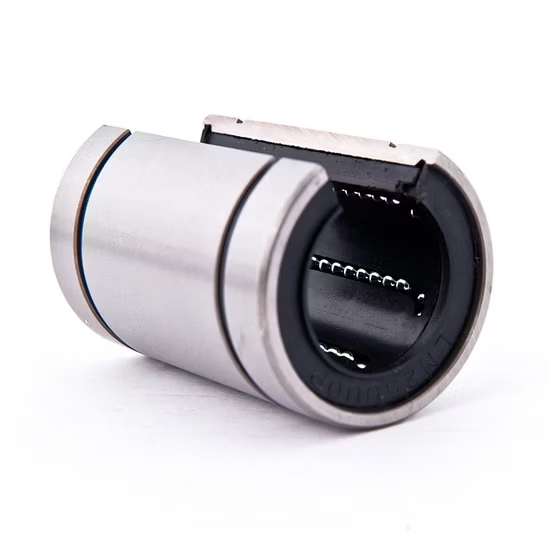

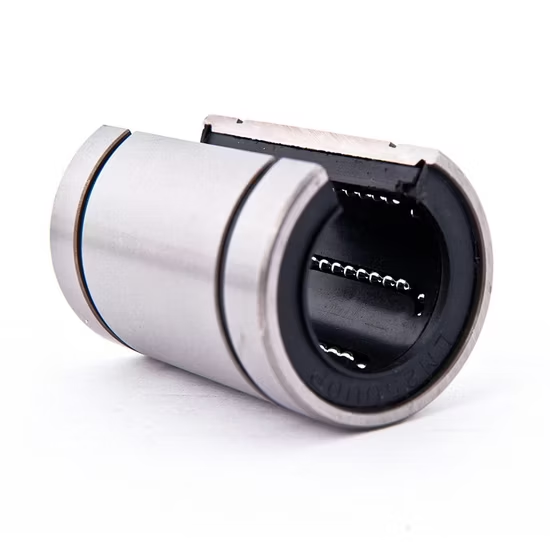
Lme20-Op Open Linear Bearing features an open shape for adjustable clearance and a nylon cage for smooth, low-noise operation.
Multi-Brand Authorized Coverage — Source mixed-brand linear motion components in a single shipment without coordinating multiple vendors.
| Parameter | Value |
|---|---|
| Designation | Lme20-Op |
| Product Type | Linear Bearing |
| Shape | Open |
| Material Options | Bearing steel or stainless steel variants |
| Cage Material | Nylon |
| Precision Class | P0, P6, P5, P4, P2 |
| Feature | High temperature, high speed, low voice |
| Origin | Germany, Japan, Sweden, Malaysia, China |
Note: The specific suffixes in this designation require manufacturer catalog confirmation for exact dimensional tolerances.
| Industry | Typical Applications |
|---|---|
| Automation & Robotics | Multi-axis Cartesian robot gantries and pick-and-place sliding modules |
| Machine Tools | CNC router spindle traversal carriages and precision grinding tables |
| Packaging Machinery | High-speed linear indexing conveyors and sealing press guide rails |
| 3D Printing | Heavy-duty extruder carriage guide systems requiring adjustable clearance |
Ignoring the open-profile clamping mechanics causes immediate carriage jamming.
In automated assembly environments, a significant share of premature linear motion failures stems from cross-reference errors that match the base bore size but overlook the housing split design. When procurement teams source standard closed units instead of the required open variants, the necessary preload adjustment is impossible, leading to severe shaft binding. I have seen entire production lines halt because a basic model substitution ignored the housing split, causing the carriage to seize under thermal expansion . Sourcing the exact Lme20-Op linear bearing ensures the housing can be properly clamped to achieve the precise running clearance your specific shaft tolerance demands.
The open housing design is critical for applications where shaft deflection or thermal growth requires fine-tuned preload control. By utilizing the Lme20-Op linear bearing, engineers can adjust the clamping force directly on the shaft to eliminate play without inducing excessive friction. Our technical review process verifies that the selected open-profile units align perfectly with your automation load requirements, preventing the micro-vibrations that degrade positioning accuracy in high-speed pick-and-place operations.
High-speed linear motion generates substantial friction heat, which drastically alters the internal clearance between the recirculating balls and the shaft. If the cage material cannot withstand these elevated temperatures, it deforms and causes catastrophic carriage lock-up. Furthermore, the absence of integrated seals in open designs means the system relies heavily on external lubrication schedules and environmental shielding. Properly managing the lubrication film thickness and preventing particulate ingress are essential to maintaining the low-voice operation required in sensitive testing and medical equipment environments .
The nylon cage construction is specifically engineered to minimize acoustic noise and reduce the overall moving mass of the carriage, which is vital for rapid acceleration and deceleration cycles. This polymer material provides excellent self-lubricating properties at high speeds but requires careful monitoring when operating continuously at elevated temperatures. Selecting the appropriate precision class, ranging from standard P0 up to ultra-precise P2, directly dictates the dimensional stability of the linear motion. Higher precision grades ensure that the ball circulation paths maintain strict geometric tolerances, preventing the uneven load distribution that typically accelerates raceway wear.
Failing to correctly adjust the clamping force on an open-type housing results in either excessive play or severe over-preloading. According to failure classification frameworks, over-preloading rapidly exhausts the fatigue life of the recirculating elements, leading to sudden carriage seizure and catastrophic damage to the drive motors. Conversely, insufficient clamping allows micro-movements that destroy the positioning accuracy of CNC machinery, resulting in scrapped parts and voided equipment warranties. These hidden costs far exceed the initial savings of bypassing a thorough technical selection review .
Our distribution network eliminates the risk of receiving counterfeit linear guides with soft inner rings that fail under minimal load. We verify every cross-reference to ensure the open housing geometry and nylon cage specifications match your exact application parameters, rather than just supplying a generic bore size. Each shipment includes comprehensive batch traceability, allowing your maintenance team to track the origin and material certifications of every unit. This strict verification process ensures that the high-speed and high-temperature capabilities of the components are genuinely backed by the manufacturer's metallurgical standards.
To ensure optimal performance, please provide your specific radial and axial load profiles, maximum travel speeds, and operating temperature ranges. Supplying the OEM equipment number or the exact shaft tolerance class allows our engineering team to perform a comprehensive cross-reference review and calculate the expected L10 life. We will confirm the precise clamping torque requirements and recommend the optimal external lubrication interval for your specific application environment.
Q: How do I verify the authenticity of the linear bearing using official brand tools?
A: You can verify authenticity by scanning the QR code on the packaging using the manufacturer's official mobile application. This confirms the batch origin and material specifications, ensuring you receive genuine components with the correct nylon cage and bearing steel construction, completely eliminating the risk of counterfeit products with substandard metallurgy.
Q: What cross-reference checks are critical beyond the base model number?
A: Beyond the base bore size, you must verify the housing shape, specifically confirming the open-profile design for adjustable clearance. It is equally critical to check the cage material and the exact precision class to ensure the component can handle your specific high-speed and thermal expansion requirements without causing carriage binding.
Q: How do I select the correct precision class for high-speed automation?
A: High-speed automation typically requires tighter geometric tolerances to prevent vibration and uneven load distribution. While standard classes suffice for basic transport, precision applications like CNC spindles or robotics demand higher grades to maintain positioning accuracy and ensure smooth, low-voice operation during rapid acceleration and deceleration cycles.
Q: What are the mounting best practices for open-type linear bearings?
A: When mounting open-type units, it is essential to tighten the clamping screws gradually and evenly to apply uniform preload on the shaft. This prevents housing distortion and ensures smooth linear travel. Always follow the specific torque specifications to avoid over-preloading, which drastically reduces fatigue life and causes premature failure.
Our 5-step process ensures every order is engineered, validated, and supported for optimal performance.
Technical needs assessment
Custom specifications
Free samples for $50k+
Pre-shipment inspection
On-site & predictive
Our certified engineers respond within 24 hours with detailed technical specifications, pricing, and lead time information.


