01
Consultation
Technical needs assessment


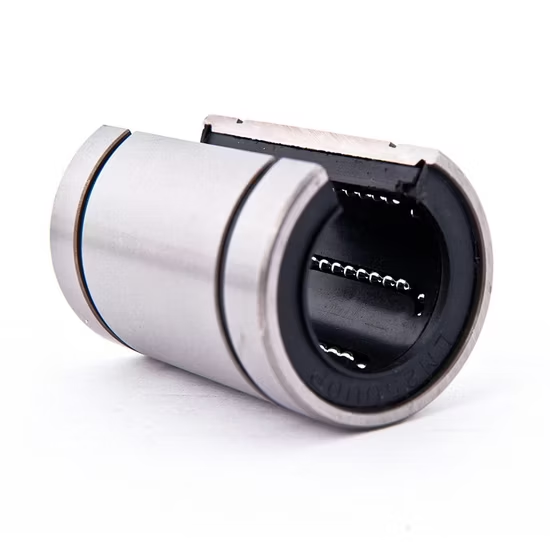
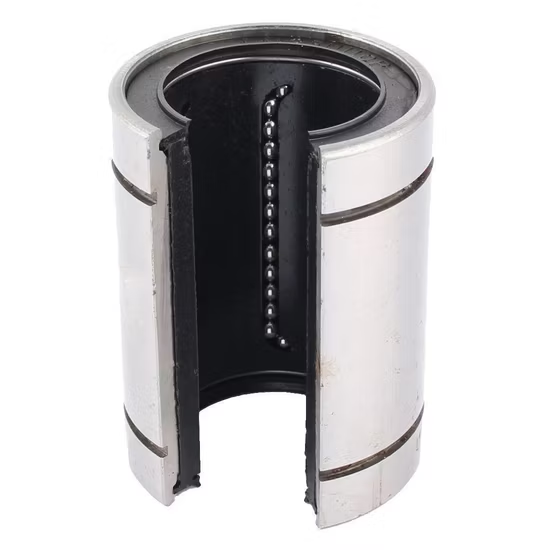
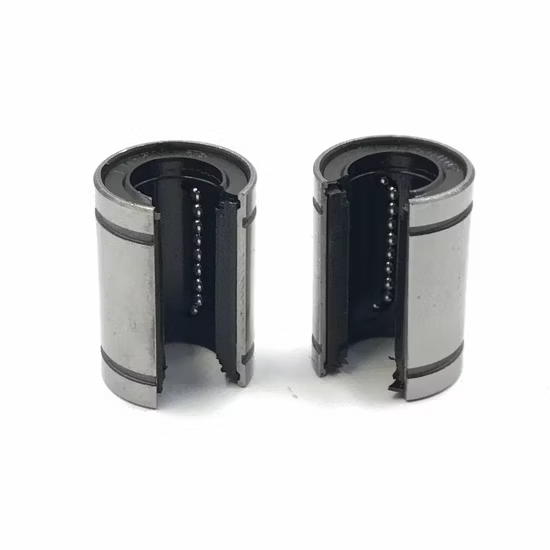


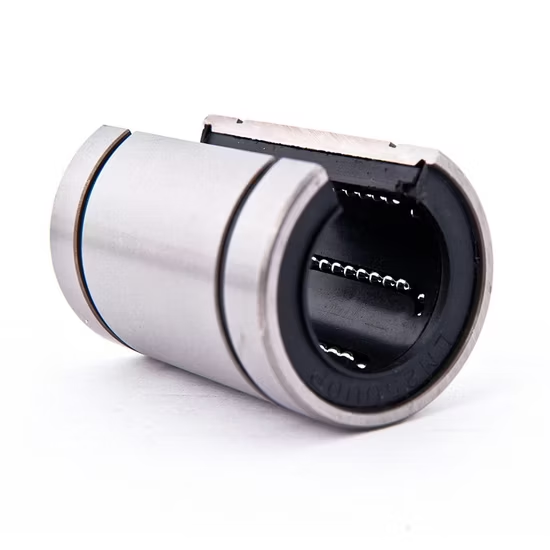
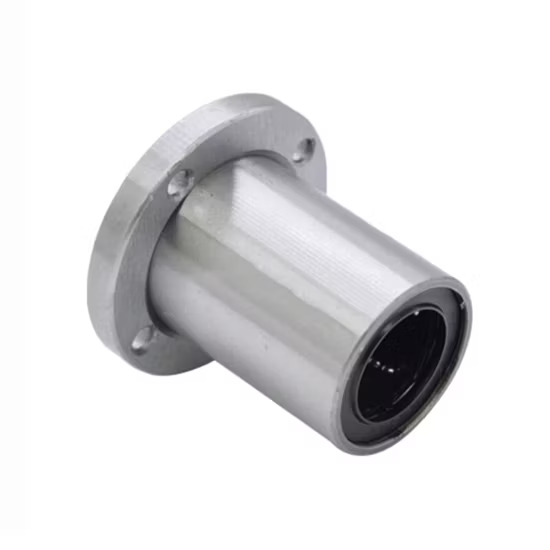
Lm12-Aj Open Linear Bearing P0-P2 — Constructed from bearing steel, this open-type unit allows precise clearance adjustment on shafts. The nylon cage reduces friction noise, supporting high-speed automation across P0 to P2 precision grades.
Cross-reference triple alignment — verifying base number, open shape, and adjustable suffix prevents assembly failure in linear guides.
| Parameter | Value |
|---|---|
| Designation | Lm12-Aj |
| Bearing Type | Linear Bearing |
| Shape | Open |
| Flange Shape | Circular |
| Series | LM |
| Material | Bearing Steel |
| Cage Material | Nylon |
| Precision Rating | P0, P6, P5, P4, P2 |
| Feature | High Speed, Low Voice |
Note: AJ is an unverified suffix requiring manufacturer catalog confirmation, typically indicating an open adjustable clearance design in linear motion systems.
| Industry | Typical Applications |
|---|---|
| CNC Machine Tools | Spindle linear guide mechanisms |
| Industrial Automation | High-speed reciprocating pick-and-place axes |
| Precision Measuring Instruments | Optical scanning linear stages |
| 3D Printers | Extruder carriage smooth rod guides |
Matching the core designation while ignoring the open shape and adjustable suffix leads to rapid thermal binding.
Procurement teams frequently source replacement parts by matching the base number alone, assuming dimensional equivalence guarantees operational success. In high-speed reciprocating applications, ignoring the specific structural suffix means the replacement cannot be preloaded correctly within the housing. This mismatch causes the carriage to either run with excessive play or bind tightly against the shaft as friction heat builds up, resulting in catastrophic guide seizure rather than gradual wear .
Sourcing the correct Lm12-Aj open linear bearing requires looking beyond basic outer dimensions to evaluate how the carriage interacts with the housing. Our technical review process ensures that the open slit and flange geometry perfectly match your specific clamping mechanism. This precise alignment allows maintenance teams to dial in the exact preload required for smooth, zero-backlash travel across the entire stroke length.
Linear guides in automated machinery face relentless reciprocating cycles that generate significant friction heat. At elevated speeds, standard lubrication films can break down, leading to direct metal-to-metal contact between the balls and the shaft. The nylon retainer minimizes moving mass and reduces operational noise, but it requires careful consideration of the operating environment to avoid degradation from harsh chemical coolants or excessive ambient heat .
The open shape is engineered specifically for housings with adjustable clamping screws, enabling micro-adjustments to the internal clearance. This structural feature compensates for minor shaft deflections and ensures uniform load distribution across all ball circuits. Paired with a lightweight nylon cage, the design maintains consistent ball spacing and minimizes inertial forces during rapid directional reversals, which is critical for maintaining positioning accuracy in automated machinery.
Installing a closed or non-adjustable variant in a housing designed for an open bearing voids the equipment warranty and risks immediate mechanical failure. According to industry failure analysis frameworks, improper preload adjustment is a primary driver of premature guide degradation . The resulting unplanned downtime and potential damage to the precision ground shaft far exceed the initial cost of sourcing the exact specified variant.
Counterfeit linear bearings often feature soft inner rings that deform under clamping pressure, ruining the adjustable feature entirely. We supply fully traceable components with batch verification to ensure the bearing steel meets original hardness specifications. Our cross-reference checks validate not just the base number, but the exact flange shape and structural suffix, eliminating the risk of receiving a visually similar but functionally incompatible part.
To ensure optimal performance and longevity, please provide the radial and axial loads, maximum travel speed, and operating temperature range. Sharing the specific OEM equipment number or housing drawing allows our engineering team to verify the cross-reference and confirm the exact preload requirements for your application.
Q: Why does the base number match but the replacement still fails to fit?
A: Base numbers often ignore critical structural suffixes. If your housing requires an open shape for clamping adjustment, installing a closed variant will physically prevent assembly. We verify the exact shape, flange type, and suffix to ensure complete mechanical compatibility with your existing guide blocks.
Q: How do different precision grades affect automated equipment performance?
A: Higher precision grades minimize dimensional variations in the ball circuits, resulting in smoother travel and tighter positioning accuracy. While general transport axes may function adequately with standard tolerances, high-speed CNC spindles and optical scanners demand tighter grades to eliminate micro-vibrations and maintain strict machining tolerances.
Q: What are the operational limits of the nylon cage in these guides?
A: Nylon retainers offer excellent noise reduction and lower moving mass, making them ideal for high-speed reciprocating axes. However, they have thermal and chemical limits. If your application involves sustained high temperatures or aggressive cutting fluids, we can evaluate alternative cage materials to prevent retainer degradation.
Q: How should the adjustable preload be set during installation?
A: Preload is adjusted via the housing clamping screws acting on the open slit. Tighten the screws incrementally while manually moving the carriage to find the optimal balance between zero backlash and smooth travel. Over-tightening will cause excessive friction and thermal binding, drastically reducing the guide lifespan.
Q: What lubrication strategy is recommended for high-frequency reciprocation?
A: High-frequency cycles require a lubricant with strong film strength and good adhesion to prevent it from being pushed out of the load zones. We recommend consulting the equipment manufacturer's specifications for the exact grease type and establishing a regular re-lubrication schedule based on the total travel distance and operating environment.
Our 5-step process ensures every order is engineered, validated, and supported for optimal performance.
Technical needs assessment
Custom specifications
Free samples for $50k+
Pre-shipment inspection
On-site & predictive
Our certified engineers respond within 24 hours with detailed technical specifications, pricing, and lead time information.