01
Consultation
Technical needs assessment

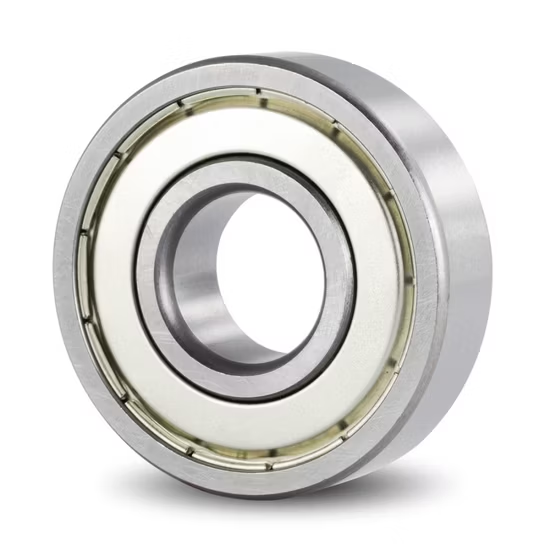
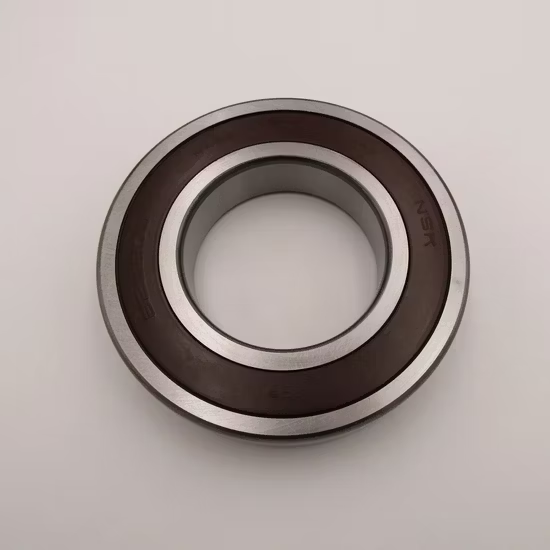


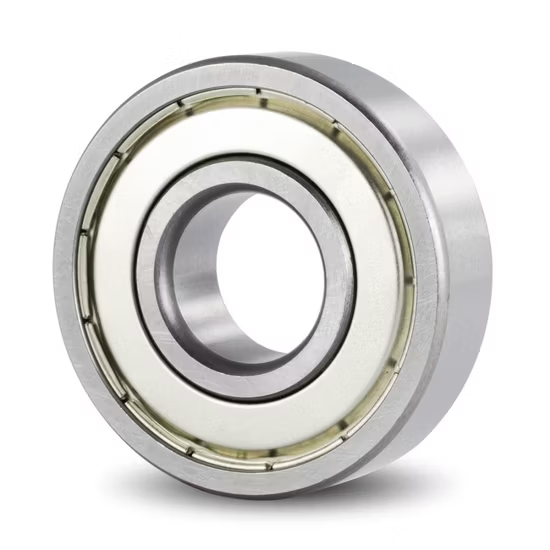
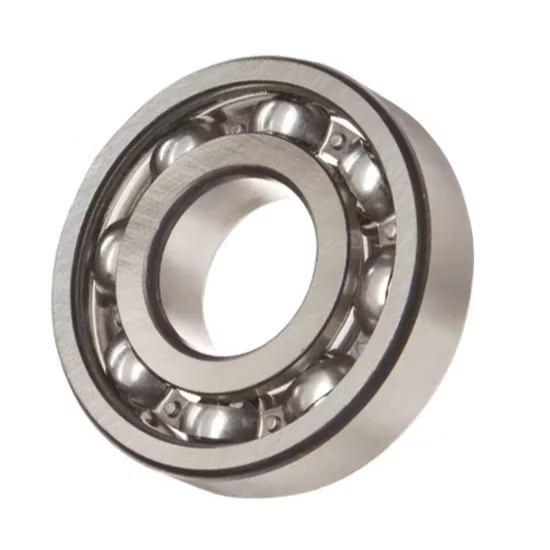
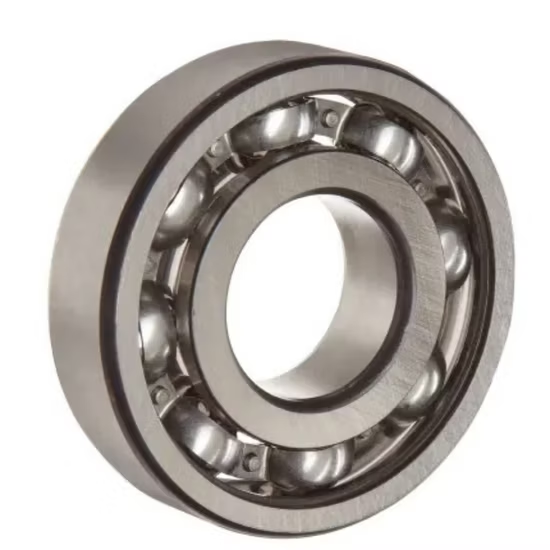
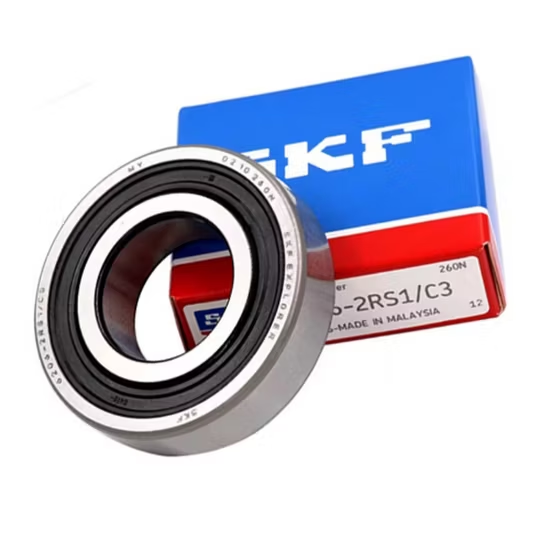
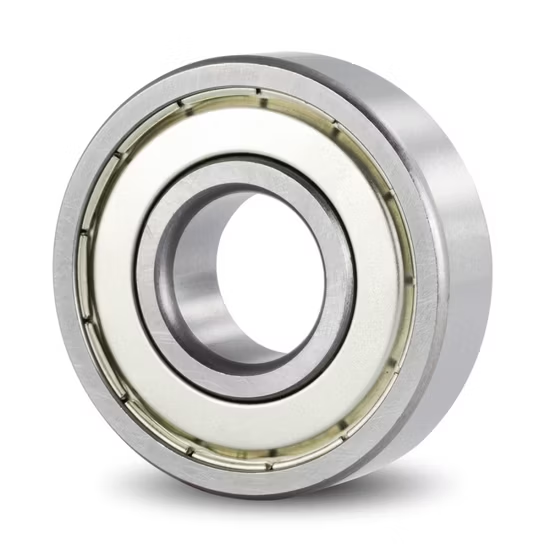
Koyo 608 Deep Groove Ball Bearing — engineered with a steel cage for reliable structural stability in electric motors and industrial gearboxes.
Unified Multi-Brand Sourcing — Consolidate your motor bearing procurement with authorized Koyo distribution alongside other major international brands, eliminating the need to coordinate with multiple vendors for mixed-line assembly requirements.
| Parameter | Value |
|---|---|
| Designation | Koyo 608 |
| Product Type | Deep Groove Ball Bearing |
| Bore Diameter (d) | 8 mm |
| Outside Diameter (D) | 22 mm |
| Width (B) | 7 mm |
| Dynamic Load Rating (C) | 3.3 kN |
| Static Load Rating (C₀) | 1.35 kN |
| Limiting Speed (Grease) | 34000 rpm |
| Limiting Speed (Oil) | 41000 rpm |
| Cage Material | Steel |
| Seal or Shield Type | Open, Rubber Seals, Iron Seals |
| Minimum Chamfer (r) | 0.3 mm |
Note: Quality grading designations such as Z1V1 through Z4V4 referenced in supplier documentation remain unverified suffixes and require official manufacturer catalog confirmation for exact noise and vibration mapping.
| Industry | Typical Applications |
|---|---|
| Electric Motors | Rotor shaft support in high-speed spindle and induction motors |
| Industrial Gearboxes | High-speed input shaft bearings in reduction gear assemblies |
| Material Handling | Conveyor roller idlers and automated sorting system drive pulleys |
| Household Appliances | Washing machine drum supports and high-speed blender motor shafts |
A structurally compromised steel cage is the primary catalyst for sudden acoustic failure in high-speed motor applications.
Years ago in the Pearl River Delta manufacturing hub, I witnessed an entire batch of electric motors face rejection due to severe noise spikes during final QA. The root cause was not the raceway geometry, but a substandard steel cage in the 608 bearings that fractured under sustained high-RPM centrifugal forces. When sourcing a Koyo 608 deep groove ball bearing, procurement teams often fixate solely on the base dimension, overlooking the metallurgical integrity of the cage and the precise noise grading required for silent operation . Counterfeit units frequently pass casual visual checks but deploy soft inner rings and fragile cages that disintegrate, turning a minor component cost into a catastrophic warranty claim.
Selecting the correct Koyo 608 deep groove ball bearing requires aligning the internal geometry with the specific acoustic and thermal profile of the motor. We review the application's operational envelope to ensure the steel cage design maintains structural stability at elevated rotational speeds. By verifying the exact sealing configuration and clearance class, we prevent the thermal binding that typically plagues generic replacements in continuous-duty motor assemblies.
Motor environments demand a careful balance between friction and protection. Iron shields offer non-contact defense against dust without generating the frictional heat associated with rubber seals, making them ideal for high-RPM zones where thermal expansion alters internal clearance. Conversely, rubber seals are mandatory in agricultural or washing machine applications where moisture ingress threatens the lubricant. Understanding how ambient temperature fluctuations affect the grease viscosity and internal clearance is critical to preventing premature cage wear .
The 8x22x7 mm footprint of this deep groove ball bearing belies the complexity of its internal tolerances. The steel cage is engineered to withstand the intense centrifugal loading inherent to 34,000 rpm grease-lubricated operation, preventing the pocket wear that leads to roller skewing. Seal selection dictates the maintenance cycle; open variants allow for custom relubrication in enclosed gearboxes, while shielded versions lock in factory-applied grease for life. The acoustic performance is heavily dependent on the surface finish of the raceways and the precision of the steel ball grading, which directly influences the vibration signature detected during motor end-of-line testing.
Installing a standard clearance bearing in an application requiring C3 clearance for thermal expansion inevitably leads to internal preload, excessive heat generation, and rapid lubricant degradation. According to ISO 281 fatigue life calculations, operating a bearing under such unintended preload conditions drastically accelerates subsurface spalling . This unplanned downtime not only halts production but often causes secondary catastrophic damage to the motor shaft and housing, voiding equipment warranties and inflating replacement costs far beyond the initial bearing price.
Our authorization across major international brands ensures that every Koyo 608 deep groove ball bearing shipped is sourced directly from the manufacturer's production facilities. We specifically audit the noise and vibration grading to ensure it matches the motor manufacturer's acoustic specifications, a detail frequently botched by unauthorized traders. Our cross-referencing process validates not just the 8x22x7 base dimensions, but confirms the exact cage material and seal type required by the OEM equipment number. Furthermore, our mixed-brand consolidation allows you to fulfill complex BOM requirements in a single shipment without compromising traceability.
To guarantee optimal performance, provide our technical team with your motor's specific radial and axial load profiles, operational RPM, and expected thermal gradients. Supplying the exact OEM equipment number or the original bearing's full suffix string allows us to execute a precise cross-reference review. This data enables us to validate the L10 fatigue life and confirm whether the standard clearance or a specific seal variant is required for your application.
Q: How do Z-series quality levels affect motor noise?
A: These designations typically map to specific noise and vibration grading standards crucial for electric motors. A higher grade indicates stricter tolerances on raceway surface finish and ball sphericity, directly reducing the acoustic signature during high-speed rotation. Always verify the exact mapping with official technical documentation to ensure it meets your motor's decibel limits.
Q: Why choose iron shields over rubber seals for high-speed applications?
A: Iron shields provide a non-contact labyrinth seal that keeps out large particulate contaminants without introducing the frictional drag of rubber lips. In high-RPM motor applications, this non-contact design prevents excessive heat generation, preserving the internal grease and maintaining the necessary thermal clearance for sustained operation.
Q: How do you verify the authenticity of the Koyo 608?
A: We supply full batch traceability documentation and advise buyers to scan the packaging QR codes using the brand's official mobile application. This digital verification confirms the manufacturing origin and rules out sophisticated counterfeits that rely on cloned visual markers but fail on internal metallurgical quality.
Q: What clearance class is required for high-temperature motor environments?
A: Motors operating at elevated temperatures or with tight shaft fits typically require a C3 or greater internal clearance to compensate for thermal expansion. Installing a standard clearance bearing in these conditions causes internal preload, leading to rapid heat buildup, lubricant failure, and premature cage destruction.
Q: Can this bearing be cross-referenced to other brands?
A: Yes, we provide precise cross-referencing to equivalent series from other major manufacturers. However, we strictly verify that the alternative matches not only the 8x22x7 mm base dimensions but also the specific steel cage design, seal type, and internal clearance to prevent unforeseen performance degradation in your equipment.
Our 5-step process ensures every order is engineered, validated, and supported for optimal performance.
Technical needs assessment
Custom specifications
Free samples for $50k+
Pre-shipment inspection
On-site & predictive
Our certified engineers respond within 24 hours with detailed technical specifications, pricing, and lead time information.