01
Consultation
Technical needs assessment


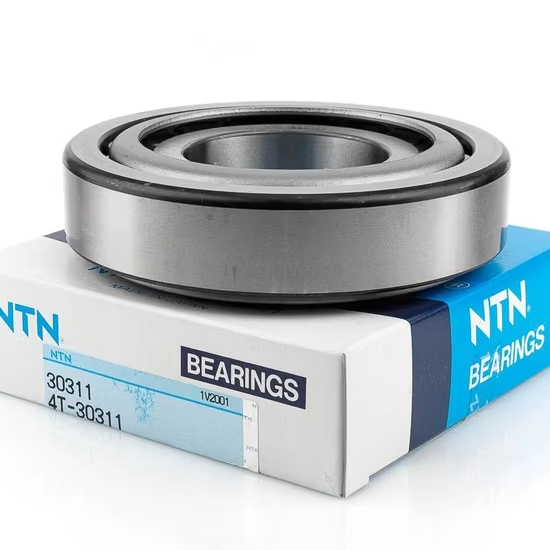
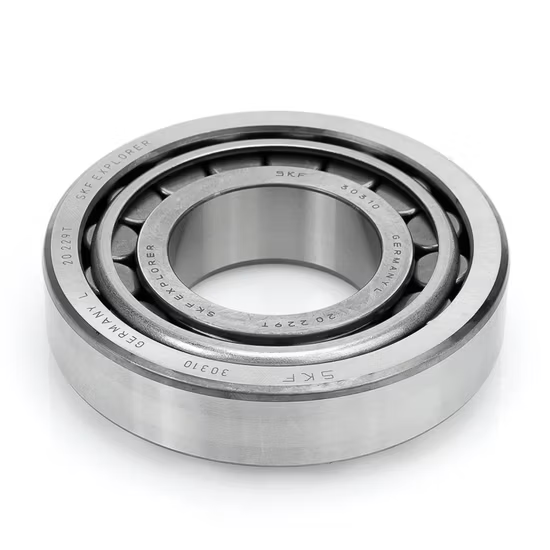

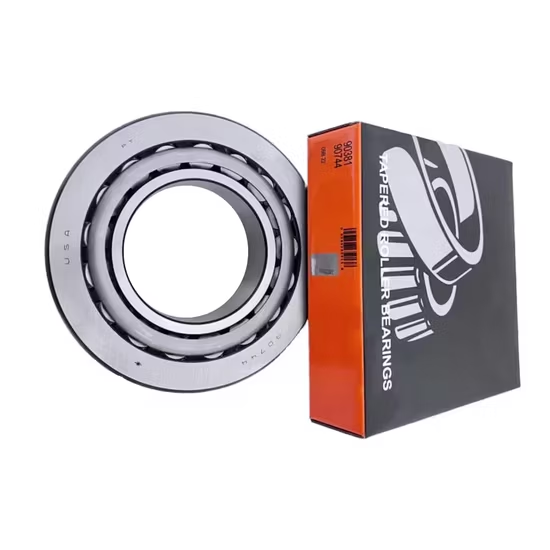
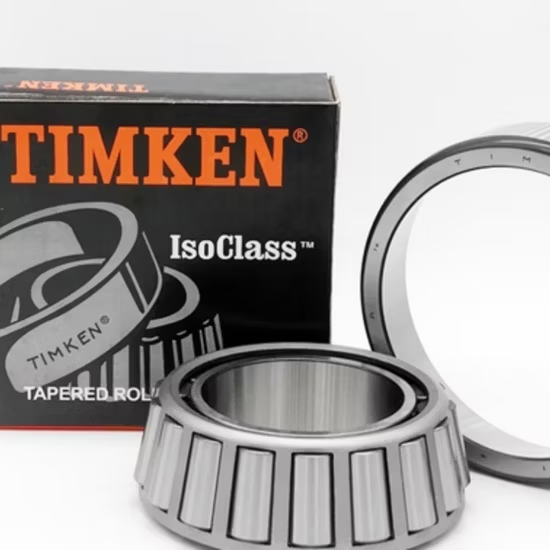
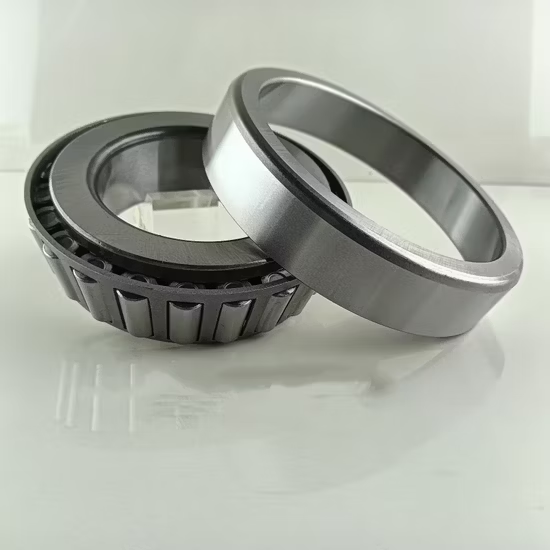
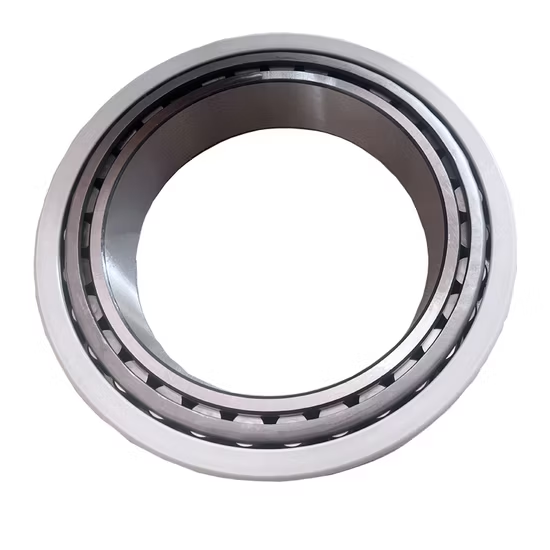
33010 Tapered Roller Bearing P4 — constructed from GCr15 steel to handle heavy radial and axial loads in wind turbines and industrial gearboxes.
Verified Origin Traceability — Every 33010 tapered roller bearing we dispatch includes verifiable batch documentation linked directly to the manufacturer's production facilities.
| Parameter | Value |
|---|---|
| Designation | 33010 |
| Bearing Type | Tapered Roller Bearing |
| Precision Class | P4 |
| Material | GCr15 bearing steel |
| Cage Material | Available in nylon, brass, or iron variants |
| Origin | Germany, Japan, Sweden, Malaysia, or China |
| Certification | ISO 9001 compliant manufacturing |
| Industry | Typical Applications |
|---|---|
| Wind Power | Main shaft support and gearbox planetary stages |
| Industrial Gearboxes | Heavy-duty speed reducer output shafts |
| Manufacturing Plants | Rotary equipment trunnion supports and conveyor drives |
Matching only the base designation ignores the critical internal geometry and precision class required for sustained operation under fluctuating loads.
I once investigated a catastrophic thermal seizure in a wind turbine gearbox where the replacement part matched the base number but lacked the necessary P4 precision and correct internal clearance. The equipment experienced severe vibration and premature cage failure because the cross-reference overlooked the specific operational demands of the planetary stage. Sourcing a 33010 tapered roller bearing requires looking far beyond the basic numeric stamp to prevent such costly unplanned downtime .
Wind turbine drivetrains subject components to immense combined loads and continuous deflection. The 33010 tapered roller bearing addresses these challenges through its P4 precision class, which ensures tighter dimensional tolerances and superior running accuracy compared to standard commercial grades. By minimizing internal geometric deviations, this precision level reduces localized stress concentrations on the roller ends, directly supporting the reliability demanded by modern renewable energy installations.
Turbine main shafts and gearbox stages endure highly variable wind loads, creating complex radial and axial force vectors that shift rapidly. These fluctuating conditions demand a bearing capable of maintaining stable lubrication films despite varying rotational speeds and operational temperatures. Proper internal clearance is vital here; if the thermal expansion of the shaft and housing is not accommodated by the correct clearance class, the rollers can skew, leading to rapid lubricant breakdown and severe friction heat generation .
The P4 precision rating (equivalent to ABEC 7) dictates strict limits on bore diameter, outside diameter, and radial runout. In high-speed or heavily loaded gearbox applications, this tight tolerance prevents the inner ring from creeping on the shaft and ensures the rollers track perfectly along the raceway. While the GCr15 material provides the foundational hardness and fatigue resistance necessary for heavy loads, it is the P4 geometric accuracy that allows the 33010 tapered roller bearing to operate smoothly without generating excessive vibration or noise under peak torque conditions.
Overlooking the exact precision class or internal design when replacing a bearing rarely results in a simple, gradual wear-out. Instead, it frequently triggers sudden, catastrophic damage to adjacent gearbox components, including gear teeth and shaft journals. Such failures inevitably lead to extended unplanned downtime and completely void equipment warranties. Adhering to the failure mode classifications outlined in ISO 15243 highlights that geometric mismatches are a primary driver of premature surface distress and eventual structural fracture .
Our procurement process specifically targets the vulnerabilities found in standard supply chains. We verify that the internal geometry and precision class of your requested part perfectly match the OEM requirements, eliminating the risk of receiving a base-number match with incorrect internal clearances. Every shipment includes full batch traceability, allowing you to verify the origin through official brand applications. Furthermore, our technical team reviews your specific load and speed parameters to ensure the selected cage material and precision grade are genuinely suited for your wind turbine or gearbox application.
To ensure the selected component perfectly matches your drivetrain requirements, please provide the specific radial and axial loads, operating speeds, and thermal conditions of your application. Supplying the original OEM equipment number allows our engineering team to perform a comprehensive cross-reference check, verifying that the internal design and precision class align exactly with your machinery. This technical review guarantees that the proposed solution addresses your unique operational challenges without relying on generic catalog assumptions.
Q: How can I verify the authenticity of the received components?
A: We provide verifiable batch and lot traceability documentation with every shipment. You can scan the QR codes on the packaging using the official brand applications to instantly confirm the manufacturing origin and authenticity. This process ensures that the high-precision components you receive are genuine products directly from the manufacturer's production facilities, completely eliminating the risk of counterfeit parts entering your critical wind turbine assemblies.
Q: Why is P4 precision necessary instead of standard P0 grade?
A: Standard P0 grade bearings possess wider dimensional tolerances that can cause excessive vibration, noise, and uneven load distribution in demanding gearbox applications. The P4 precision class ensures much tighter control over radial runout and geometric accuracy, which is essential for maintaining stable lubrication films and preventing premature surface fatigue under the heavy, fluctuating loads typical of wind turbine drivetrains and industrial speed reducers.
Q: How do I choose the correct cage material for my application?
A: Cage selection depends heavily on your specific operating speed, temperature, and lubrication conditions. Nylon cages offer excellent performance at higher speeds with lower friction, while brass cages provide superior durability and heat dissipation in heavy-load, high-vibration environments. By sharing your exact operational parameters, our technical team can recommend the optimal cage material variant to ensure reliable performance and extended service life for your specific machinery.
Q: What causes thermal seizure in correctly sized bearings?
A: Thermal seizure often occurs when the internal clearance class does not match the thermal expansion characteristics of the shaft and housing during operation. If a standard clearance is used where a C3 or C4 is required, the heat generated by operation eliminates the internal gap, causing the rollers to bind and generate catastrophic friction. Proper application-based selection review prevents this by aligning the clearance with your actual operating temperatures.
Our 5-step process ensures every order is engineered, validated, and supported for optimal performance.
Technical needs assessment
Custom specifications
Free samples for $50k+
Pre-shipment inspection
On-site & predictive
Our certified engineers respond within 24 hours with detailed technical specifications, pricing, and lead time information.