01
Consultation
Technical needs assessment

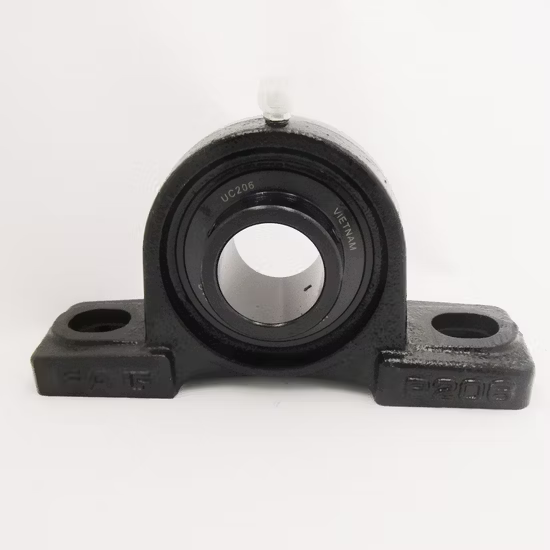
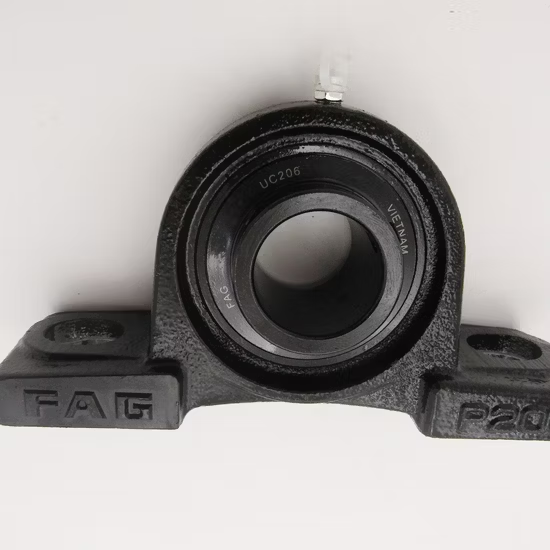
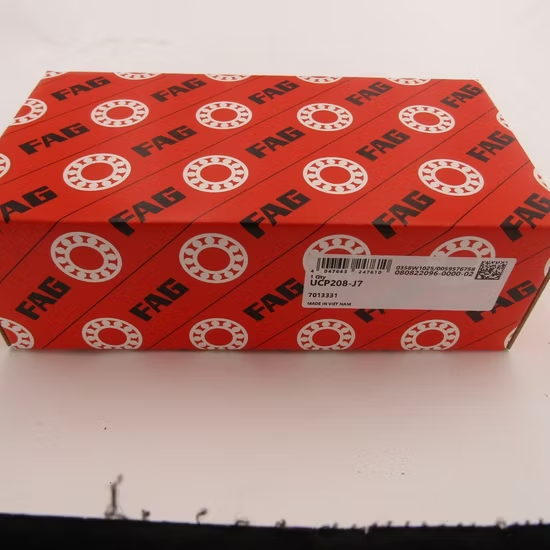
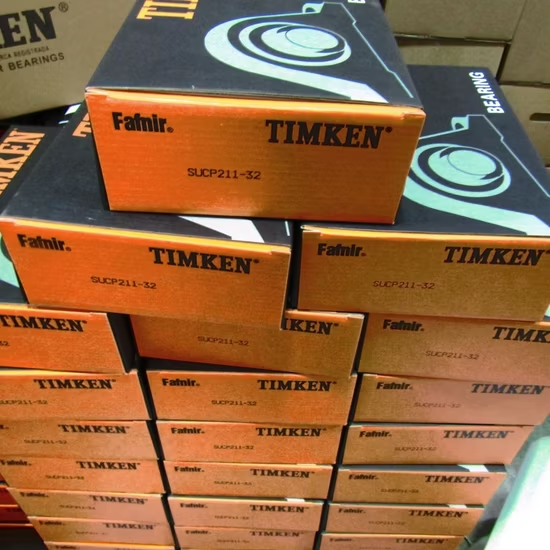
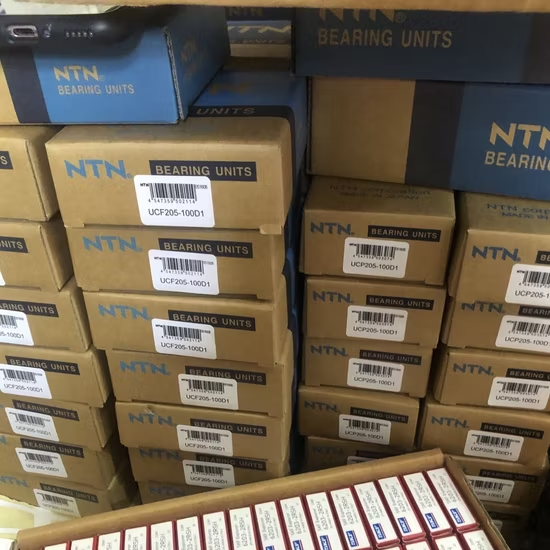
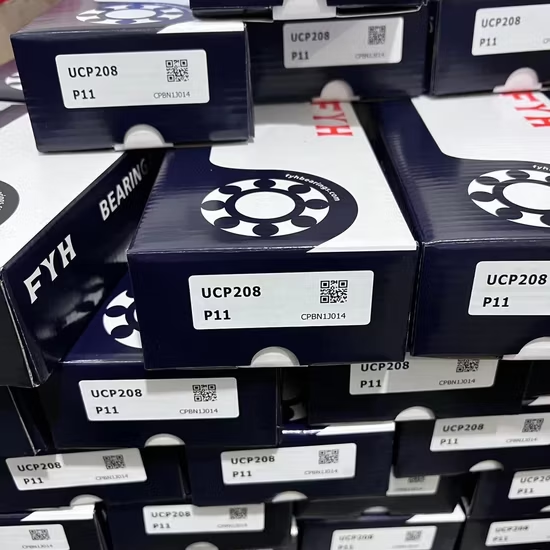
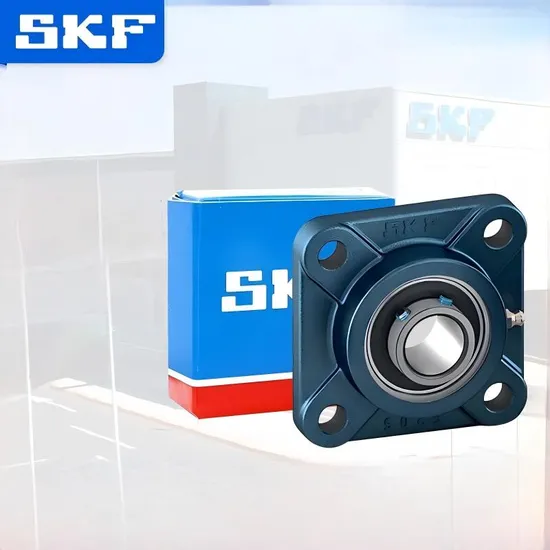
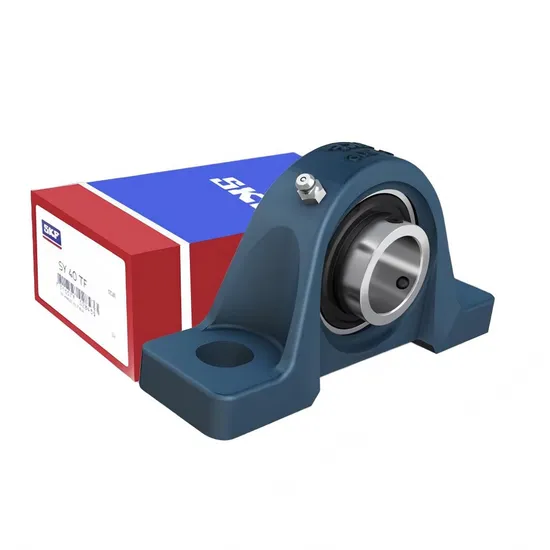
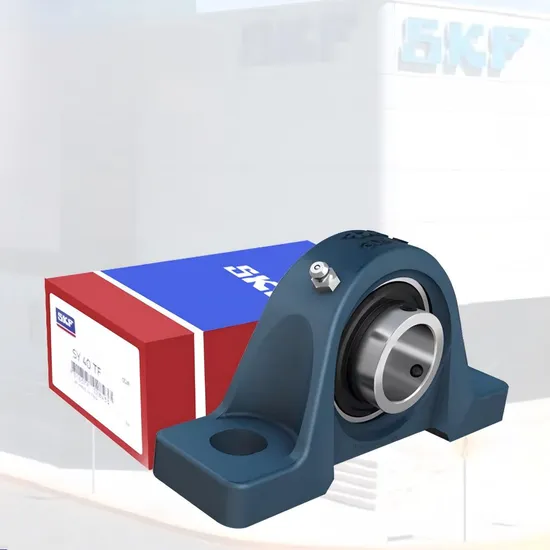
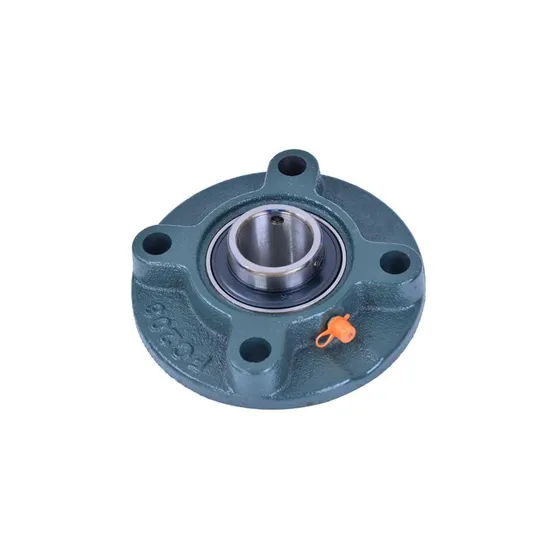
UCP210 UCP211 UCP212 UCP213 UCP214 UCP215 UCP216 Pillow Block Units feature cast iron housings for high rigidity and set screw locking for secure shaft mounting in agricultural and conveyor applications. The deep groove raceway accommodates radial loads while wide inner rings ensure stable operation.
Full Brand Authorization — Consolidate your mixed-brand requirements for UCP210 UCP211 UCP212 UCP213 UCP214 UCP215 UCP216 pillow block bearing units into a single, fully traceable shipment without juggling multiple vendors.
| Parameter | Value |
|---|---|
| Designation | UCP210 UCP211 UCP212 UCP213 UCP214 UCP215 UCP216 |
| Product Type | Pillow Block Unit |
| Bearing Type | Insert Bearing with Pillow Block Housing |
| Locking Mechanism | Set Screw Locking |
| Housing Material | Cast Iron |
| Raceway Type | Deep Groove Raceway |
| Rows Number | Single |
| Bore Type | Cylindrical |
| Housing Model | P (Pillow Block) |
| Available Features | Options available in corrosion resistant, high temperature, or high speed variants |
| Origin | Germany / Japan / Sweden / Malaysia / China |
| Industry | Typical Applications |
|---|---|
| Agricultural Machinery | Combine harvester rotor drives, tractor PTO shaft supports, planter seed metering mechanisms |
| Material Handling | Belt conveyor tail pulley mounts, bucket elevator bottom shaft bearings, roller bed idler supports |
| General MRO | Exhaust fan shaft supports, agitator drive shafts, industrial washer drum bearings |
The housing cracks long before the internal rolling elements fatigue.
When sourcing replacement units for heavy-duty conveyors or harvesting equipment, buyers often focus exclusively on the internal bearing clearance while ignoring the metallurgical integrity of the cast iron housing. A significant share of premature failures in the field stems from housings that lack the necessary structural rigidity to absorb shock loads, leading to base fractures or cap deformation . As a verified UCP210 UCP211 UCP212 UCP213 UCP214 UCP215 UCP216 pillow block bearing supplier, we ensure that every cast iron P-type housing meets strict dimensional and material standards, preventing the catastrophic misalignment that destroys the inner bearing.
Selecting the correct UCP210 UCP211 UCP212 UCP213 UCP214 UCP215 UCP216 pillow block bearing supplier is only the first step; verifying the internal design against the actual operational load is critical. The deep groove raceway design inherently handles combined radial and moderate axial loads, making it ideal for conveyor pulleys and agricultural shafts. However, when equipment experiences heavy shock loading—such as a combine harvester engaging dense crop material—the wide inner ring and set screw locking mechanism must maintain absolute grip on the shaft to prevent fretting corrosion.
Agricultural and material handling environments subject these units to severe contamination, moisture, and fluctuating temperatures. The cast iron housing provides a sturdy barrier, but the internal sealing arrangement dictates the actual service life. In dusty harvesting conditions, contact seals are necessary to block particulate ingress, though they generate additional friction heat. Conversely, in high-speed conveyor applications, non-contact shields or specialized labyrinth seals minimize thermal buildup while still deflecting bulk debris. Proper relubrication intervals must be established based on the specific grease type and the operating temperature to prevent the lubricant from breaking down or washing out during washdown cycles .
The "UCP" prefix identifies a pillow block unit featuring a cast iron housing (P) and an insert bearing with a wide inner ring and set screw locking (UC). The "2" denotes the medium-wide series, balancing load capacity with spatial constraints. The subsequent numbers, ranging from 10 to 16, represent the bore diameter size code, which must be cross-referenced precisely with the shaft dimensions. While the base designation dictates the physical envelope, the internal clearance class—such as C3 for applications involving thermal expansion or heavy press fits—is frequently overlooked. Installing a standard CN clearance unit in a high-temperature conveyor drive will cause thermal binding and rapid cage failure once the equipment reaches operating temperature.
Specifying the correct base number while ignoring the clearance, seal type, or locking mechanism suffixes leads directly to unplanned downtime. A set screw locking unit installed on a shaft subjected to severe reversing loads may gradually loosen, causing the inner ring to spin on the shaft and score the journal. Similarly, substituting a standard grease-filled unit for one requiring high-temperature synthetic lubrication will result in rapid grease degradation and catastrophic seizure. These misapplications void manufacturer warranties and force expensive emergency replacements, highlighting the necessity of rigorous technical review before procurement .
Our cross-reference methodology aligns the internal clearance, cage material, and sealing arrangement, not just the base designation. When replacing an OEM unit, we verify the exact shaft locking mechanism and housing center height to ensure drop-in compatibility. We provide full batch traceability for every brand we distribute, allowing you to verify the origin of the cast iron housing and the internal insert bearing. Our application-based selection review evaluates your specific load, speed, and temperature parameters to recommend the optimal suffix combination. Furthermore, we consolidate mixed-brand requirements into a single order, simplifying your supply chain without compromising on authenticity.
To ensure the selected UCP series units perfectly match your machinery, please provide the exact radial and axial loads, operating speeds, and ambient temperature ranges. Sharing the OEM equipment number or the original manufacturer's part number allows our engineering team to perform a precise cross-reference check. If the application involves extreme moisture or chemical exposure, detail the environmental conditions so we can verify the suitability of the sealing and housing material options.
Q: How do we verify the authenticity of multi-brand pillow block units?
A: Every unit we supply includes a Certificate of Conformity and batch traceability documentation. You can scan the QR codes on the packaging or the housing using the official mobile applications provided by the respective bearing manufacturers. This direct verification confirms the genuine origin and manufacturing date of the cast iron housings and insert bearings.
Q: What installation dimensions must align during a UCP cross-reference?
A: Beyond matching the bore diameter and basic designation, you must verify the housing center height, the distance between the mounting bolt holes, and the overall base length. Additionally, confirming the shaft locking mechanism—such as set screw versus eccentric collar—ensures the replacement unit will physically mount and function correctly on your existing shaft and baseplate.
Q: When should set screw locking be preferred over eccentric collar locking?
A: Set screw locking is ideal for applications with steady, unidirectional loads and standard shaft finishes, providing a secure and rigid grip. Eccentric collar locking is preferred for shafts subjected to severe shock loads, heavy vibrations, or frequent reversing directions, as the collar tightens automatically under load, preventing the inner ring from creeping and scoring the shaft journal.
Q: How do we determine the correct relubrication interval for agricultural equipment?
A: The relubrication cycle depends on the operating speed, ambient temperature, and the level of particulate contamination in the environment. In highly contaminated agricultural settings, more frequent purging is required to expel ingested dirt and moisture. We recommend consulting the manufacturer's relubrication charts based on your specific operational parameters to prevent grease breakdown and seal damage.
Q: What are the material selection boundaries for cast iron versus plastic housings?
A: Cast iron P-type housings offer superior structural rigidity, shock load absorption, and thermal conductivity, making them mandatory for heavy-duty conveyors and high-load agricultural drives. Plastic or composite housings are strictly limited to light-load, low-speed applications where corrosion resistance, washdown capability, and weight reduction are the primary operational requirements.
Our 5-step process ensures every order is engineered, validated, and supported for optimal performance.
Technical needs assessment
Custom specifications
Free samples for $50k+
Pre-shipment inspection
On-site & predictive
Our certified engineers respond within 24 hours with detailed technical specifications, pricing, and lead time information.