01
Consultation
Technical needs assessment


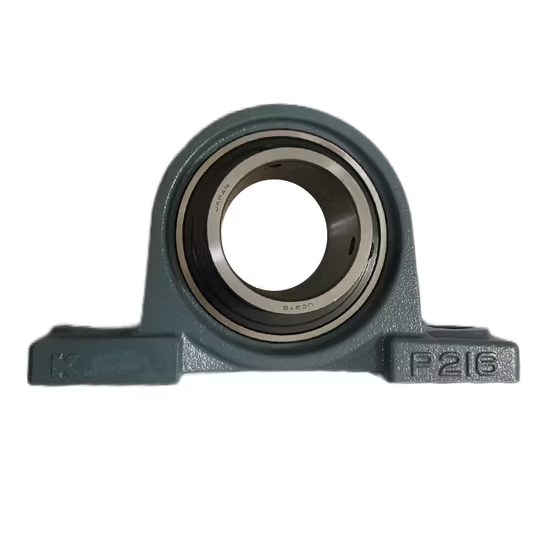

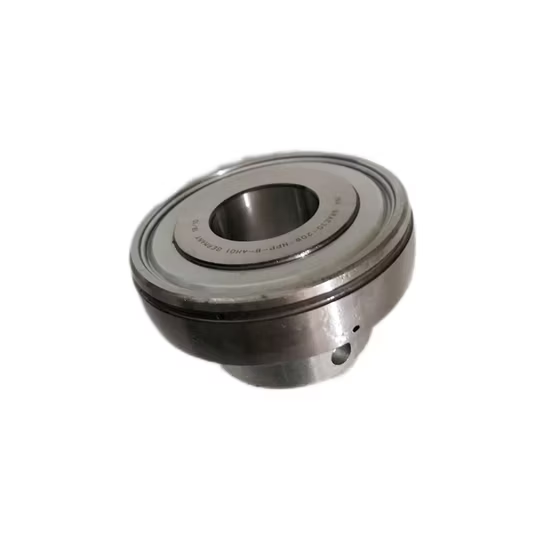
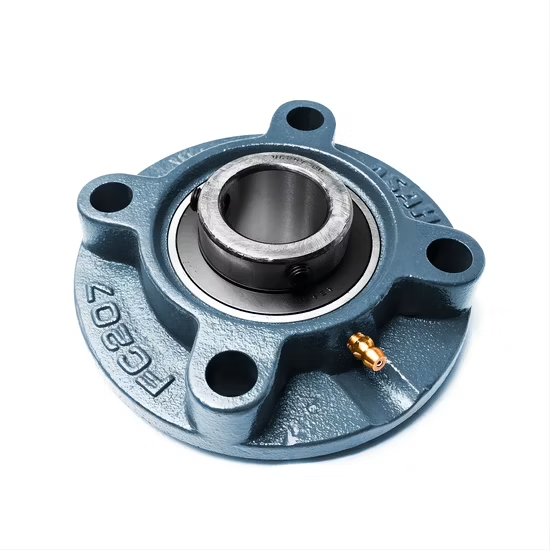
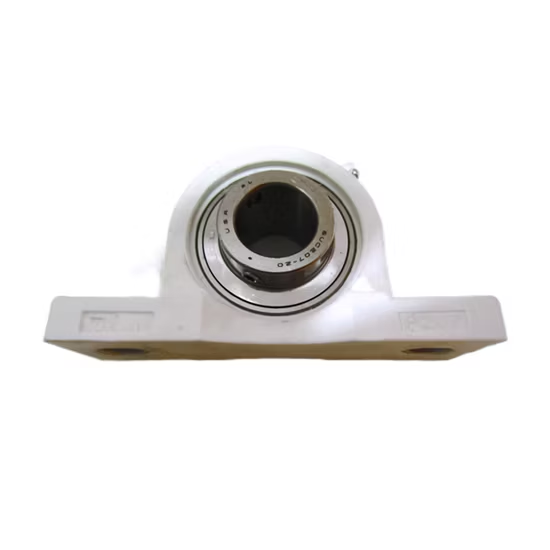
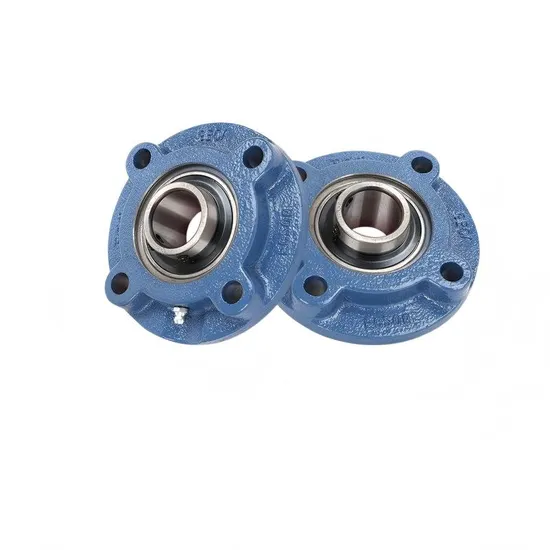
Ucf210 Ucf211 Ucf212 Ucf213 Ucf214 Ucf215 Ucf216 Ucf217 Ucf218 Pillow Block Bearings feature square flanged cast iron housings with deep groove raceways and grub screw locking for secure shaft mounting across 50-90 mm bores. Normal internal clearance supports standard operating temperatures without thermal binding risks.
Multi-Brand Authorization — sourcing Ucf210 through Ucf218 units across SKF, FAG, and NSK eliminates the need to coordinate multiple vendors for mixed-brand MRO requirements.
| Parameter | Value |
|---|---|
| Designation | Ucf210 Ucf211 Ucf212 Ucf213 Ucf214 Ucf215 Ucf216 Ucf217 Ucf218 |
| Product Type | Pillow Block Bearing (Flanged Housing Unit) |
| Housing Material | Cast Iron |
| Bearing Block Model | P |
| Raceway Type | Deep Groove Raceway |
| Locking Mechanism | Grub Screw Locking |
| Internal Clearance | Normal (CN) |
| Housing Geometry | Square Flange |
| Dimension Series | Light Series (2) |
| Bore Diameter Range | 50 mm to 90 mm |
| Feature Options | Corrosion Resistant, High Temperature, High Speed variants available |
| Origin | Germany / Japan / Sweden / Malaysia / China |
| Industry | Typical Applications |
|---|---|
| Agricultural Machinery | Combine harvester rotor drives and tractor PTO shaft supports |
| Material Handling | Belt conveyor tail pulleys and bucket elevator return idlers |
| Textile Machines | Yarn winding spindles and loom shedding mechanism shafts |
| General MRO | Industrial exhaust fan shaft supports and agitator drive mounts |
Matching the base designation while ignoring the locking mechanism and internal clearance suffixes is the primary driver of thermal binding in square flange installations.
Procurement teams often approve cross-references based solely on the Ucf prefix and bore size, overlooking critical internal design variations. When a standard clearance insert is forced into a high-temperature conveyor application without accounting for thermal expansion, the internal components quickly bind. I have personally dismantled seized Ucf210 units where the inner ring was visibly softer than specification, a classic symptom of cloned QR codes masking counterfeit metallurgy. These failures rarely happen during initial testing; they strike weeks later under continuous operational loads, turning a routine replacement into an unplanned line stoppage .
Selecting the correct UCF series pillow block bearing supplier involves more than verifying stock availability; it requires confirming that the insert's outer ring profile perfectly mates with the cast iron housing bore. Our technical review process checks the grub screw locking torque specifications and ensures the deep groove raceway geometry aligns with the specific radial loads of your conveyor pulleys, preventing micro-movements that lead to housing bore wear.
In agricultural and material handling environments, shafts experience significant temperature fluctuations and heavy particulate exposure. The deep groove raceway handles steady radial loads well, but elevated ambient heat demands careful clearance selection to prevent the rolling elements from skidding. Furthermore, while the cast iron housing provides structural rigidity, the sealing interface between the insert and the environment dictates the service interval. Choosing the right contact seal variant is essential to keep abrasive dust out without generating excessive friction heat at higher rotational speeds .
The designation string carries specific engineering instructions. The "U" confirms an insert bearing with a cylindrical outer ring and grub screw locking, designed for easy shaft mounting without complex adapters. The "C" denotes normal internal clearance, which is suitable for standard ambient temperatures but requires careful evaluation if the shaft operates near heat sources. The "F" specifies the square flanged housing, providing a stable four-bolt mounting footprint. Finally, the "2" indicates a light dimension series, balancing load capacity with spatial constraints for bore sizes ranging from 50 mm (code 10) up to 90 mm (code 18).
Installing an insert with incorrect internal clearance or mismatched seal types inevitably leads to premature failure. According to ISO 281 frameworks, operating a normal clearance bearing in a high-heat environment drastically reduces the calculated L10 life due to inadequate internal operating clearance. This results in catastrophic damage to the cast iron housing bore, voiding equipment warranties and forcing complete assembly replacements rather than simple insert swaps .
We address the most common procurement vulnerabilities by enforcing strict suffix alignment during cross-referencing. If your OEM manual specifies a specific seal type or locking collar variant, we verify those exact parameters rather than substituting a visually similar base model. Every shipment includes batch traceability to the manufacturer, allowing your maintenance team to verify the metallurgy and origin. We also provide application-based selection reviews to ensure the chosen clearance class matches your specific thermal and load profile.
To ensure the selected flanged housing unit matches your exact operational requirements, please provide the radial and axial load profiles, operating temperature ranges, and shaft speed parameters. Sharing the OEM equipment number or the existing nameplate data allows our engineering team to perform a precise cross-reference review, verifying that the internal clearance, sealing arrangement, and locking mechanism are fully optimized for your specific application.
Q: Why does a matching base Ucf designation still cause field failures?
A: Base numbers only define the physical envelope and bore size. If the internal clearance or seal type suffixes differ from the OEM requirement, the bearing may suffer thermal binding or contamination ingress. We verify all suffix parameters during cross-referencing to ensure the internal design matches your specific operational environment and prevents premature seizure.
Q: How do I choose between normal and C3 clearance for these flange units?
A: Normal clearance suits standard ambient temperatures and typical conveyor speeds. If the shaft operates near heat sources or experiences significant thermal expansion, C3 clearance is necessary to maintain adequate internal operating gaps. Provide your temperature and speed data so we can recommend the correct clearance class for your application.
Q: How can I verify the authenticity of the supplied pillow block bearings?
A: Counterfeit units often feature soft inner rings and cloned QR codes. We supply authorized stock with full batch traceability. You can verify authenticity by scanning the QR codes using the brand's official mobile application and cross-checking the physical documentation, including the Certificate of Conformity and material test reports provided with your shipment.
Q: What causes the cast iron housing bore to wear out prematurely?
A: Housing bore wear typically occurs when the insert's cylindrical outer ring spins inside the housing due to improper fit or excessive vibration. Ensuring the housing mounting surface is flat, tightening the four flange bolts to the correct torque, and verifying the shaft locking mechanism prevents micro-movements that gradually degrade the cast iron bore.
Our 5-step process ensures every order is engineered, validated, and supported for optimal performance.
Technical needs assessment
Custom specifications
Free samples for $50k+
Pre-shipment inspection
On-site & predictive
Our certified engineers respond within 24 hours with detailed technical specifications, pricing, and lead time information.

![UCPA206-17 Pillow Block Bearing Authorized Distributor Cross-Reference [WARN] draft identifier mismatch](https://skfiso.com/wp-content/uploads/2026/09/ucpa206-17-pillow-block-bearing-authorized-distributor-cross-reference-warn-draft-identifier-mismatch-9c3a1e.avif)