01
Consultation
Technical needs assessment

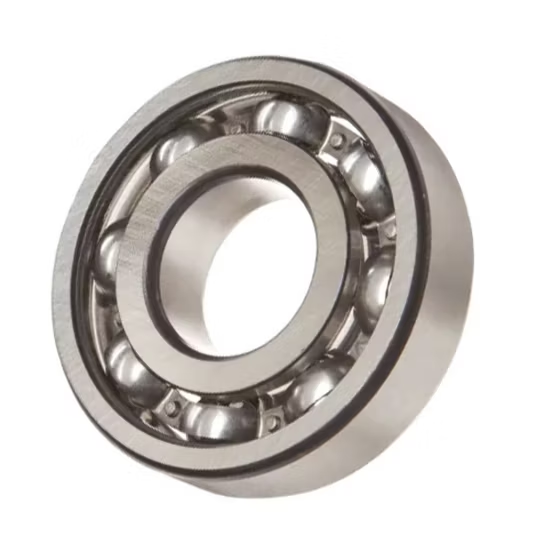
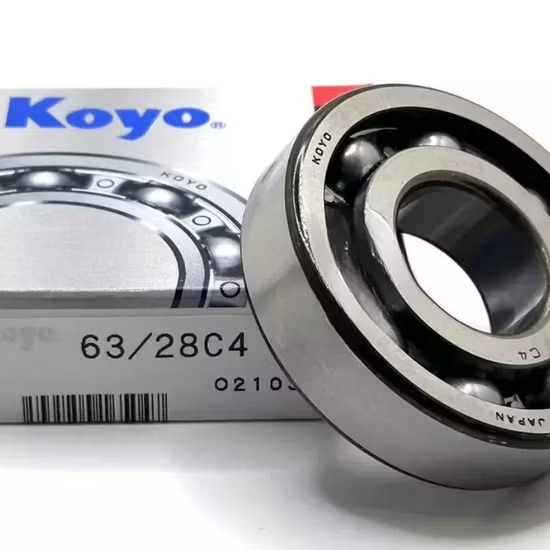
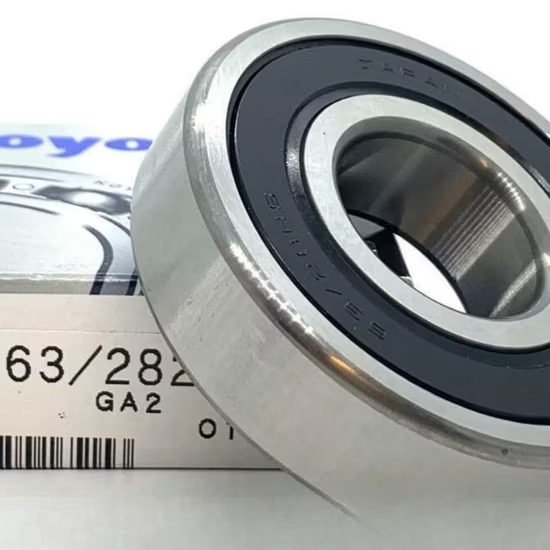


6203 6305 6307 Deep Groove Ball Bearings manage radial loads in electric motors and gearboxes, supporting configurable sealing and noise grades.
Multi-Brand Sourcing — Consolidating 6203, 6305, and 6307 deep groove ball bearing requirements from NSK, NTN, Timken, Koyo, and NACHI into a single, fully traceable procurement channel.
| Parameter | Value |
|---|---|
| Designation | 6203 6305 6307 |
| Bearing Type | Deep Groove Ball Bearing |
| Bearing Style | Open, Rubber Seals, Iron Seals |
| Quality Level | Z1V1, Z2V2, Z3V3, Z4V4 |
| Feature | Low Noise, High Speed, Long Service Life |
| Origin | Germany / Japan / Sweden / Malaysia / China |
| Industry | Typical Applications |
|---|---|
| Electric Motors | Rotor shaft support in industrial AC/DC motors and servo drives |
| Industrial Gearboxes | High-speed input shafts and intermediate gear reduction stages |
| Material Handling | Drive pulleys and idler rollers in belt conveyor systems |
| Pumps & Compressors | Impeller shaft bearings in centrifugal pumps and rotary compressors |
Sourcing a 6203 6305 6307 deep groove ball bearing strictly by its base designation ignores the internal geometry and sealing configurations that dictate actual field performance.
Procurement engineers frequently match the basic 6xxx series number but overlook critical noise grades or sealing variants, leading to thermal binding in high-speed motor rotors or rapid grease degradation in dusty conveyor environments. When a standard open bearing is installed where an iron-shielded or rubber-sealed variant was required, the resulting contamination causes premature spalling. Verifying the exact sealing style and vibration class prevents these silent killers of equipment uptime.
Matching the correct sealing configuration to the operating environment is critical for maximizing service intervals. Open bearings are ideal for gearboxes where the housing provides splash lubrication and filtration, while iron seals offer low-friction protection for high-speed motor shafts where heat generation must be minimized. Rubber seals provide superior exclusion of fine particulates and moisture for agricultural or outdoor material handling applications. Selecting the appropriate style ensures the 6203 6305 6307 deep groove ball bearing operates within its designed friction and thermal limits.
High-speed electric motors and precision gearboxes demand strict control over vibration and thermal expansion. The Z1V1 through Z4V4 quality levels dictate the permissible noise and vibration thresholds, with Z4V4 reserved for ultra-quiet servo applications and Z1V1 suited for general industrial drives. Operating temperatures directly influence internal clearance; if the thermal expansion of the shaft and housing is not accounted for during selection, the bearing may experience excessive preload, leading to cage failure and catastrophic seizure under continuous duty cycles.
The Z/V grading system classifies the acoustic and vibration performance of the bearing, which is paramount for minimizing resonance in electric motor housings. A Z4V4 grade undergoes stringent dynamic balancing to eliminate high-frequency harmonics, whereas lower grades suffice for heavy-duty conveyors. Regarding sealing, iron shields maintain a non-contact labyrinth gap, allowing for higher limiting speeds without generating frictional heat. Conversely, rubber seals establish a contact lip that provides robust contamination exclusion but introduces a slight drag penalty, requiring careful matching to the motor's torque and speed profile.
Installing an incorrect sealing variant or ignoring the Z/V noise grade leads to a cascade of mechanical failures. An open bearing used in an unfiltered environment will ingest abrasive dust, accelerating raceway wear and causing unplanned downtime. Conversely, using a high-friction rubber seal in a high-speed application generates excessive heat, degrading the lubricant and resulting in premature fatigue. These specification mismatches void equipment warranties and inflate maintenance budgets far beyond the initial component cost.
Our technical team reviews every inquiry to ensure the selected sealing style and Z/V grade align perfectly with the application's speed and environmental demands. We provide exact cross-reference alignment across NSK, NTN, Timken, Koyo, and NACHI, verifying that internal geometries match the OEM requirements rather than just swapping base numbers. Every shipment includes batch traceability, ensuring that the specific manufacturing lot can be tracked back to the origin facility. We supply dimensional and running accuracy inspection reports to validate the noise and vibration grades before the components reach your assembly line.
To ensure optimal performance, provide your radial and axial load profiles, operating speeds, and ambient temperature ranges so our engineering team can validate the appropriate Z/V grade and sealing configuration. If you are replacing an existing component, share the OEM equipment number or the exact suffix string from the old bearing for precise cross-reference verification. Supplying these application parameters allows us to confirm the internal geometry matches your specific motor or gearbox requirements.
Q: How do I choose between rubber seals and iron shields for my electric motor application?
A: Iron shields provide non-contact protection, making them ideal for high-speed motor shafts where minimizing frictional heat is critical. Rubber seals offer a contact lip that provides superior exclusion of moisture and fine dust, suited for harsher environments. We review your speed and contamination exposure to recommend the optimal sealing architecture for your specific motor design.
Q: What is the practical difference between Z1V1 and Z4V4 quality levels in these bearings?
A: The Z/V grades classify the acoustic and vibration limits of the bearing. Z1V1 is suitable for standard industrial drives where moderate noise is acceptable. Z4V4 undergoes stringent dynamic balancing to eliminate high-frequency harmonics, making it mandatory for precision servo motors and quiet household appliances. We verify these grades through running accuracy inspection reports before shipment.
Q: How can I verify the authenticity of the bearings I receive?
A: Every bearing we supply features batch traceability and can be verified using the manufacturer's official mobile app via QR codes on the packaging. This process confirms the origin facility and rules out counterfeits with soft inner rings or cloned labels. We also provide a Certificate of Conformity and dimensional inspection reports for complete procurement transparency.
Q: How do you handle cross-brand interchange for these specific deep groove ball bearings?
A: We do not simply match the base 6xxx designation. Our technical team verifies that the internal geometry, sealing configuration, and Z/V noise grades align perfectly across NSK, NTN, Timken, Koyo, and NACHI equivalents. This ensures the replacement bearing meets the exact thermal and frictional requirements of your original equipment without causing unexpected downtime.
Our 5-step process ensures every order is engineered, validated, and supported for optimal performance.
Technical needs assessment
Custom specifications
Free samples for $50k+
Pre-shipment inspection
On-site & predictive
Our certified engineers respond within 24 hours with detailed technical specifications, pricing, and lead time information.