01
Consultation
Technical needs assessment

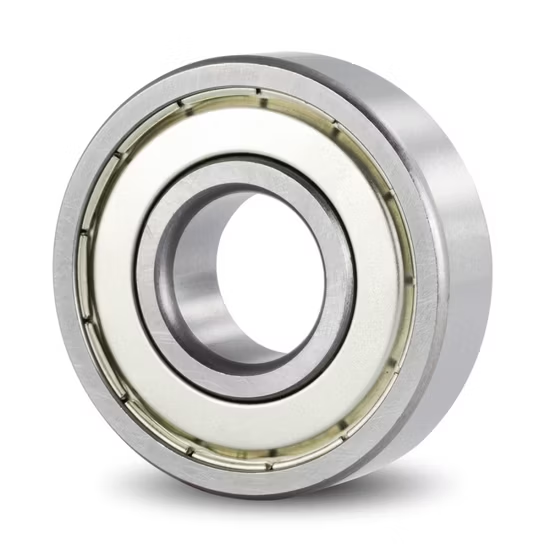
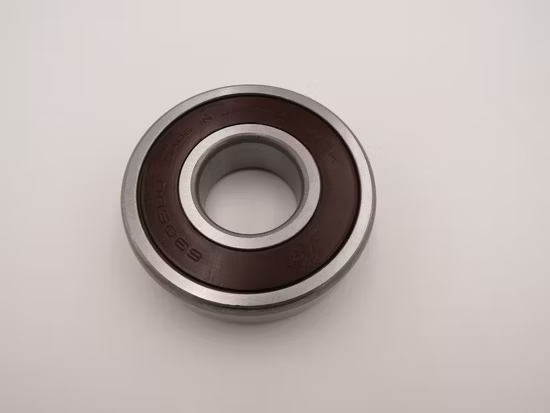


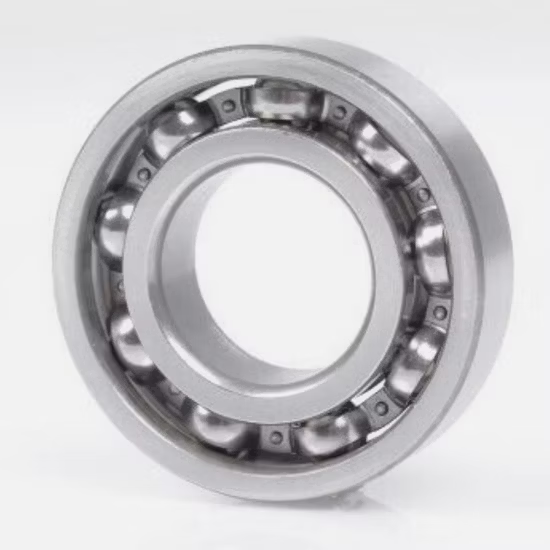
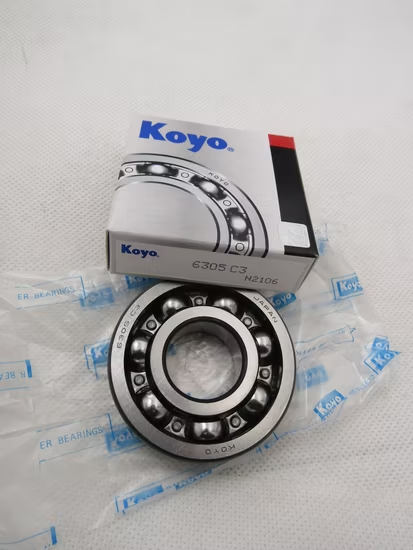
Koyo 6206 Deep Groove Ball Bearing delivers reliable radial load support for electric motors and industrial gearboxes, ensuring stable high-speed performance under continuous operation.
Complete Batch Traceability — Every Koyo 6206 unit ships with verifiable manufacturer lot documentation and official QR authentication to guarantee supply chain integrity.
| Parameter | Value |
|---|---|
| Designation | Koyo 6206 |
| Bearing Type | Deep Groove Ball Bearing |
| Seal or Shield Type | Available in open, rubber seal, and iron shield variants |
| Noise and Vibration Level | Z1V1, Z2V2, Z3V3, Z4V4 options |
| Feature | Low noise, high-speed capability, extended service life |
| HS Code | 848210 |
| Industry | Typical Applications |
|---|---|
| Electric Motors | Rotor shaft support, cooling fan assemblies, stator housings |
| Industrial Gearboxes | High-speed input shafts, intermediate gear support, output bearings |
| Agricultural Machinery | Conveyor drive rollers, seed metering mechanisms, PTO shaft supports |
Matching the base number is only the first step; ignoring internal clearance and seal variants leads to rapid field failure.
Procurement teams often treat standard designations as universal replacements, assuming a basic number covers all operational needs. During my years distributing bearings in Dongguan, I witnessed a motor manufacturer suffer catastrophic thermal binding because their maintenance crew substituted a standard clearance unit where a C3 clearance was strictly required for thermal expansion. The inner ring expanded, eliminated the internal gap, and locked the rotor. Sourcing a genuine Koyo 6206 deep groove ball bearing requires strict verification of the exact seal type, noise grade, and internal clearance to prevent these costly operational disruptions .
Selecting the correct configuration prevents premature wear in high-speed rotational equipment. We review your specific load profiles and environmental exposure to recommend the precise Koyo 6206 deep groove ball bearing variant, ensuring the seal type and noise grade align perfectly with your OEM requirements.
High-speed electric motors generate significant internal heat, demanding appropriate internal clearance to accommodate thermal expansion of the shaft and housing. Concurrently, agricultural gearboxes operate in heavily contaminated environments where particulate ingress destroys raceway finishes. Balancing these factors requires choosing between non-contact iron shields for low-friction, high-speed applications or contact rubber seals for maximum contamination exclusion, alongside selecting the correct noise and vibration grade to maintain acoustic standards .
The Z1V1 through Z4V4 classifications define the acoustic and vibrational output, which is critical for household appliances and precision electric motors where noise pollution is strictly regulated. Upgrading to a Z4V4 grade ensures smoother raceway geometries and tighter ball tolerances. Furthermore, choosing between open, rubber-sealed, or iron-shielded variants dictates the maintenance schedule; sealed units retain factory grease and exclude moisture, while open variants allow for custom relubrication in specialized gearbox applications.
Installing a basic clearance unit in a high-temperature motor causes thermal binding, leading to catastrophic cage failure and unplanned downtime. Conversely, using a heavy-contact rubber seal in a high-speed, low-load application generates excessive friction heat, degrading the lubricant prematurely. According to ISO 15243 failure mode classification frameworks, these specification mismatches account for a significant share of early-life bearing failures, resulting in voided equipment warranties and expensive secondary damage to shafts and housings .
We provide authorized coverage across all major brands, allowing you to consolidate mixed-brand requirements into a single, fully traceable order. Our cross-reference matching goes beyond basic designations; we verify that the clearance, cage material, and precision suffixes exactly match your equipment's original engineering intent. Every shipment includes batch traceability to the manufacturer, verifiable through official brand apps, eliminating the risk of counterfeit units with soft inner rings. We also conduct application-based selection reviews to ensure your chosen variant handles the specific load, speed, and temperature conditions of your machinery.
To ensure optimal performance, share your specific radial and axial loads, operating speeds, and ambient temperatures so our engineering team can verify the L10 life and confirm the correct internal clearance. If you are replacing an existing unit, provide the OEM equipment number or the exact suffix markings from the original nameplate for a precise cross-reference check.
Q: How can I verify the authenticity of the Koyo 6206 deep groove ball bearing upon delivery?
A: Every unit we supply includes batch traceability documentation and an official QR code. You can scan this code using the manufacturer's official mobile application to instantly verify the product's origin, production date, and authenticity, ensuring you receive genuine components rather than counterfeits with compromised metallurgy.
Q: What cross-reference checks are critical when substituting a standard 6206 bearing?
A: Beyond matching the basic 30mm bore and 62mm outside diameter, you must verify the internal clearance class, seal type, and noise grade. Substituting a standard clearance for a C3 variant in high-temperature applications causes thermal binding, while ignoring seal differences leads to rapid contamination or excessive friction heat.
Q: How do I choose between rubber seals and iron shields for my application?
A: Iron shields provide non-contact protection ideal for high-speed, low-contamination environments where minimizing friction is critical. Rubber seals offer contact sealing that provides superior exclusion of dust and moisture, making them suitable for agricultural or heavily contaminated industrial machinery, albeit with slightly higher friction and lower speed limits.
Q: What is the practical difference between Z1V1 and Z4V4 noise grades in electric motors?
A: The Z-series grades indicate the strictness of manufacturing tolerances and raceway surface finishes. A Z4V4 grade exhibits significantly lower acoustic emission and vibration compared to Z1V1, which is essential for precision electric motors, household appliances, and medical equipment where operational quietness and smooth rotation are strictly required.
Our 5-step process ensures every order is engineered, validated, and supported for optimal performance.
Technical needs assessment
Custom specifications
Free samples for $50k+
Pre-shipment inspection
On-site & predictive
Our certified engineers respond within 24 hours with detailed technical specifications, pricing, and lead time information.