01
Consultation
Technical needs assessment

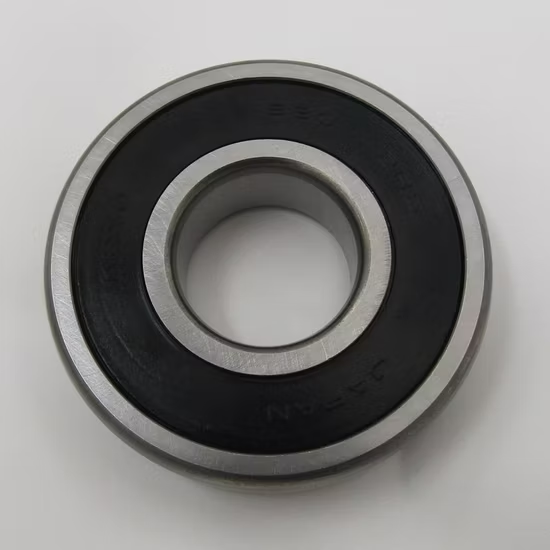
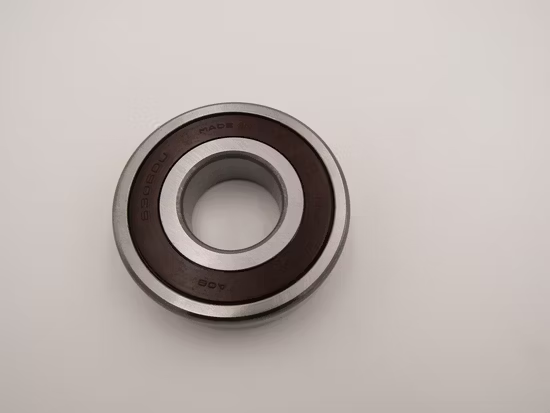
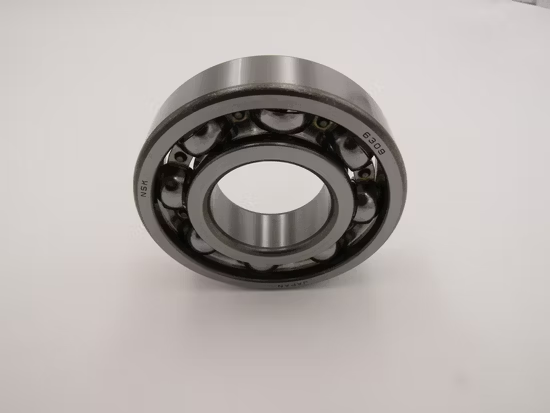
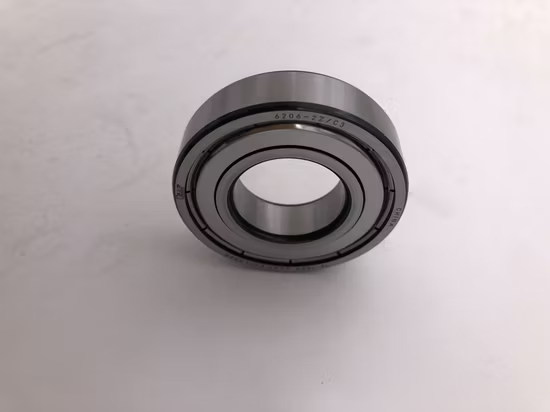

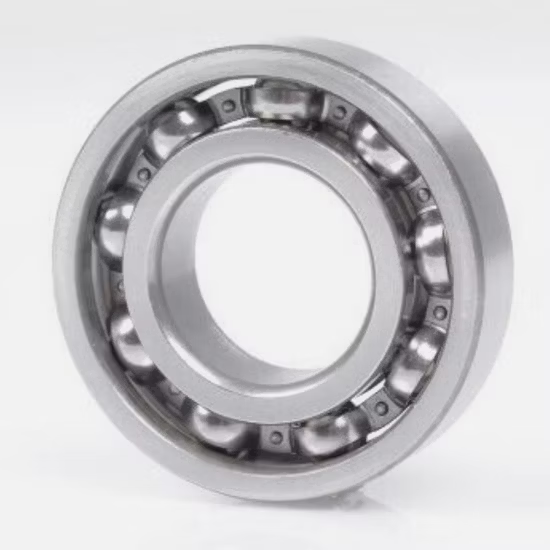
606 607 608 609 2RS Deep Groove Ball Bearing — versatile rubber and iron seal options prevent contamination, while Z1V1 to Z4V4 grading ensures quiet electric motor operation.
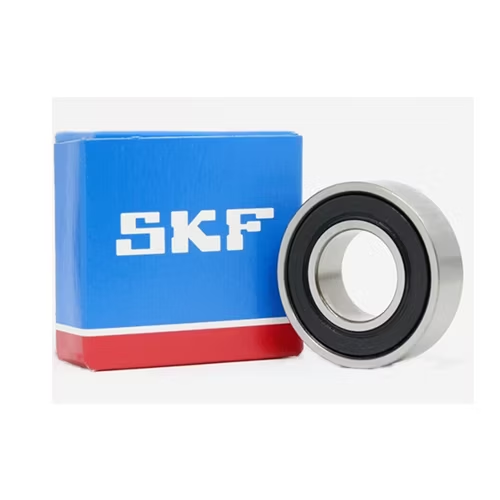
Multi-Brand Authorized Coverage — Procure SKF, FAG, and NSK equivalents for the 606 607 608 609 2RS series in a single consolidated shipment, eliminating the need to coordinate with multiple vendors.
| Parameter | Value |
|---|---|
| Designation | 606 607 608 609 2RS |
| Bearing Type | Deep Groove Ball Bearing |
| Seal or Shield Type | Open, Rubber Seals, Iron Seals |
| Quality Level | Z1V1, Z2V2, Z3V3, Z4V4 |
| Origin | Germany, Japan, Sweden, Malaysia, China |
Note: The 2RS suffix designation requires manufacturer catalog confirmation for specific seal material variants.
| Industry | Typical Applications |
|---|---|
| Electric Motors | Rotor shaft support in industrial drive motors |
| Industrial Gearboxes | High-speed input shaft positioning |
| Material Handling | Conveyor pulley idler roll assemblies |
| General MRO | Household appliance spindle and pump shaft mounts |
Matching the base designation while ignoring seal compound differences leads to rapid hardening and motor seizure.
During an emergency repair at a Nigerian cement plant, I witnessed a complete motor lockup caused by counterfeit units where the rubber seals could not withstand the ambient heat. The seals hardened, cracked, and allowed abrasive clinker dust to invade the raceway . When sourcing a 606 607 608 609 2RS deep groove ball bearing, assuming all rubber seals offer identical thermal resistance is a costly mistake that halts production lines.
Selecting the correct 606 607 608 609 2RS deep groove ball bearing requires matching the seal type to the specific environmental threat. Rubber seals provide excellent contact sealing against fine particulate matter but generate higher friction, while iron shields offer non-contact protection suitable for high-speed, cleaner environments. Our technical review ensures the selected variant aligns perfectly with your facility's contamination profile and thermal limits.
In heavy material handling, equipment faces extreme thermal cycling and heavy particulate ingress. Standard elastomers may exceed their thermal limits, losing elasticity and permitting dust intrusion that destroys the raceway. Proper lubrication retention is equally critical; once the seal fails, grease washout accelerates wear . Selecting the appropriate seal configuration prevents these cascading mechanical failures.
The Z1V1 through Z4V4 quality levels dictate the strict noise and vibration tolerances, which are essential for high-speed electric motor applications where acoustic performance matters. The seal options—open, rubber, or iron—must be balanced against operating speed and temperature. Rubber seals maximize contamination exclusion but increase rotational drag, whereas iron shields minimize friction at the cost of allowing fine moisture ingress. Understanding these trade-offs ensures the 606 607 608 609 2RS deep groove ball bearing performs reliably under specific operational constraints.
Overlooking critical suffixes during procurement results in unplanned downtime and catastrophic damage to adjacent machinery. A unit specified for standard temperatures will fail rapidly in a hot kiln environment, voiding equipment warranties and inflating maintenance budgets. Adhering to ISO 281 life calculation frameworks requires accurate input regarding seal friction and contamination factors, which are compromised when the wrong variant is installed .
We provide authorized coverage across all major brands, allowing you to fulfill mixed-brand requirements for the 606 607 608 609 2RS series in one order. Our cross-brand interchange process verifies clearance and seal materials, not just the base number, preventing the installation of CN clearance where C3 is required for thermal expansion. Every batch includes strict traceability to the manufacturer, ensuring you receive genuine components that pass rigorous dimensional inspections.
Share your specific radial loads, rotational speeds, and operating temperatures so our engineering team can validate the L10 life and recommend the optimal seal configuration. Providing the original equipment manufacturer part numbers allows us to perform a comprehensive cross-reference check, ensuring the supplied units meet all internal design and clearance requirements.
Q: How can I verify the authenticity of the supplied units?
A: Every batch includes verifiable lot traceability. You can scan the QR codes on the packaging using the official brand applications to confirm the manufacturing origin and batch details. We also provide a Certificate of Conformity and dimensional inspection reports to guarantee the components meet all specified tolerances before they reach your facility.
Q: Why is cross-referencing more than just the base number important?
A: Matching only the base designation often overlooks critical internal clearances or seal materials. Installing a standard clearance unit in a high-temperature motor causes thermal binding. Our technical review ensures the cross-reference aligns with your specific clearance class, cage material, and precision suffixes to prevent premature field failures.
Q: What is the practical difference between Z1V1 and Z4V4 quality levels?
A: The Z and V classifications define the strict noise and vibration limits of the unit. Z1V1 is suitable for general industrial applications, while Z4V4 is required for precision electric motors and household appliances where quiet, smooth operation is mandatory. Selecting the correct grade prevents excessive acoustic noise and high-frequency vibration in sensitive equipment.
Q: How do I choose between rubber seals and iron shields?
A: Rubber seals provide superior contact sealing against fine dust and moisture but generate higher friction, making them ideal for contaminated, moderate-speed environments. Iron shields offer non-contact protection with minimal friction, suiting high-speed, cleaner applications. We evaluate your specific operating temperature and contamination levels to recommend the optimal configuration.
Our 5-step process ensures every order is engineered, validated, and supported for optimal performance.
Technical needs assessment
Custom specifications
Free samples for $50k+
Pre-shipment inspection
On-site & predictive
Our certified engineers respond within 24 hours with detailed technical specifications, pricing, and lead time information.