01
Consultation
Technical needs assessment

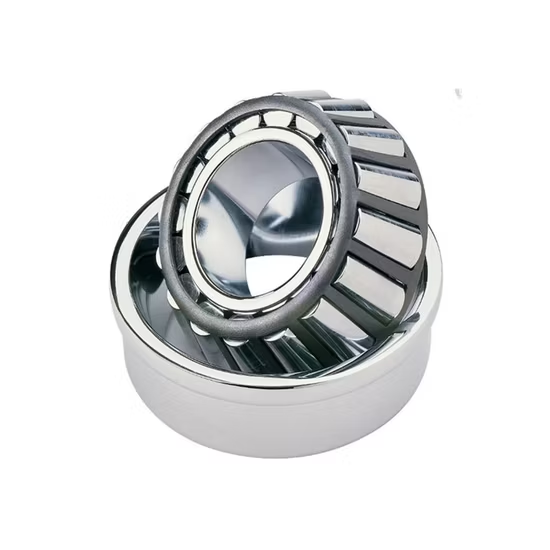
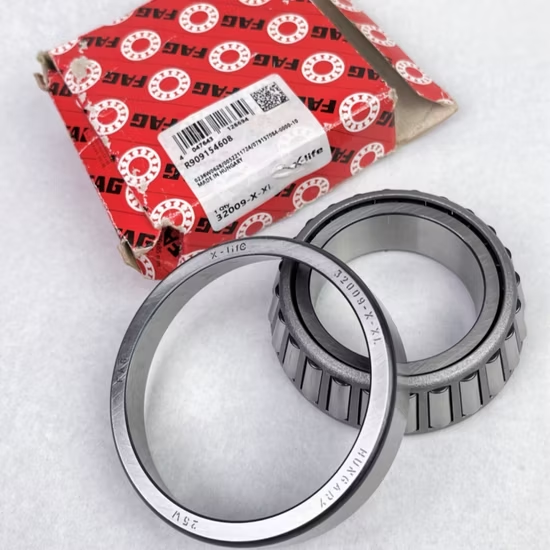


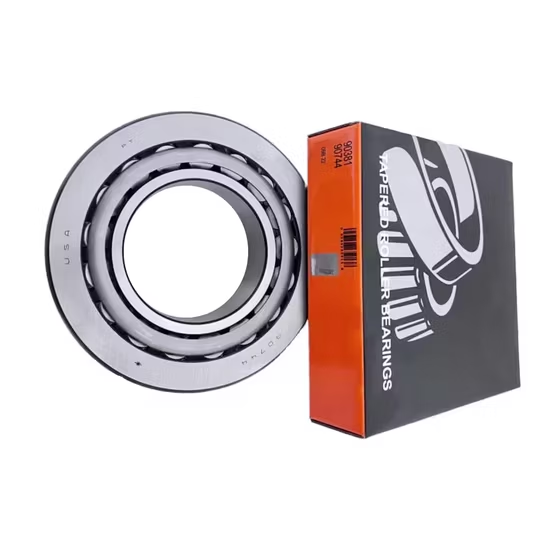

32019 32020 Tapered Roller Bearing — P4 precision class
Every shipment includes full documentation: material test reports, dimensional and running accuracy inspection records, and batch traceability certificates.
Verified via official apps — Every 32019 32020 tapered roller bearing batch includes traceable QR codes scannable through manufacturer applications to confirm authenticity before installation.
| Parameter | Value |
|---|---|
| Designation | 32019 32020 |
| Bearing Type | Single Row Tapered Roller Bearing |
| Precision Class | P4 |
| Material | GCr15 Bearing Steel |
| Cage Material | Available in nylon, brass, or iron variants |
| Origin | Germany, Japan, Sweden, Malaysia, or China |
| Certification | ISO 492 / DIN 620 Class 4 tolerances |
| MOQ | 1 PCS |
| HS Code | 8482500090 |
| Industry | Typical Applications |
|---|---|
| Automotive & Heavy Vehicles | Wheel hubs and truck axles subjected to combined radial and axial loads |
| Industrial Machinery | Heavy-duty gearboxes and manufacturing plant drive shafts |
| Marine & Construction | Marine propulsion drives and building material handling equipment |
Matching the basic designation without verifying internal clearances and cage materials leads to rapid thermal binding under heavy loads.
Procurement engineers often assume that confirming the base number is sufficient for replacement, but overlooking internal design variations causes catastrophic field failures. I have witnessed numerous truck axles and industrial gearboxes seize entirely because a standard clearance was installed where thermal expansion demanded a wider internal gap. When the basic designation matches but the cage material or precision suffix differs from the original equipment requirements, the bearing cannot dissipate heat or handle the specific vibration profiles, resulting in premature cage fracture and unplanned downtime .
Sourcing the correct 32019 32020 tapered roller bearing requires looking beyond the catalog number to evaluate how the component will behave in your specific machinery. We review your application parameters to ensure the selected cage material and precision grade align with the actual rotational speeds and load vectors. This application-based selection review prevents the common mismatch where a high-speed nylon cage is forced into a high-vibration environment that demands the damping characteristics of a brass alternative.
Tapered roller bearings in truck axles and industrial gearboxes must endure complex combined loads while managing significant heat generation from gear meshing and friction. The operating temperature directly dictates the required internal clearance; insufficient clearance causes the rollers to bind as the shaft expands, while excessive clearance leads to damaging impact loads and noise. Proper lubrication practices and the selection of an appropriate cage material are critical to maintaining the hydrodynamic film and preventing metal-to-metal contact under these extreme thermal and mechanical stresses .
The P4 precision class ensures tighter dimensional and running accuracy than standard grades, which is essential for minimizing vibration in high-speed gearboxes and marine drives. Manufactured from GCr15 high-carbon chromium steel, these components offer excellent hardenability and contact fatigue strength, typically reaching HRC58-62 on the raceways . Furthermore, the availability of nylon, brass, or iron cage options allows engineers to optimize the bearing for specific friction, speed, and temperature boundaries, ensuring the internal geometry remains stable under dynamic loading.
Relying solely on basic designation cross-references frequently results in the installation of components that lack the necessary internal design features for the application. This oversight triggers a cascade of mechanical issues, ranging from accelerated raceway spalling to complete shaft seizure, which voids equipment warranties and halts production lines. The resulting unplanned downtime and emergency freight costs for replacement parts far exceed the initial procurement savings, highlighting the severe financial penalties of ignoring precision and clearance specifications .
Our authorized coverage across all major international brands allows you to consolidate mixed-brand requirements into a single, fully traceable order without coordinating multiple suppliers. We specialize in cross-brand interchange that strictly matches clearance, cage material, and precision class, eliminating the dangerous assumption that identical base numbers guarantee identical internal geometry. Every batch is backed by manufacturer traceability and QR verification, ensuring that the components you receive are genuine and perfectly aligned with your OEM equipment specifications.
To ensure optimal performance and longevity, please provide detailed operating parameters including radial and axial loads, rotational speeds, and expected operating temperatures for our technical team to conduct a comprehensive L10 life calculation. Supplying the original OEM equipment number allows us to perform a rigorous cross-reference verification, confirming that the internal geometry and precision class perfectly match your machinery's design intent.
Q: How can I verify the authenticity of the received components before installation?
A: Every batch includes traceable documentation and QR codes that can be scanned using the manufacturer's official mobile applications. This verification process confirms the origin and production details, protecting your equipment from counterfeit products that often feature soft inner rings and cloned visual markers which fail under actual operating loads.
Q: Why is it critical to match cage material during cross-referencing?
A: Different cage materials dictate the bearing's speed limits, vibration damping, and temperature thresholds. Installing a standard cage in an application that requires the specific thermal stability of brass or the low-friction properties of nylon will lead to rapid cage degradation, increased friction, and eventual mechanical seizure under dynamic operating conditions.
Q: What are the selection boundaries between nylon, brass, and iron cages?
A: Nylon cages offer low friction and are ideal for moderate temperatures and high speeds, while brass cages provide superior durability, vibration damping, and thermal stability for heavy-load, high-temperature environments. Iron cages are typically selected for specific cost-performance balances in standard industrial applications where extreme speed or temperature fluctuations are not primary concerns.
Q: How does P4 precision compare to standard grades in industrial gearboxes?
A: P4 precision provides significantly tighter dimensional and running accuracy compared to standard P0 or P6 grades. This enhanced precision minimizes vibration, reduces operational noise, and ensures smoother load distribution across the rollers, which is absolutely critical for maintaining the reliability and efficiency of high-speed manufacturing plant drive systems.
Our 5-step process ensures every order is engineered, validated, and supported for optimal performance.
Technical needs assessment
Custom specifications
Free samples for $50k+
Pre-shipment inspection
On-site & predictive
Our certified engineers respond within 24 hours with detailed technical specifications, pricing, and lead time information.


