01
Consultation
Technical needs assessment


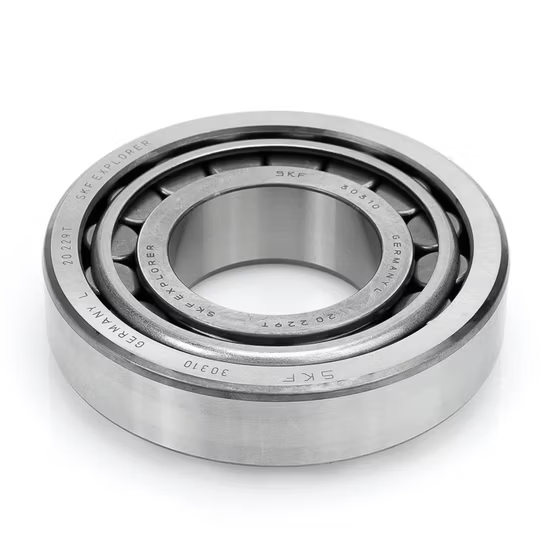
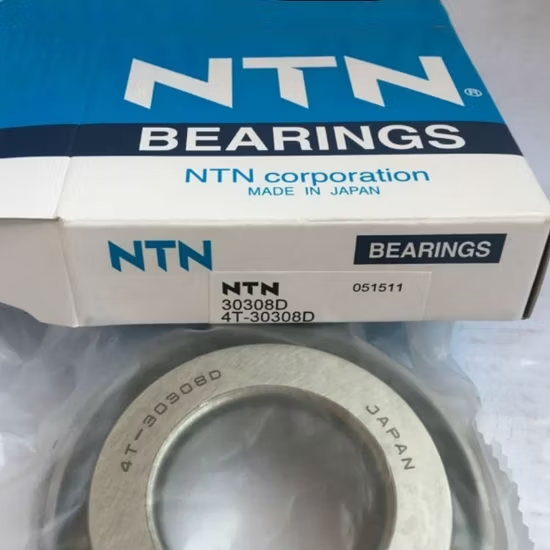


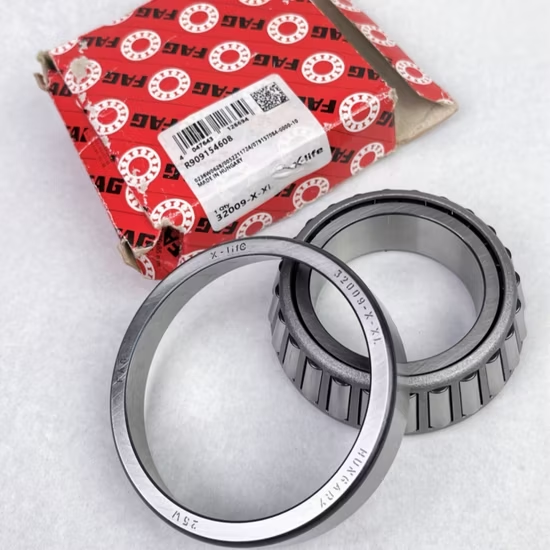
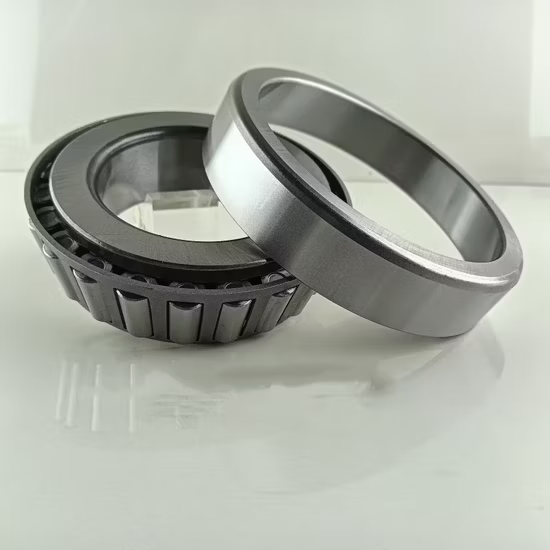
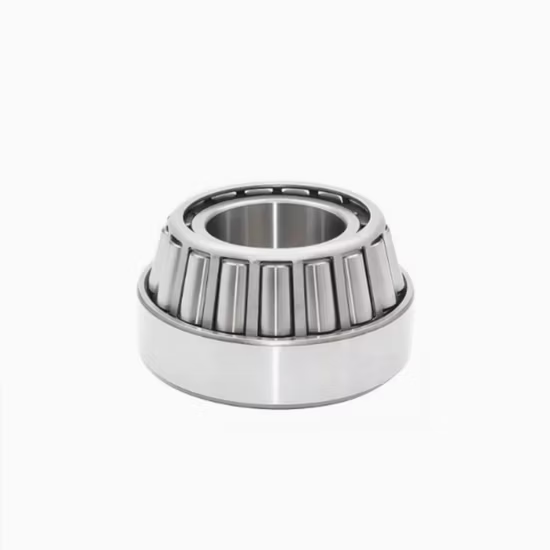
30208 Single Row Tapered Roller Bearing — manufactured from GCr15 bearing steel with P4 precision for automotive wheel hubs and industrial gearboxes.
Verified Origin Tracking — Every 30208 unit ships with manufacturer lot documentation and official app QR validation to eliminate counterfeit risks in critical drivetrain assemblies.
| Parameter | Value |
|---|---|
| Designation | 30208 |
| Product Type | Tapered Roller Bearing |
| Number of Rows | Single Row |
| Precision Class | P4 |
| Material | GCr15 Bearing Steel |
| Cage Material Options | Pressed steel, machined brass, or polyamide |
| Bore Type | Cylindrical |
| Origin | Germany, Japan, Sweden, Malaysia, or China |
| Industry | Typical Applications |
|---|---|
| Automotive & Heavy Vehicles | Wheel hub assemblies, truck axle differentials, steering knuckle pivots |
| Industrial Power Transmission | Heavy-duty gearbox shaft supports, reducer output stages |
| Material Handling | Forklift mast roller guides, conveyor drive pulley shafts |
Matching the basic designation is never enough to prevent catastrophic field failures.
I have seen entire fleets grounded in Latin America because a procurement team sourced standard replacements based solely on the basic number, ignoring internal design variations. When a 30208 single row tapered roller bearing is installed with a cage material mismatched to the actual vibration profile, the retaining structure fatigues and fractures long before the rolling elements show wear. Sourcing teams often overlook how internal geometry and component materials dictate survival under heavy shock loads .
Selecting the right 30208 single row tapered roller bearing requires looking past the outer dimensions to evaluate how internal components handle specific operational stresses. Our engineering review process cross-checks the requested precision class and cage design against the actual load spectra of your automotive or industrial application. This prevents the all-too-common scenario where a dimensionally correct part fails prematurely due to inadequate high-speed stability or poor debris exclusion.
Automotive axles and industrial gearboxes subject components to severe combined radial and axial loads, often accompanied by intense shock impacts during start-stop cycles. The thermal expansion generated under continuous heavy loading dictates the necessary internal clearance and lubrication strategy. If the operating temperature exceeds the thermal limit of standard bearing steel or the selected lubricant degrades, the internal geometry collapses, leading to severe spalling and secondary damage to adjacent housing components .
The 30208 designation defines a standard metric single row tapered roller bearing engineered to manage combined loads through a specific contact angle between the rollers and raceways. Achieving P4 precision ensures tighter dimensional and running accuracy, which is critical for minimizing vibration in high-speed gearbox applications. The GCr15 material provides the necessary core toughness and surface hardness to resist surface fatigue. Furthermore, selecting the appropriate cage material—whether pressed steel for high-speed stability, machined brass for heavy vibration, or polyamide for lower noise—fundamentally alters the operational envelope of the assembly.
Relying on superficial cross-references often results in unplanned downtime and voided equipment warranties when the substituted part lacks the required internal design characteristics. A component that matches the basic envelope dimensions but features an incorrect internal profile will rapidly generate excessive friction heat. Under the ISO 281 framework for life calculation, such mismatches drastically reduce the theoretical fatigue life, transforming a routine maintenance interval into a catastrophic breakdown event requiring complete assembly replacement .
We maintain authorized distribution channels across all major international brands, allowing you to consolidate mixed-brand requirements into a single, fully documented shipment. Our cross-reference protocol strictly aligns internal geometry, cage materials, and precision suffixes, eliminating the dangerous assumptions that cause field failures. Every shipment includes comprehensive batch traceability and dimensional inspection reports that verify the claimed P4 tolerance before the parts leave our facility. We also provide post-delivery mounting guidance and failure analysis support to ensure the components perform exactly as engineered in your specific application.
To ensure optimal drivetrain performance, provide our technical team with your exact radial and axial load profiles, operating speeds, and continuous thermal conditions. Sharing the specific OEM equipment numbers allows us to execute a rigorous cross-reference check that accounts for internal design variations and cage material requirements. This collaborative review guarantees the selected components align perfectly with your operational demands and maintenance intervals.
Q: How do we verify the authenticity of 30208 bearings using official brand applications?
A: Authenticity is confirmed by scanning the unique QR code printed on the original packaging using the manufacturer's official mobile application. This digital verification links the physical product to the factory database, confirming the production date, origin, and specific P4 precision classification, effectively eliminating the risk of installing counterfeit components with soft inner rings.
Q: Why must internal design and cage materials align during cross-brand interchange?
A: Matching only the basic 30208 number ignores critical internal variations that dictate performance under specific load and vibration profiles. Installing a bearing with an incompatible cage material or internal geometry leads to rapid thermal binding, accelerated fatigue, and catastrophic structural failure, completely voiding the expected service life and risking severe damage to the surrounding housing.
Q: What are the boundary conditions for selecting different cage materials in automotive applications?
A: Pressed steel cages offer excellent high-speed capability and durability in standard conditions, while machined brass provides superior resistance to high vibration and shock loads typical in heavy truck axles. Polyamide cages reduce operational noise and friction but require strict temperature and chemical compatibility checks to prevent material degradation in harsh environments.
Q: How do we differentiate between metric and inch tapered roller bearing designations?
A: Metric designations like 30208 follow ISO standards with specific dimensional series indicating bore, diameter, and width, whereas inch series rely on distinct alphanumeric codes. Confusing the two systems during sourcing leads to improper fits and immediate assembly failure. Always verify the exact boundary dimensions and standard references before approving any cross-brand substitution.
Q: What mounting practices are recommended to preserve P4 precision during installation?
A: Preserving P4 accuracy requires controlled induction heating for the inner ring to achieve proper interference fit without distorting the raceway. Axle nuts must be torqued to exact specifications to set the correct internal clearance, preventing excessive preload that causes thermal binding or excessive looseness that leads to destructive roller skidding and premature wear.
Our 5-step process ensures every order is engineered, validated, and supported for optimal performance.
Technical needs assessment
Custom specifications
Free samples for $50k+
Pre-shipment inspection
On-site & predictive
Our certified engineers respond within 24 hours with detailed technical specifications, pricing, and lead time information.