01
Consultation
Technical needs assessment

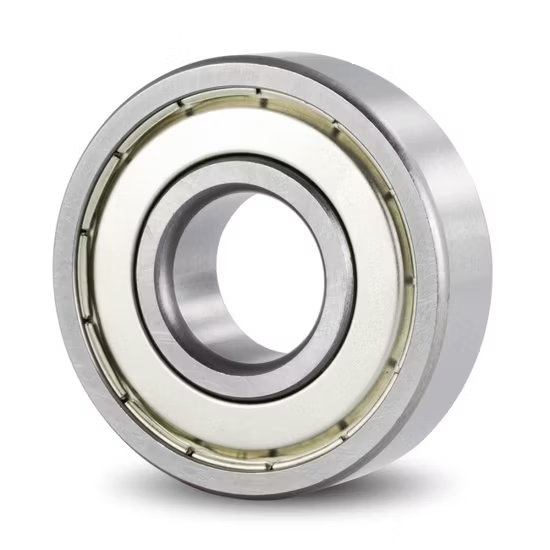


633 634 635 636 637 638 639 Deep Groove Ball Bearing series supports open, rubber seal, and iron shield structures.
Three-way cross-reference alignment — verifying base number, seal type, and vibration grade prevents micro-motor noise failures.
| Parameter | Value |
|---|---|
| Designation | 633 634 635 636 637 638 639 |
| Bearing Type | Deep Groove Ball Bearing |
| Seal or Shield Type | Open, Rubber Seals, Iron Seals |
| Vibration and Noise Level | Z1V1, Z2V2, Z3V3, Z4V4 |
| Material | Available in standard bearing steel or stainless steel variants |
| Origin | Germany, Japan, Sweden, Malaysia, China |
| HS Code | 848210 |
| Industry | Typical Applications |
|---|---|
| Electric Motors | Micro-motor rotors and stator support structures |
| Household Appliances | Washing machine drum spindles and fan motor shafts |
| Gearboxes | Small reduction gear input and output shafts |
| Pumps | Miniature centrifugal pump impeller shafts |
Matching the base designation without verifying clearance and noise grades guarantees premature thermal binding.
During my years at the Vietnam representative office, I witnessed firsthand how ignoring suffixes leads to catastrophic field failures. We once processed a batch of 638 bearings where the base number was correct, but the client required C3 clearance for a high-temperature motor. The delivered batch was CN group, and the bearings seized and burned out shortly after startup due to thermal expansion. When sourcing a 633 634 635 636 637 638 639 deep groove ball bearing, procurement engineers often focus solely on the basic dimensions, overlooking the critical internal geometry and vibration specifications. This oversight results in abnormal noise in precision appliances or sudden seizure in industrial drives .
Selecting the correct 633 634 635 636 637 638 639 deep groove ball bearing requires aligning the physical footprint with the specific operational environment. Our technical review process ensures that the selected variant matches the exact load profile and spatial constraints of your equipment. By evaluating the application parameters before shipment, we prevent the common mismatch where a standard open bearing is installed in a highly contaminated environment, leading to rapid raceway degradation.
Miniature and small-bore applications present unique tribological challenges, particularly regarding lubrication retention and contamination ingress. In high-speed electric motors, friction from contact seals can generate excessive heat, making non-contact iron shields or open designs with external oil mist lubrication more appropriate. Conversely, household appliances demand exceptional quietness, requiring strict adherence to higher vibration and noise control grades. Temperature fluctuations in gearboxes dictate the necessary internal clearance to accommodate shaft expansion without inducing preload on the rolling elements .
The available seal and shield configurations directly dictate the maintenance interval and operational lifespan of the assembly. Rubber seals provide superior protection against dust and moisture but introduce rotational friction that limits maximum speed capabilities. Iron shields offer a non-contact barrier suitable for high-speed electric motors where grease retention is needed without thermal penalty. Furthermore, the Z1V1 through Z4V4 vibration classifications are critical for household appliances and precision instruments; selecting a lower grade for a high-speed spindle will result in unacceptable acoustic emissions and accelerated cage wear.
Installing a standard clearance bearing in an application requiring extra clearance leads to internal preload as the shaft expands, culminating in catastrophic cage failure. Conversely, using a high-vibration variant in a precision medical device voids equipment warranties and triggers costly product recalls. These misapplications result in unplanned downtime and severe secondary damage to adjacent machinery components. Relying solely on basic dimensional interchangeability without validating the internal design suffixes is a primary driver of premature replacement cycles .
We eliminate the risk of receiving counterfeit units with soft inner rings by enforcing strict batch traceability for every 633 634 635 636 637 638 639 deep groove ball bearing shipped. Our cross-reference protocol verifies not just the base number, but explicitly checks the seal type and vibration grade against your OEM requirements. We provide mixed-brand consolidation, allowing you to source German, Japanese, or Swedish origins in a single shipment without coordinating multiple vendors. Every order includes application-based selection reviews to ensure the chosen clearance and cage material match your specific thermal and speed conditions.
To ensure precise technical alignment, please provide the radial and axial load profiles, operational speeds, and expected temperature ranges for your application. Sharing the original OEM equipment number allows our engineering team to perform a comprehensive cross-reference check, verifying the exact seal and vibration requirements. This data enables us to calculate the L10 life and recommend the optimal internal clearance class for your specific machinery.
Q: Why does a matching base number still cause motor failure?
A: A matching base number only confirms physical dimensions. If the internal clearance is standard (CN) instead of the required C3 for high-temperature motors, thermal expansion will eliminate internal play, causing the bearing to seize. We verify clearance, seal type, and vibration grades to prevent these hidden mismatches.
Q: How do I choose between rubber seals and iron shields?
A: Rubber seals offer maximum contamination protection but generate friction heat, limiting top speeds. Iron shields provide non-contact dust protection suitable for high-speed electric motors where heat buildup must be minimized. We review your speed and environment to recommend the correct configuration.
Q: What do the Z1V1 to Z4V4 designations indicate?
A: These codes classify the vibration and acoustic noise levels of the bearing. Z1V1 is standard, while Z4V4 represents ultra-quiet precision suitable for sensitive household appliances and medical devices. Selecting the correct grade ensures compliance with your equipment's acoustic specifications.
Q: How can I verify the authenticity of multi-origin micro-bearings?
A: We supply batch traceability documentation and QR codes that link directly to the manufacturer's official verification apps. This allows you to confirm the exact production facility, material batch, and origin country, eliminating the risk of installing counterfeit components with substandard metallurgy.
Q: What tools should be used for mounting these small bearings?
A: For miniature deep groove ball bearings, avoid direct mechanical force on the outer ring or seals. Use precision induction heaters for inner ring expansion and specialized mounting sleeves that apply force strictly to the inner ring face, preventing cage deformation and seal lip damage during assembly.
Our 5-step process ensures every order is engineered, validated, and supported for optimal performance.
Technical needs assessment
Custom specifications
Free samples for $50k+
Pre-shipment inspection
On-site & predictive
Our certified engineers respond within 24 hours with detailed technical specifications, pricing, and lead time information.


