01
Consultation
Technical needs assessment


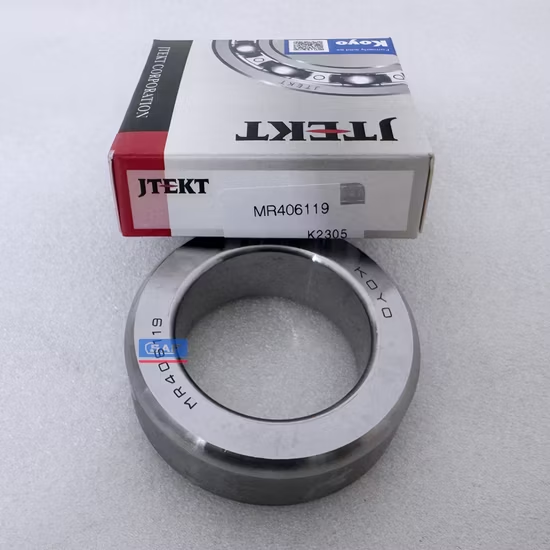
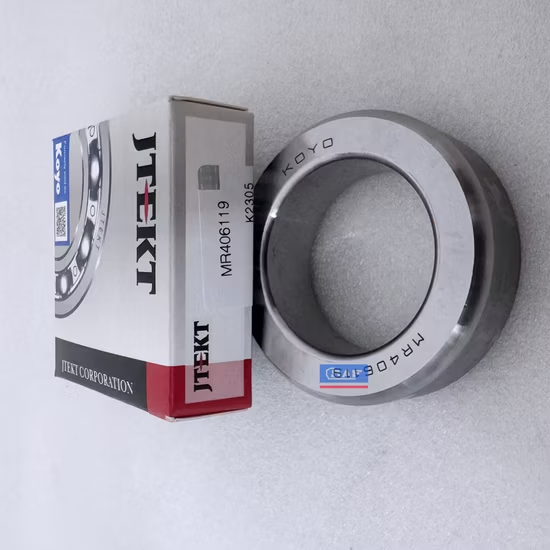

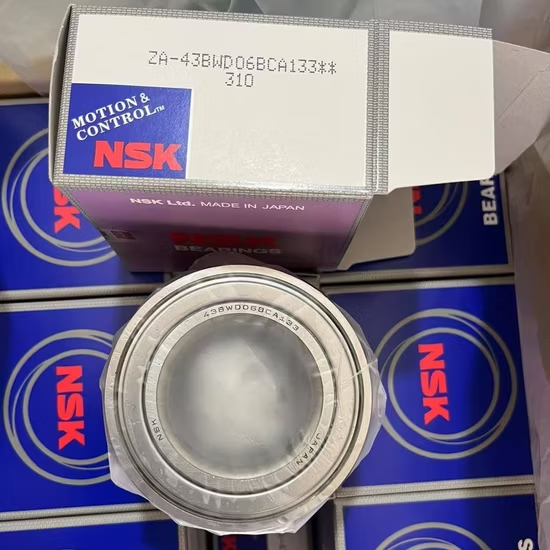
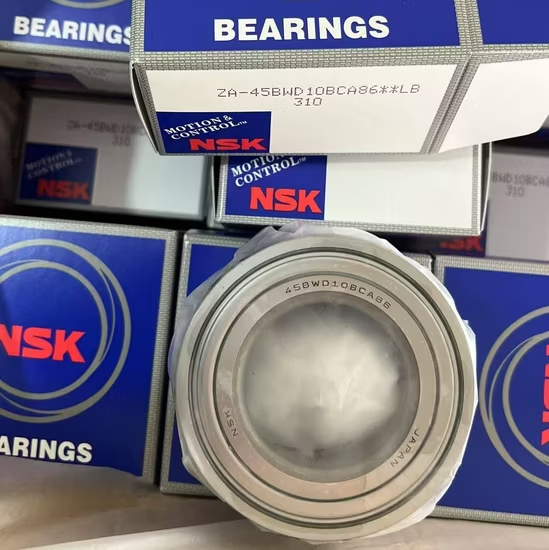
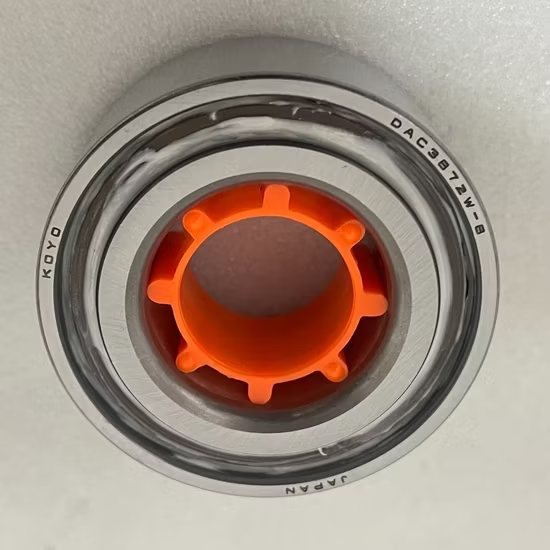
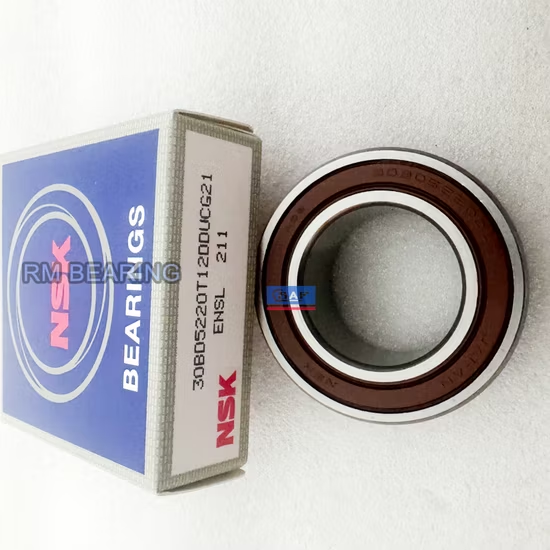
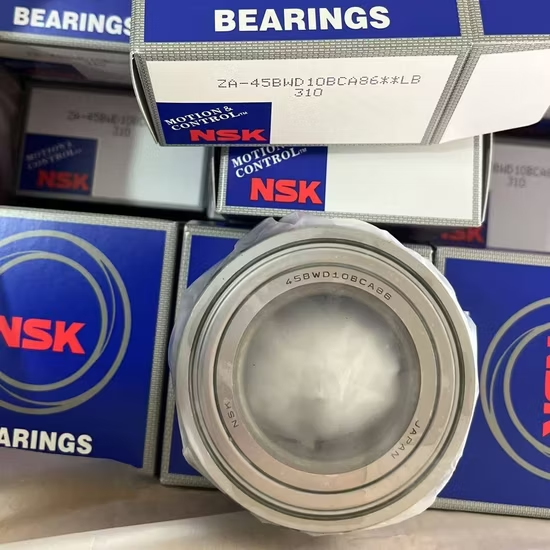
89544-K0010 Wheel Hub Bearing — P4 precision, C0 clearance, double row with integrated ABS sensor.
Every shipment includes a full documentation package with material test reports and dimensional inspection certificates for complete batch verification.
Three-Way Cross-Reference Alignment — verifying the base OE number, ABS sensor harness specs, and internal seal structures to prevent field mismatch.
| Parameter | Value |
|---|---|
| Designation | 89544-K0010 |
| Bearing Type | Wheel Hub Bearing |
| Material | Chrome Steel |
| Precision Class | P4 |
| Clearance Class | C0 |
| ABS Sensor | With ABS |
| Number of Rows | Double Row |
| Seal Type | Nylon / Brass / Iron Seal options |
| Certification | ISO9001 |
| Origin | Shanghai |
| Industry | Typical Applications |
|---|---|
| Automotive | Front brake hub assembly and steering knuckle mounting |
| Construction Machinery | Light-duty equipment wheel ends and steering axles |
| Tractor | Agricultural machinery front axle hub units |
Matching the base designation without verifying internal seal designs and ABS sensor specifications leads to premature thermal binding and brake noise.
Early in my career transitioning from installation to technical sales in the Pearl River Delta, I dismantled a returned hub unit that caused severe brake squeal. The base OE number matched perfectly, but the replacement lacked the correct seal lip geometry, allowing road grit to contaminate the grease. Relying solely on basic part numbers ignores critical internal variations. A significant share of premature failures stems from these subtle mismatches rather than material defects . When sourcing the 89544-K0010 wheel hub bearing, procurement engineers must look beyond the surface designation to ensure the internal architecture aligns with the specific vehicle dynamics and environmental exposure.
The double-row configuration of this assembly manages the combined radial and axial loads generated during vehicle cornering and braking. By integrating the ABS sensor directly into the hub unit, the design ensures consistent signal transmission to the anti-lock braking system, preventing erratic brake modulation. Our technical team reviews cross-references like 43550-47020 and D10e-26-15xe not just for dimensional fit, but to confirm the magnetic encoder ring specifications match the vehicle's ECU requirements.
Wheel ends operate in highly contaminated environments, facing constant exposure to water, mud, and road salt. The seal type dictates the boundary between reliable service and rapid degradation. While nylon seals offer low friction for high-speed highway driving, brass or iron seal variants provide superior structural rigidity against heavy debris impact in construction or agricultural settings. Selecting the appropriate seal option prevents moisture ingress that typically washes out lubricants and initiates corrosion on the raceways .
Unlike standard industrial bearings, automotive hub assemblies require tight dimensional control to prevent brake rotor runout. The P4 precision class ensures the inner and outer rings maintain strict geometric tolerances, minimizing vibration transfer to the steering wheel. Meanwhile, the C0 (normal) clearance class is specifically calibrated for the thermal expansion characteristics of passenger and light commercial vehicles. Installing a C3 clearance variant in this application would result in excessive internal play, causing premature wear and noticeable steering wander at highway speeds.
When a hub unit fails due to an overlooked suffix or seal discrepancy, the consequences extend far beyond the component itself. Unplanned downtime for fleet vehicles disrupts logistics schedules and damages operational credibility. In severe cases, a compromised ABS signal can trigger dashboard warning lights and disable critical stability control systems, leading to safety liabilities. Furthermore, installing non-conforming units often results in warranty voidance from the vehicle manufacturer, shifting the entire financial burden of collateral damage onto the repair facility .
Our distribution model focuses on eliminating the guesswork from mixed-brand procurement. We verify cross-references by checking the ABS sensor wiring connector pinouts and flange bolt patterns, not just the outer dimensions. Every batch we supply includes traceability documentation back to the manufacturer's production facilities, ensuring the chrome steel metallurgy meets original specifications. By utilizing official brand applications for QR code verification, we protect buyers from counterfeit units featuring soft inner rings that fail under dynamic loading.
To ensure the selected hub unit perfectly matches your fleet or distribution requirements, please provide the specific vehicle identification number or the exact OEM equipment designation. Sharing operational parameters such as typical axle loads and environmental conditions allows our engineering team to recommend the optimal seal configuration. We will then conduct a comprehensive cross-reference review to guarantee dimensional and electronic compatibility before finalizing the quotation.
Q: Why is it insufficient to match only the base OE number when sourcing this hub assembly?
A: Base numbers often cover multiple vehicle variants with different ABS sensor types, flange bolt patterns, or seal designs. Matching only the base number risks installing a unit with an incompatible magnetic encoder or inadequate sealing for the specific operating environment, leading to immediate dashboard warnings or rapid contamination failure.
Q: How can I verify the authenticity of the supplied units upon delivery?
A: We provide batch traceability documentation and QR codes that can be scanned using the manufacturer's official mobile applications. This process verifies the production lot and confirms the internal components are genuine, effectively filtering out counterfeit products that feature substandard metallurgy or cloned visual markers.
Q: What happens if a C3 clearance bearing is installed instead of the specified C0 clearance?
A: Installing a C3 clearance unit in an application designed for C0 introduces excessive internal play. This leads to increased vibration, accelerated wear on the rolling elements, and potential steering instability at higher speeds, as the thermal expansion of the automotive hub assembly does not require the extra internal gap.
Q: How do I choose between nylon, brass, and iron seal options for this application?
A: Nylon seals offer low friction and are ideal for high-speed highway applications. Brass or iron seals provide greater structural rigidity and are recommended for construction machinery or agricultural tractors where the hub unit faces heavy debris impact, deep water immersion, and severe particulate contamination.
Our 5-step process ensures every order is engineered, validated, and supported for optimal performance.
Technical needs assessment
Custom specifications
Free samples for $50k+
Pre-shipment inspection
On-site & predictive
Our certified engineers respond within 24 hours with detailed technical specifications, pricing, and lead time information.