01
Consultation
Technical needs assessment


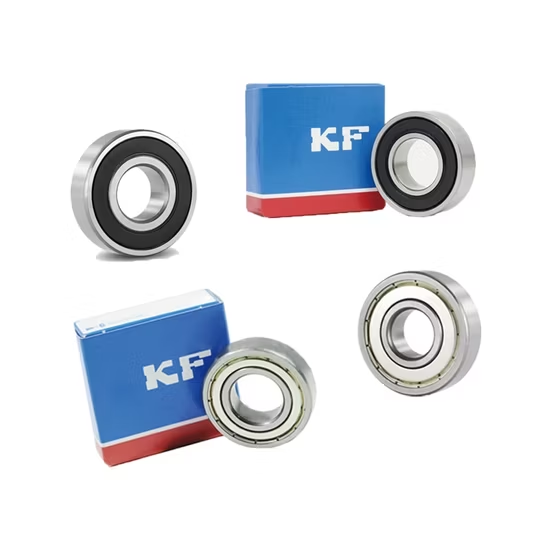
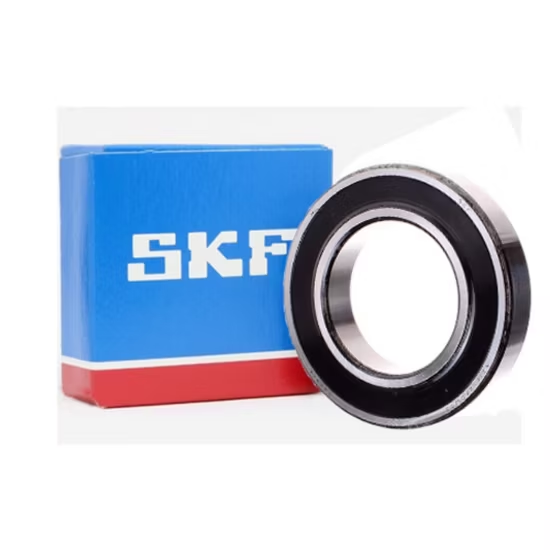


6403 6404 6405 6407 6408 6409 Deep Groove Ball Bearing — offered in open, 2RS, and 2Z variants.
Multi-Brand Traceability — Every 6403 6404 6405 6407 6408 6409 deep groove ball bearing ships with manufacturer lot documentation to verify exact seal and clearance configurations.
| Parameter | Value |
|---|---|
| Designation | 6403 6404 6405 6407 6408 6409 |
| Product Type | Deep Groove Ball Bearing |
| Seal or Shield Type | Open, 2RS (Rubber Contact Seal), 2ZZ (Steel Shield) |
| Quality Level | Z1V1, Z2V2, Z3V3, Z4V4 |
| Origin Options | Germany, Japan, Sweden, Malaysia, China |
| HS Code | 848210 |
| Industry | Typical Applications |
|---|---|
| Electric Motors | Rotor shaft supports requiring Z3V3 or Z4V4 low-noise grading |
| Industrial Gearboxes | Intermediate shaft positions needing 2ZZ shields for oil splash environments |
| Pumps and Conveyors | Drive pulleys and impeller shafts exposed to moisture requiring 2RS seals |
| Household Appliances | High-speed spindle motors demanding strict vibration control |
Matching the base number is only the first step; ignoring the seal and vibration suffix guarantees field failure.
When procuring components for high-humidity environments, confusing a non-contact steel shield with a rubber contact seal leads to rapid moisture ingress and lubricant washout. I witnessed this exact failure mode at a Vietnamese motor manufacturing plant, where misapplied shields allowed condensation to destroy the grease matrix. Procurement teams often focus solely on the bore and outer diameter, overlooking how a 2RS contact seal prevents contamination while a 2ZZ shield handles higher speeds with lower friction. Selecting the wrong variant for a 6403 6404 6405 6407 6408 6409 deep groove ball bearing results in premature thermal binding or catastrophic cage failure under load.
Selecting the correct sealing arrangement dictates the operational lifespan of the assembly. The open configuration allows for external oil circulation in gearboxes, while the 2ZZ steel shield provides a non-contact labyrinth that retains grease and blocks large debris without adding rotational friction. For applications facing liquid exposure or fine particulate dust, the 2RS rubber contact seal creates a physical barrier against the inner ring, ensuring the internal lubricant remains intact even under severe environmental stress.
Deep groove geometries excel at handling combined radial and light axial loads, but the operational envelope shifts based on rotational speed and thermal expansion. High-speed electric motors demand low-friction shields or open designs to prevent heat generation from seal lip contact. Conversely, slow-moving conveyors in washdown areas require the tight sealing interface of rubber lips. Temperature fluctuations also dictate internal clearance requirements; insufficient expansion room causes the rolling elements to skid, while excessive clearance amplifies vibration and accelerates raceway fatigue.
The Z1V1 through Z4V4 quality levels define the strictness of vibration and acoustic emission testing during manufacturing. A Z4V4 grade is non-negotiable for precision household appliance motors where audible hum is unacceptable, whereas a Z1V1 grade suffices for heavy industrial gearboxes. The internal cage design and raceway superfinishing directly influence these metrics. Furthermore, verifying the exact internal geometry ensures the component can withstand the specific dynamic loads of the application, preventing micro-pitting on the raceways during continuous operation.
Substituting a standard clearance part where a C3 expansion clearance is required causes the internal components to bind as the shaft heats up, leading to unplanned downtime and seized rotors. Similarly, installing a standard precision grade in a high-speed spindle generates excessive vibration that damages adjacent equipment. These misalignments void equipment warranties and trigger costly emergency replacements, proving that rigorous cross-referencing of the full designation is a financial necessity, not just a technical formality.
Our distribution network covers all major international manufacturers, allowing mixed-brand orders to be fulfilled under a single traceable shipment. We strictly verify that cross-referenced equivalents match the exact 2RS or 2ZZ suffix, rather than just the base dimension, preventing the friction mismatches that plague generic substitutions. Every batch is backed by manufacturer lot traceability, ensuring the metallurgical origin is documented. Our technical team reviews application parameters to confirm that the selected vibration grade and seal type align perfectly with your operational environment.
To ensure the selected configuration meets your exact operational demands, provide our engineering team with the radial and axial load profiles, maximum rotational speeds, and ambient temperature ranges. Sharing the original equipment manufacturer part numbers allows us to perform a comprehensive cross-reference check, verifying that the seal type and internal clearance match the initial design intent. This technical review guarantees that the replacement components integrate flawlessly into your existing machinery without requiring mechanical modifications.
Q: How can I verify the authenticity of the 2RS and 2ZZ suffixes?
A: We provide manufacturer batch codes that allow you to scan the packaging via official brand applications. This digital verification confirms the exact seal configuration and production origin, protecting your facility from counterfeit products that often feature cloned QR codes and incorrectly molded rubber lips or poorly fitted steel shields.
Q: Why is cross-referencing more than just matching the base number?
A: Matching the base dimension ignores critical internal differences. A cross-reference must align the internal clearance, cage material, and seal type. Installing a standard clearance part in a high-temperature motor causes thermal binding, while using a steel shield in a wet environment leads to rapid grease washout and premature failure.
Q: How do I choose between Open, 2RS, and 2ZZ configurations?
A: Open bearings suit oil-lubricated gearboxes. The 2ZZ steel shield offers low-friction protection for high-speed, grease-lubricated applications where liquid exposure is minimal. The 2RS rubber contact seal provides maximum protection against moisture and fine dust, making it ideal for pumps and conveyors operating in harsh or washdown environments.
Q: What do the Z1V1 to Z4V4 quality levels indicate?
A: These designations classify the bearing's vibration and acoustic emission limits. Z4V4 represents the strictest tolerance, essential for high-speed electric motors and household appliances where noise reduction is critical. Lower grades like Z1V1 are typically sufficient for general industrial gearboxes where acoustic performance is less restrictive.
Q: What mounting practices protect the internal geometry?
A: Avoid applying axial force through the rolling elements during installation. For tight interference fits on the shaft, use controlled induction heating to expand the inner ring evenly. This prevents brinelling on the raceways and preserves the precise internal geometry required for smooth, low-vibration operation.
Our 5-step process ensures every order is engineered, validated, and supported for optimal performance.
Technical needs assessment
Custom specifications
Free samples for $50k+
Pre-shipment inspection
On-site & predictive
Our certified engineers respond within 24 hours with detailed technical specifications, pricing, and lead time information.


