01
Consultation
Technical needs assessment


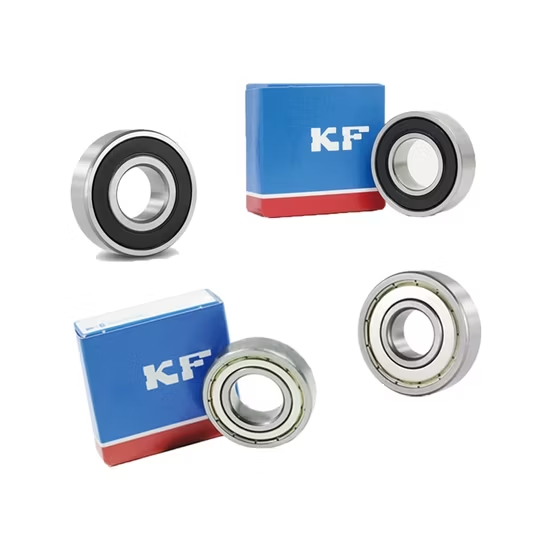


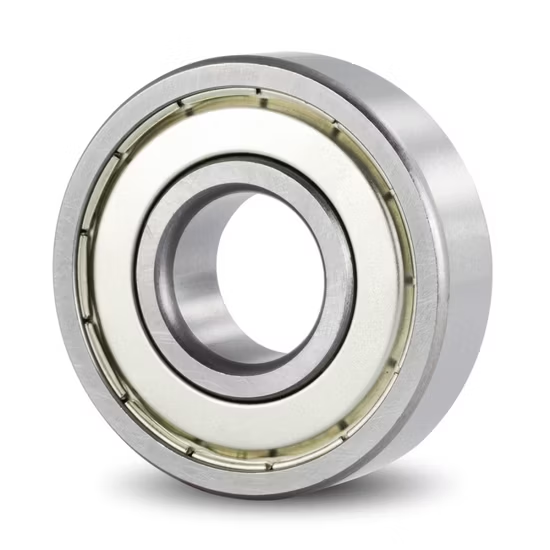
6303zz Deep Groove Ball Bearing — double shielded iron seals prevent contamination ingress while supporting high-speed CNC spindle operations.
Batch Traceability — Every 6303zz unit ships with verifiable lot documentation linking directly to the manufacturer's production records.
| Parameter | Value |
|---|---|
| Designation | 6303zz |
| Bearing Type | Deep Groove Ball Bearing |
| Material | Chrome Steel (GCr15) |
| Seal or Shield Type | Double Shielded (Iron Seals) |
| Vibration and Noise Grade | Z1V1, Z2V2, Z3V3, Z4V4 |
| Customization | Cross-brand interchange available |
| Industry | Typical Applications |
|---|---|
| Machine Tool Manufacturing | High-speed CNC spindle assemblies and precision milling heads |
| Electric Motor Production | Premium efficiency motor shafts and cooling fan drives |
| Industrial Automation | Precision conveyor rollers and automated guided vehicle wheels |
A matching designation on the box does not guarantee stable operation inside a high-speed CNC spindle assembly. Sourcing a 6303zz deep groove ball bearing based solely on the base number often leads to catastrophic thermal binding when internal clearances and vibration grades are overlooked. Procurement teams frequently receive components that look correct externally but fail rapidly under continuous rotational stress because the internal geometry was never validated for precision machining environments .
Selecting the correct 6303zz deep groove ball bearing requires looking past the basic dimension series. For CNC spindles, the internal clearance must accommodate thermal expansion generated during prolonged high-speed cutting operations. We review the specific rotational speeds and operational temperatures of your spindle design to ensure the selected vibration grade and internal geometry align perfectly with the required machining tolerances, preventing chatter marks on finished parts.
Spindle environments demand a delicate balance between contamination exclusion and friction management. Iron shields provide a non-contact barrier that keeps metallic swarf and coolant mist out of the raceway without introducing the drag associated with rubber seals. At elevated rotational speeds, minimizing friction is critical to prevent the lubricant from degrading prematurely . The double shielded configuration ensures the factory-applied lubricant remains intact while allowing the inner ring to expand freely as the spindle heats up during heavy milling cycles.
The zz suffix explicitly defines the double iron shield configuration, a non-contact sealing arrangement essential for high-speed spindle applications where rubber seal friction would generate excessive heat. Equally critical are the Z1V1 through Z4V4 vibration and noise classifications. A standard Z1V1 grade might suffice for a basic conveyor roller, but a precision CNC spindle demands Z3V3 or Z4V4 to minimize harmonic vibration transfer to the cutting tool. Selecting the appropriate noise grade ensures the spindle runs smoothly, directly impacting the surface finish quality of the machined components.
Installing a standard clearance component in an application requiring C3 clearance leads to rapid preload buildup as the spindle reaches operating temperature. This unplanned downtime results in premature failure of the raceway and potential catastrophic damage to the expensive spindle housing. According to ISO 281 fatigue life calculation frameworks, operating with incorrect internal clearance drastically reduces the calculated L10 life, turning a routine maintenance interval into an emergency production halt .
Having spent years on the floor at Hanover industrial exhibitions, I have seen too many production lines halted because a P0 grade component was forced into a high-precision spindle. We do not just ship boxes; we verify that the cross-reference aligns on cage design, clearance, and vibration grade, not just the base number. Our technical team reviews your specific application parameters to ensure the GCr15 material and shield configuration can handle your exact speed and load profile. This application-based selection review eliminates the guesswork and prevents suffix mismatches that cause field failures.
To ensure the selected deep groove ball bearing matches your exact spindle requirements, please provide your operational parameters including radial and axial loads, maximum rotational speed, and operating temperature range. Sharing the original OEM equipment number allows our engineering team to perform a comprehensive cross-reference check, verifying that the internal clearance and vibration grade align perfectly with your machinery's design specifications.
Q: Why is the zz iron shield preferred over rubber seals for CNC spindles?
A: Iron shields provide a non-contact sealing barrier that excludes metallic swarf and coolant without introducing the friction and heat generation associated with contacting rubber seals. This non-contact design is critical for maintaining high rotational speeds and preventing premature lubricant degradation in precision spindle applications.
Q: How do Z1V1 to Z4V4 grades affect spindle performance?
A: These grades classify the vibration and noise levels of the bearing. While Z1V1 is suitable for general industrial motors, high-precision CNC spindles typically require Z3V3 or Z4V4 to minimize harmonic vibration transfer to the cutting tool, ensuring superior surface finish quality on machined parts and reducing acoustic noise.
Q: What happens if internal clearance is ignored during cross-referencing?
A: If a standard clearance bearing is installed where C3 is required, thermal expansion during high-speed operation will eliminate the internal play. This causes excessive preload, leading to rapid temperature spikes, accelerated raceway wear, and ultimately catastrophic spindle failure long before the expected L10 fatigue life is reached.
Q: How can I verify the authenticity of the GCr15 material?
A: Every batch we supply includes a Material Test Report detailing the chemical composition of the chrome steel. Additionally, the components feature QR codes that can be scanned using official manufacturer applications to verify the production lot and confirm the material originates from authorized production facilities.
Our 5-step process ensures every order is engineered, validated, and supported for optimal performance.
Technical needs assessment
Custom specifications
Free samples for $50k+
Pre-shipment inspection
On-site & predictive
Our certified engineers respond within 24 hours with detailed technical specifications, pricing, and lead time information.