01
Consultation
Technical needs assessment


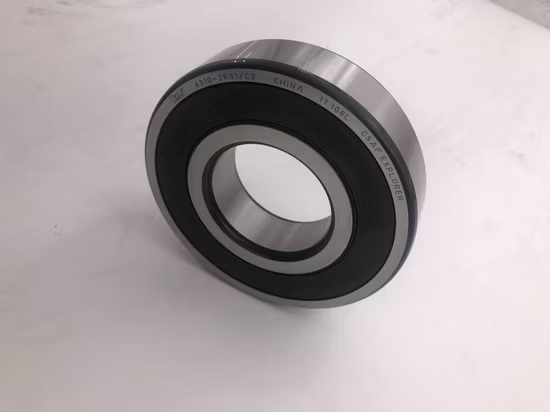
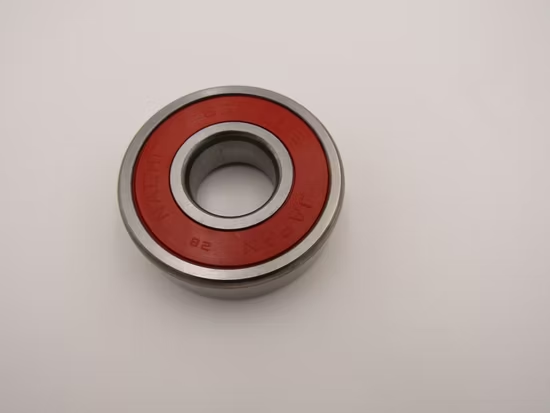
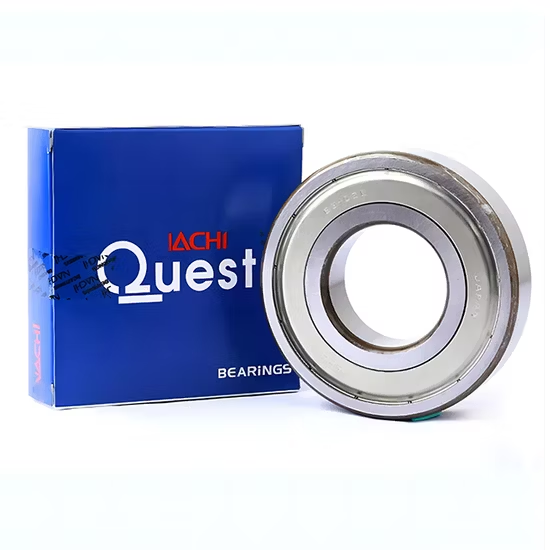


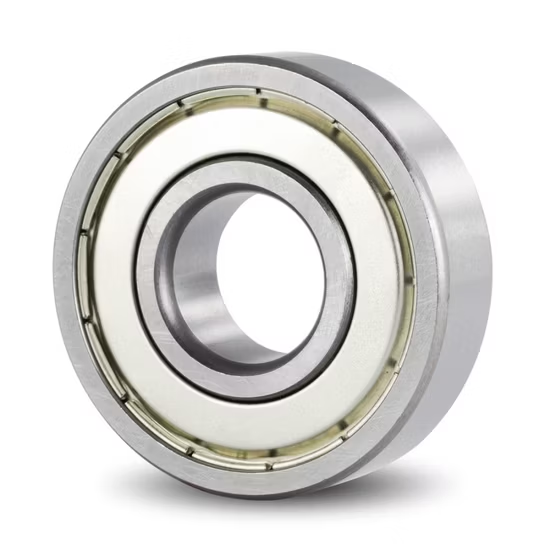
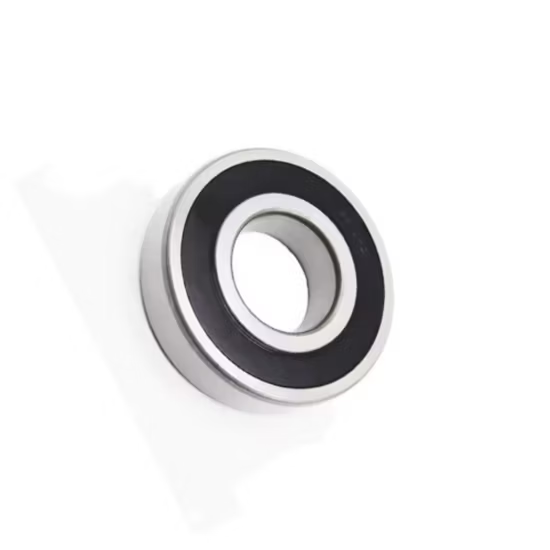
624 Deep Groove Ball Bearing — engineered with a deep groove structure to efficiently handle both radial and light axial loads across electric motors and industrial gearboxes.
Exact Cross-Reference Alignment — We verify seal configurations, internal clearances, and precision grades rather than relying solely on the base 624 designation to ensure perfect equipment fit.
| Parameter | Value |
|---|---|
| Designation | 624 |
| Bearing Type | Deep Groove Ball Bearing |
| Seal or Shield Type | ZZ, 2RS, Open (Available options) |
| Material | GCr15 bearing steel (Standard), ceramic or stainless steel variants available |
| Origin | Shanghai |
| Customization | Customized specifications available |
| Industry | Typical Applications |
|---|---|
| Electric Motors | Small motor rotors and high-speed stator supports |
| Industrial Gearboxes | High-speed input shafts and auxiliary drive mechanisms |
| Manufacturing Plants | Precision conveyor rollers and automated assembly guides |
| Household Appliances | High-speed spindle mechanisms in washing machines and cooling fans |
Matching the base number is never enough if internal clearances and seal types are ignored.
Procurement teams frequently order replacements based solely on the stamped outer ring, only to face catastrophic field failures weeks later. I have dismantled too many seized micro-spindles in the Yangtze River Delta region where a standard clearance was forced into a high-temperature motor, causing thermal expansion to lock the rolling elements. When a 624 deep groove ball bearing fails prematurely, the root cause is rarely the steel itself; it is usually a mismatched suffix, a cloned QR code hiding a soft inner ring, or a shield type that cannot retain grease under high-speed vibration .
Selecting the right configuration requires looking past the basic dimensions to evaluate the actual operating environment. Our engineering team reviews your specific radial loads, rotational speeds, and ambient temperatures to recommend the optimal seal and clearance combination. This application-based selection process ensures the 624 deep groove ball bearing performs reliably without generating excess friction heat or admitting microscopic contaminants.
Miniature bearings operate at exceptionally high rotational speeds, making friction management and lubrication retention critical to their survival. Metal shields offer minimal friction for high-RPM electric motors, whereas rubber contact seals provide superior defense against dust and moisture in conveyor applications, albeit with a slight speed penalty. Furthermore, temperature fluctuations dictate the necessary internal clearance; ignoring thermal expansion during operation inevitably leads to preload buildup and cage destruction . Proper selection balances these competing factors to maximize service life.
The suffix attached to the base number dictates how the bearing interacts with its environment. Open variants require external lubrication systems and are ideal for enclosed gearboxes where oil splash is constant. ZZ metal shields provide non-contact protection, keeping grease inside and large debris out without adding significant frictional heat, making them perfect for high-speed electric motors. 2RS rubber seals offer contact sealing for harsh, dusty manufacturing plants, though they limit the maximum permissible speed. Beyond seals, internal clearance must be matched to the application: standard clearance suits normal temperatures, while C3 clearance provides the necessary thermal expansion room for hot-running motors, preventing the inner ring from expanding into the rolling elements and causing a seizure.
Installing a bearing with incorrect internal geometry or counterfeit metallurgy triggers a cascade of mechanical failures. Unplanned downtime halts entire production lines, while catastrophic damage to adjacent shafts and housings multiplies the repair costs far beyond the price of the component itself. According to failure analysis frameworks, a significant share of premature failures stems from improper selection rather than manufacturing defects . Warranty voidance is almost guaranteed when equipment manufacturers discover non-compliant clearances or unverified material origins during post-failure teardowns.
Sourcing from authorized channels eliminates the risk of receiving counterfeit components with soft inner rings that fail under minimal load. We provide cross-reference alignment that checks seal types, clearances, and precision suffixes, ensuring the replacement perfectly matches the OEM requirement. Our batch traceability allows you to verify the exact manufacturing origin through official brand applications. Furthermore, our application-based selection review covers load, speed, and temperature parameters to prevent the costly mistakes associated with blind catalog ordering.
To ensure optimal performance, please provide your specific radial and axial loads, operating speeds, and ambient temperature ranges for a comprehensive L10 life calculation. Sharing the original OEM equipment number allows our technical team to perform a precise cross-reference check, verifying that the seal type and internal clearance match the manufacturer's original design. This data enables us to deliver a technically validated solution rather than a simple catalog part.
Q: How do I choose between ZZ, 2RS, and Open seals for my application?
A: ZZ metal shields are best for high-speed electric motors requiring low friction. 2RS rubber seals suit dusty environments needing strict contamination protection, though they limit top speed. Open bearings are ideal for gearboxes with continuous external oil lubrication. We evaluate your specific speed and environment to recommend the exact configuration.
Q: Why must cross-referencing include clearance and precision suffixes?
A: Matching only the base 624 number ignores critical internal geometry. Installing a standard clearance in a high-temperature motor causes thermal expansion to lock the bearing, while using standard precision in a high-speed spindle generates excess vibration. We verify these suffixes to ensure exact operational alignment.
Q: How do I resolve material discrepancies when sourcing replacements?
A: While GCr15 is standard, some applications require ceramic or stainless steel variants for extreme temperatures or corrosion resistance. We review your operating environment to confirm if the original material specification is still appropriate or if an upgrade is necessary to prevent premature field failure.
Q: What documentation verifies authenticity and batch traceability?
A: Every shipment includes a Certificate of Conformity, dimensional inspection reports, and country-of-origin documents. Crucially, we provide batch and lot traceability that allows you to scan the QR code via the manufacturer's official app, proving the steel quality and heat treatment meet exact specifications.
Q: How do I determine the correct clearance class for high-temperature motors?
A: Standard clearance is suitable for normal operating temperatures. However, if the motor runs hot, the inner ring expands more than the outer ring, reducing internal clearance and causing seizure. We calculate the thermal expansion based on your operating temperature to determine if a C3 or C4 clearance is required.
Our 5-step process ensures every order is engineered, validated, and supported for optimal performance.
Technical needs assessment
Custom specifications
Free samples for $50k+
Pre-shipment inspection
On-site & predictive
Our certified engineers respond within 24 hours with detailed technical specifications, pricing, and lead time information.