01
Consultation
Technical needs assessment

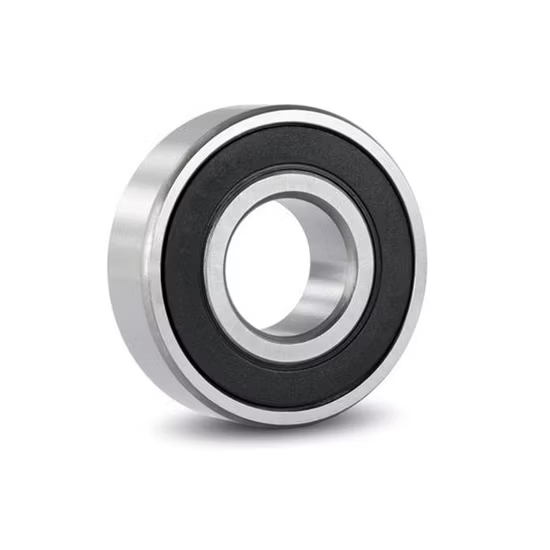

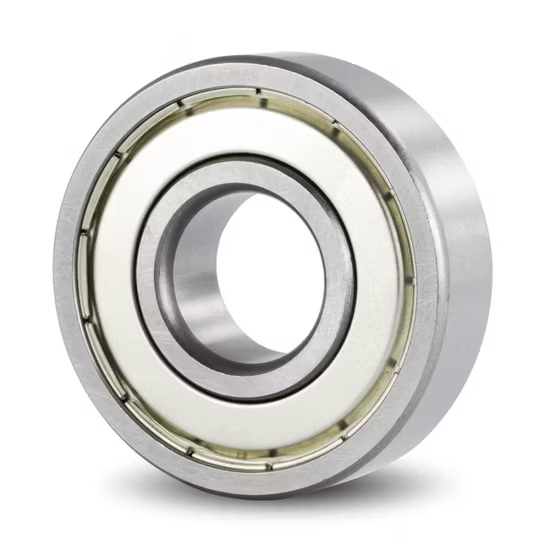


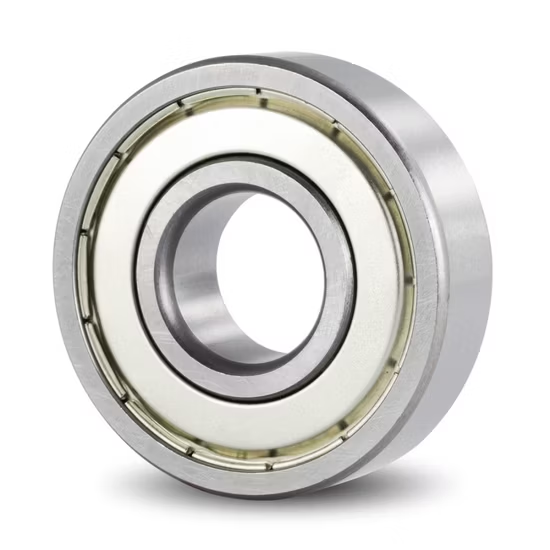
6204 Deep Groove Ball Bearing 20×47×14 mm — chrome steel construction for electric motors and gearboxes.
Multi-Brand Authorized Coverage — Source SKF, FAG, and NSK equivalents for your 6204 deep groove ball bearing requirements in a single consolidated shipment without juggling multiple vendors.
| Parameter | Value |
|---|---|
| Designation | 6204 |
| Bearing Type | Deep Groove Ball Bearing |
| Bore Diameter (d) | 20 mm |
| Outside Diameter (D) | 47 mm |
| Width (B) | 14 mm |
| Material | Chrome Steel |
| Seal or Shield Type | Open, ZZ (Double Steel Shields), 2RS (Double Contact Rubber Seals) |
| Precision Class | P4, P5, P6 |
| Quality Level | Z1V1, Z2V2, Z3V3, Z4V4 |
| Customization | OEM |
| HS Code | 848210 |
| Industry | Typical Applications |
|---|---|
| Printing & Packaging | Printing press impression cylinders, folder-gluer conveyor rollers |
| Electric Motors | High-speed rotor shafts, cooling fan assemblies |
| Industrial Gearboxes | Input/output shaft support, intermediate gear clusters |
| Fluid Handling | Centrifugal pump shafts, vacuum pump rotors |
A missing clearance or mismatched seal suffix turns a standard replacement into a catastrophic thermal failure.
In the Pearl River Delta manufacturing hubs, I have witnessed countless printing press impression cylinders lock up mid-run simply because a standard clearance part was forced into a high-speed, high-heat environment. When procurement teams focus solely on the base number, they overlook the critical suffix combinations that dictate thermal expansion tolerance and contamination resistance. This oversight leads to rapid cage degradation and unplanned downtime that halts entire production lines .
Selecting the correct 6204 deep groove ball bearing requires aligning the physical shield or seal type with the specific contamination profile of your machinery. Our technical review process ensures that the chosen variant—whether open for oil-bath lubrication or sealed for grease retention—perfectly matches the dust, moisture, and particulate exposure of your application, leveraging our cross-brand interchange expertise to secure the exact configuration you need.
High-speed printing cylinders and electric motor shafts generate substantial friction heat, making internal clearance and seal friction critical variables. If a non-contact steel shield (ZZ) is used in a washdown environment, moisture ingress will rapidly destroy the raceways, whereas a contact rubber seal (2RS) in a high-temperature zone might melt or create excessive drag. Furthermore, operating at elevated temperatures demands careful consideration of how thermal expansion affects the internal geometry, necessitating precise clearance selection to prevent the rolling elements from binding under load .
The distinction between ZZ and 2RS dictates whether the bearing retains factory grease while blocking coarse dust, or provides a tight lip seal against fine particulates and moisture at the cost of slightly higher friction. Precision classes P4, P5, and P6 define the dimensional and running accuracy tolerances; a P4 rating is non-negotiable for precision machine tool spindles to minimize vibration, while P6 suffices for general conveying. Additionally, the Z1V1 through Z4V4 quality levels specify the stringent vibration and acoustic emission limits required for quiet electric motor operation, ensuring the internal geometry and surface finish meet strict noise criteria.
Installing a standard internal clearance where a C3 equivalent was required for thermal expansion routinely causes the bearing to seize as the shaft heats up. Similarly, substituting a P6 grade into a high-speed spindle application introduces unacceptable vibration, accelerating fatigue spalling on the raceways. These misalignments result in catastrophic damage to adjacent housings, voided equipment warranties, and severe production delays that far exceed the initial cost of the component .
We prevent cross-reference errors by verifying not just the base 6204 designation, but strictly aligning the clearance, cage material, and precision suffixes across different manufacturers. Our batch traceability ensures every chrome steel component is linked to its original heat treatment lot, eliminating the risk of soft inner rings from counterfeit sources. We provide application-based selection reviews that evaluate your specific load and speed parameters, ensuring the seal type and precision grade are perfectly matched to your machinery's reality.
To ensure precise application matching, please share your operating parameters including radial and axial loads, rotational speeds, and ambient temperatures for L10 life verification. Providing the specific OEM equipment number allows our engineering team to execute a thorough cross-reference check, confirming that the seal type, precision class, and internal geometry perfectly align with your original design specifications.
Q: How do I choose between ZZ shields and 2RS seals for a printing press application?
A: The ZZ steel shields offer low-friction protection against coarse paper dust and retain grease effectively for high-speed cylinders. However, if the press operates in high humidity or requires occasional washdowns, the 2RS rubber contact seals provide superior moisture exclusion, albeit with a slight increase in rotational friction and temperature generation.
Q: Why must cross-referencing include suffixes and not just the base 6204 number?
A: Matching only the base dimensions ignores critical internal differences. A substitute might have standard clearance instead of the required thermal expansion clearance, or a stamped steel cage instead of a precision-machined one. These hidden discrepancies cause thermal binding or cage failure under the specific speed and load conditions of your equipment.
Q: How can I verify the authenticity and material quality of the received bearings?
A: Authenticity is confirmed by scanning the packaging QR code through the manufacturer's official application, which validates the batch origin. Material quality is verified via the supplied material test reports and dimensional inspection certificates, ensuring the chrome steel hardness and precision tolerances strictly meet the declared P-class specifications.
Q: What do the P4, P5, and P6 precision classes mean for my motor or spindle?
A: These classes define the strictness of dimensional and running accuracy tolerances. P6 is suitable for general electric motors and gearboxes, P5 offers tighter runout for higher-speed applications, and P4 provides the ultra-precise geometry required for machine tool spindles and high-end printing cylinders to minimize vibration and ensure superior surface finishes.
Our 5-step process ensures every order is engineered, validated, and supported for optimal performance.
Technical needs assessment
Custom specifications
Free samples for $50k+
Pre-shipment inspection
On-site & predictive
Our certified engineers respond within 24 hours with detailed technical specifications, pricing, and lead time information.