01
Consultation
Technical needs assessment


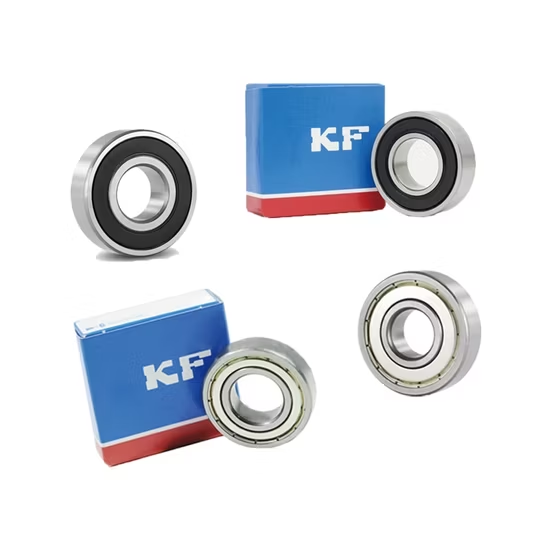


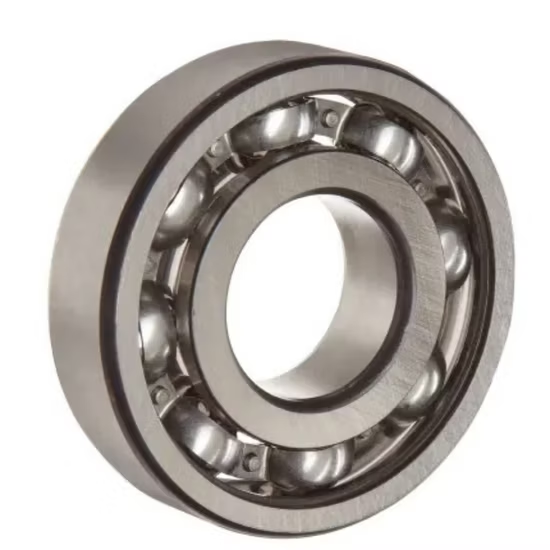
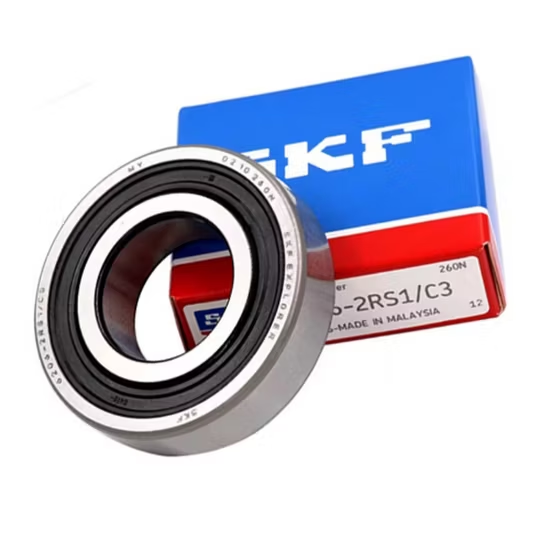
6203 2z Deep Groove Ball Bearing features double steel shields providing reliable dust exclusion for medium-speed operations in electric motors and industrial gearboxes. This shielded design effectively retains internal lubrication while preventing debris ingress.
Precision Cross-Reference Alignment — We validate internal clearance, cage design, and shield friction to ensure your replacement matches the exact OEM equipment requirement.
| Parameter | Value |
|---|---|
| Designation | 6203 2z |
| Bearing Type | Deep Groove Ball Bearing |
| Seal or Shield Type | Double steel shields |
| Noise and Vibration Level | Z1V1, Z2V2, Z3V3, Z4V4 |
| Origin | Germany, Japan, Sweden, Malaysia, China |
| HS Code | 848210 |
| Industry | Typical Applications |
|---|---|
| Electric Motors | Rotor shaft support in continuous-duty induction motors |
| Industrial Gearboxes | High-speed input shafts and intermediate gear stages |
| Material Handling | Conveyor drive pulleys and idler roller assemblies |
| Pumps | Centrifugal pump impeller shafts and motor couplings |
Selecting the right 6203 2z deep groove ball bearing requires more than just matching the base number on the old component.
Matching the base designation without verifying internal clearance and shield friction limits often leads to premature thermal failure.
I have seen countless motor burnouts in the Pearl River Delta manufacturing hubs because procurement teams ignored the friction heat generated by incorrect shield types or substandard materials. When a counterfeit unit with a soft inner ring is installed, it inevitably seizes under continuous high-speed operation, destroying the stator in the process. Sourcing authentic components with verified metallurgy prevents these catastrophic downtime events and protects the broader machinery asset.
The double steel shields on this 6203 2z deep groove ball bearing provide non-contact protection, effectively excluding dust and debris without generating the friction heat associated with rubber contact seals. This specific configuration is critical for electric motor applications where high rotational speeds demand minimal operating temperatures. Our technical team reviews your specific environmental contamination levels to confirm that non-contact shielding provides adequate protection for your exact machinery setup.
High-speed electric motor shafts generate significant internal heat, making the correct internal clearance class absolutely vital to prevent the rolling elements from binding under thermal expansion. The factory-filled lubricant must also possess the correct base oil viscosity to maintain an adequate film thickness at elevated operating temperatures without churning excessively. If the operating environment introduces fine particulate matter, the non-contact shields must be supplemented with external labyrinth seals to prevent abrasive ingress.
The 2Z suffix specifically designates double steel shields, which offer excellent contamination exclusion while maintaining the low-friction characteristics required for high-speed motor shafts. Unlike rubber seals, these metal shields do not rub against the inner ring, keeping operating temperatures stable during continuous duty cycles. Furthermore, the availability of Z1V1 through Z4V4 noise and vibration grades allows procurement engineers to specify the exact acoustic performance required, ensuring quiet operation in sensitive household appliances or precision industrial gearboxes.
Installing a standard clearance bearing in an application that demands C3 clearance for thermal expansion will cause the internal components to bind as the motor reaches its operating temperature. This localized overheating rapidly degrades the lubricant and initiates surface fatigue on the raceways long before the calculated L10 life is reached. Such premature failures result in unplanned downtime, voided equipment warranties, and secondary damage to the motor windings. Adhering to the failure analysis frameworks outlined in international standards helps identify these root causes before they escalate into catastrophic machinery damage.
We provide authorized distribution coverage across all major international brands, allowing you to consolidate mixed-brand requirements into a single, fully traceable purchase order. Our cross-reference validation goes far beyond matching the base number; we verify that the internal clearance, cage material, and shield type perfectly align with your specific equipment parameters. Every shipment includes batch traceability documentation, ensuring you can verify the metallurgical origin and authenticity of the components. We also supply detailed dimensional and running accuracy inspection reports, giving your maintenance team absolute confidence before the unit is pressed onto the shaft.
To ensure optimal performance, please provide your specific radial and axial load profiles, continuous operating speeds, and expected thermal environments for our engineering team to conduct a comprehensive L10 life calculation. If you are replacing an existing component, sharing the original OEM equipment number allows us to perform a rigorous cross-reference check, verifying that the internal clearance and vibration grade match the manufacturer's original design intent. This technical review guarantees that the selected component will withstand your exact operational demands without premature degradation.
Q: How can I verify the authenticity of the received components?
A: Every unit we supply features a unique QR code that links directly to the manufacturer's official verification application. By scanning this code with your mobile device, you can instantly confirm the production batch, origin facility, and technical specifications. This digital traceability eliminates the risk of installing counterfeit parts with substandard inner ring hardness that frequently cause high-speed motor seizures.
Q: What cross-reference checks are performed beyond the base designation?
A: We validate the internal clearance class, cage material, and noise/vibration grade to ensure complete compatibility with your equipment. A base number match is insufficient if the application requires C3 clearance for thermal expansion but receives a standard CN variant. Our technical team reviews these critical suffixes to prevent thermal binding and premature cage failure in the field.
Q: When should I choose double steel shields over rubber contact seals?
A: Steel shields are ideal for high-speed electric motor applications where minimizing friction heat is the primary concern. Unlike rubber contact seals, the non-contact metal shields do not rub against the inner ring, keeping operating temperatures stable during continuous duty cycles. However, if the motor operates in an environment with heavy liquid contamination, rubber seals or external labyrinth enclosures would be more appropriate.
Q: How do I select the correct noise and vibration level for my application?
A: The Z1V1 to Z4V4 grades indicate the strictness of the manufacturing tolerances regarding acoustic emissions and vibration amplitudes. Standard industrial gearboxes typically perform well with Z1V1 or Z2V2 grades, while precision servo motors or quiet household appliances require the tighter Z3V3 or Z4V4 specifications. We help you match the exact acoustic requirement to avoid unnecessary over-specification or unacceptable noise levels.
Our 5-step process ensures every order is engineered, validated, and supported for optimal performance.
Technical needs assessment
Custom specifications
Free samples for $50k+
Pre-shipment inspection
On-site & predictive
Our certified engineers respond within 24 hours with detailed technical specifications, pricing, and lead time information.