01
Consultation
Technical needs assessment



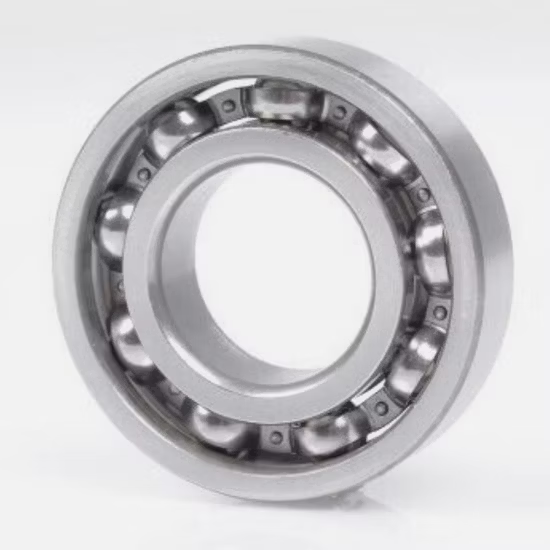
6203 2RS Deep Groove Ball Bearing — double contact rubber seals on both sides deliver reliable protection against dust and moisture ingress, supporting maintenance-free operation across electric motor, pump, and conveyor applications.
Unified multi-brand sourcing — Procure SKF, FAG, or NSK variants of this specific deep groove ball designation in a single consolidated shipment without juggling multiple vendors.
| Parameter | Value |
|---|---|
| Designation | 6203 2RS |
| Bearing Type | Deep Groove Ball Bearing |
| Seal or Shield Type | Rubber Seals (2RS) |
| Noise and Vibration Level | Z1V1, Z2V2, Z3V3, Z4V4 |
| Origin | Germany, Japan, Sweden, Malaysia, China |
| Industry | Typical Applications |
|---|---|
| Electric Motors | Rotor shaft support in fractional horsepower motors |
| Industrial Pumps | Impeller shaft sealing in centrifugal water pumps |
| Material Handling | Drive roller journals in belt conveyor systems |
| Gearboxes | Low-speed shaft support in helical gear reducers |
Overly stiff seal lips generate friction heat that degrades grease and accelerates cage fatigue.
Sourcing cheap replacements often introduces rubber compounds that harden at elevated temperatures. When the sealing lip presses too aggressively against the inner ring, the resulting friction spikes internal temperatures. This thermal buildup breaks down the factory-fill lubricant, leaving the rolling elements starved. I have inspected countless seized units where the polyamide cage melted or shattered simply because the seal material was never rated for the motor's actual operating envelope .
Selecting the correct 6203 2RS deep groove ball bearing requires looking past the basic dimension. We verify the exact noise and vibration class to ensure smooth operation in sensitive electric motor applications. By cross-referencing the required Z/V grading against the manufacturer's current production batches, we prevent the installation of overly noisy components that trigger warranty rejections in household appliances and precision pumps.
Electric motor shafts experience rapid temperature fluctuations during startup and continuous duty cycles. If the internal clearance does not accommodate this thermal growth, the rolling elements will bind. Furthermore, the double contact seal configuration must balance contamination exclusion with friction limits. Excessive lip pressure generates localized heat, while insufficient contact allows airborne dust to infiltrate the raceway and pit the polished surfaces .
The 2RS suffix indicates double contact rubber seals on both sides, providing a physical barrier against moisture and particulate matter. Unlike non-contact metal shields, these elastomeric seals introduce a slight frictional drag that must be factored into the limiting speed calculations. Simultaneously, the Z1V1 through Z4V4 noise and vibration classifications dictate the internal geometric accuracy and surface finish. Higher Z/V classes are mandatory for high-speed rotor applications to minimize acoustic emissions and structural resonance.
Installing a standard clearance variant where a C3 thermal expansion clearance was specified leads to catastrophic internal preloading. According to failure analysis frameworks like ISO 15243, this specific mounting error causes rapid surface smearing and eventual cage disintegration. The resulting unplanned downtime on a critical conveyor line far exceeds the initial savings of purchasing an incorrectly specified, cheaper alternative .
Our technical review catches cross-reference errors that automated catalogs miss. We ensure the replacement 6203 2RS matches not just the bore and diameter, but the exact cage material and internal geometry required by your OEM equipment. Every shipment includes verifiable batch traceability, eliminating the risk of installing counterfeit components with soft inner rings that fail under minimal radial loads.
To ensure precise application matching, please provide the continuous and peak radial loads alongside the maximum operating temperature of your equipment. Sharing the specific OEM motor or gearbox part number allows our engineering team to verify the required internal clearance and confirm the exact Z/V vibration class needed for your assembly line.
Q: How do I verify the authenticity of the rubber seals?
A: Counterfeit bearings often use inferior rubber that hardens and cracks. We supply every unit with a unique batch code that you can scan using the official brand application. This digital verification confirms the seal material origin and ensures the component meets the strict elastomeric standards required for long-term motor operation.
Q: Why must clearance suffixes be matched during cross-referencing?
A: A standard clearance bearing will bind when the motor shaft expands under heat. We strictly verify if your OEM design requires a C3 clearance to accommodate this thermal growth. Installing the wrong clearance class causes immediate internal preloading, leading to rapid grease degradation and premature cage failure.
Q: What is the difference between Z1V1 and Z3V3 vibration levels?
A: Higher Z/V classes indicate stricter control over raceway waviness and surface finish. While Z1V1 is acceptable for general industrial gearboxes, Z3V3 or Z4V4 is mandatory for electric motors to prevent acoustic noise and structural resonance. We match the exact grade specified by your equipment manufacturer.
Q: Can I re-lubricate this sealed configuration in the field?
A: The double contact seal design is engineered to retain the precise factory-fill grease volume while excluding contaminants. Attempting to force additional grease through the seal lips will overfill the internal cavity, causing churning and rapid temperature spikes. These units are designed to be maintenance-free for their calculated L10 life.
Our 5-step process ensures every order is engineered, validated, and supported for optimal performance.
Technical needs assessment
Custom specifications
Free samples for $50k+
Pre-shipment inspection
On-site & predictive
Our certified engineers respond within 24 hours with detailed technical specifications, pricing, and lead time information.