01
Consultation
Technical needs assessment


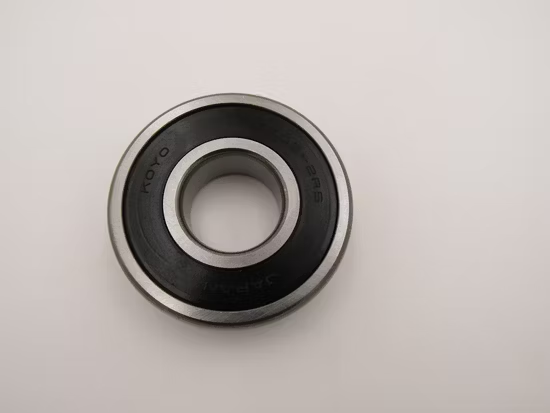
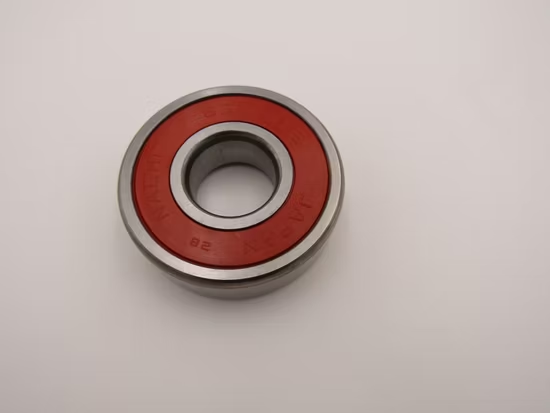
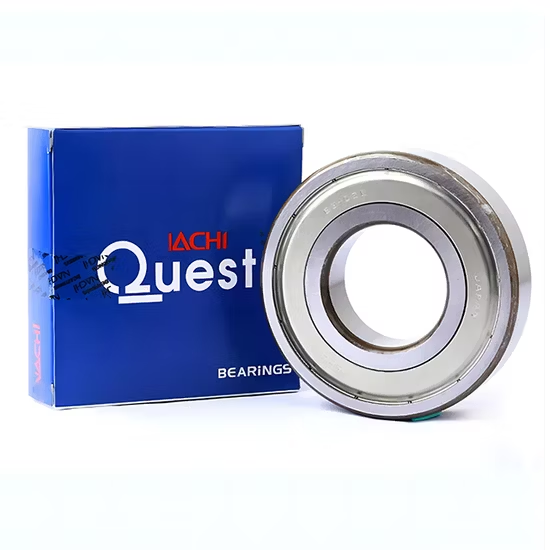


6020 Deep Groove Ball Bearing 100×150×24 mm — chrome steel construction for reliable load capacity.
Full authorized brand coverage — one consolidated shipment handles your mixed-brand 6020 deep groove ball bearing requirements without coordinating multiple suppliers.
| Parameter | Value |
|---|---|
| Designation | 6020 |
| Bearing Type | Deep Groove Ball Bearing |
| Bore Diameter (d) | 100 mm |
| Outside Diameter (D) | 150 mm |
| Width (B) | 24 mm |
| Material | Chrome Steel |
| Seal or Shield Type | Open, Zz, 2RS |
| Precision Class | P4, P5, P6 |
| Noise and Vibration Level | Z1V1, Z2V2, Z3V3, Z4V4 |
| Origin | Germany, Japan, Sweden, Malaysia, China |
| Industry | Typical Applications |
|---|---|
| Electric Motors | Main drive rotor shafts, cooling fan assemblies |
| Industrial Gearboxes | High-speed input shafts, intermediate transfer stages |
| Material Handling | Conveyor drive pulleys, belt tensioner idlers |
| Pumps | Centrifugal impeller shafts, circulation pump rotors |
Matching the exact precision and sealing suffix prevents thermal binding and early cage failure.
I spent years on the workshop floor in Ningbo, pulling apart seized electric motors. A significant share of those failures traced back to a simple cross-reference error: a standard clearance 6020 deep groove ball bearing installed where a C3 was required for thermal expansion, or an open type used in a dusty environment . Procurement teams often match the base 100x150x24 mm dimensions but overlook the critical suffixes. When a P4 precision class is specified but a P6 is shipped, the resulting vibration destroys the spindle. We verify every suffix against the OEM equipment manual to ensure the internal geometry and sealing arrangement perfectly match the operational demands.
Selecting the correct configuration requires looking beyond the basic 100 mm bore. For high-speed electric motors, a 6020 deep groove ball bearing with Z3V3 or Z4V4 noise grading ensures smooth rotation without excessive acoustic emissions. When sourcing for gearboxes subjected to heavy radial loads, verifying the cage material and internal clearance prevents microscopic skidding. Our technical team reviews your specific load, speed, and temperature parameters to confirm the selected variant handles the real-world stresses, rather than just relying on catalog ratings.
Industrial environments constantly threaten bearing integrity through heat ingress and particulate contamination. In high-temperature motor applications, standard CN clearance disappears as the inner ring expands, leading to catastrophic seizure. Selecting the appropriate internal clearance compensates for this thermal growth. Similarly, sealing choices dictate survival: rubber seals provide excellent moisture exclusion but generate friction heat at high RPMs, while iron shields offer low-friction protection against dry dust. Proper lubrication intervals and matching the seal type to the specific contamination profile are essential for maximizing service life .
The suffix string defines the actual performance boundaries of the component. The Zz configuration utilizes double iron shields, providing non-contact protection ideal for high-speed gearboxes where friction must be minimized. Conversely, the 2RS variant employs double contact rubber seals, creating a tight barrier against moisture and heavy dust in conveyor applications, albeit with a lower speed limit. Regarding accuracy, P4 and P5 precision classes are strictly reserved for machine tool spindles or precision pumps requiring minimal runout; deploying them in standard household appliances or general MRO applications is pure budget waste. Understanding these distinctions ensures you only pay for the engineering tolerances your machinery actually requires.
Installing a component with incorrect internal geometry or inadequate sealing leads directly to unplanned downtime and secondary machinery damage. When a shielded variant is mistakenly replaced with an open type, abrasive particles quickly degrade the raceways, triggering premature failure long before the calculated L10 life is reached . Furthermore, utilizing standard precision in a high-speed spindle causes excessive vibration, potentially ruining the machined surface finish and voiding equipment warranties. These cascading failures always cost significantly more than sourcing the correctly specified part initially.
We eliminate the guesswork that plagues standard distribution channels. First, our authorized multi-brand network means we source authentic units directly from the manufacturer's production facilities, completely bypassing the grey market. Second, we cross-reference not just the base 100x150x24 mm size, but rigorously check the clearance, cage, and precision suffixes against your OEM drawings. Third, every shipment includes batch traceability, allowing you to verify the exact production lot. Finally, our application-based selection review catches dangerous mismatches—like specifying a rubber seal for a high-RPM motor—before the order is even placed.
To guarantee optimal performance, please provide your specific radial and axial load profiles, operating speeds, and ambient temperature ranges. This data allows our engineering team to calculate the dynamic equivalent load and verify the L10 life for your exact machinery. If you are replacing an existing unit, sharing the OEM equipment number or the exact nameplate data enables us to perform a comprehensive cross-reference check, ensuring the replacement matches the original clearance and sealing specifications perfectly.
Q: How do I verify the authenticity of the 6020 units using official brand apps?
A: Every authentic unit features a unique, encrypted QR code on the packaging. By scanning this code with the manufacturer's official smartphone application, you can instantly verify the production batch, origin, and specifications. This digital check easily exposes counterfeit products that rely on cloned or static printed codes, ensuring your procurement remains completely secure.
Q: What cross-reference checks are critical beyond the base designation?
A: Matching the 100x150x24 mm dimensions is merely the first step. You must verify the internal clearance to accommodate thermal expansion, confirm the cage material suits your vibration profile, and ensure the precision class matches your speed requirements. Overlooking these suffix details frequently results in thermal binding or premature cage failure in the field.
Q: How should I choose between Open, Zz, and 2RS configurations?
A: Open types require external sealing housings and allow for higher speeds and custom lubrication. Zz iron shields provide low-friction, non-contact protection against dry dust, making them ideal for high-speed electric motors. 2RS rubber seals offer superior contact sealing against moisture and heavy contaminants, though they generate more friction and are limited to lower rotational speeds.
Q: What distinguishes the P4, P5, and P6 precision classes?
A: These classes define the dimensional and running accuracy tolerances. P6 is standard for general industrial machinery. P5 offers tighter runout for demanding gearboxes and pumps. P4 provides the ultra-precise rotation required for machine tool spindles. Specifying P4 for a standard conveyor application unnecessarily inflates costs without delivering any operational benefit.
Q: How do Z1V1 to Z4V4 quality levels affect machinery performance?
A: These designations classify the noise and vibration limits of the bearing. Z1V1 represents standard acoustic levels suitable for general MRO applications. Progressing to Z4V4 indicates exceptionally smooth, quiet operation, which is strictly necessary for high-end electric motors and precision appliances where excessive vibration or acoustic emission would compromise the final product quality.
Our 5-step process ensures every order is engineered, validated, and supported for optimal performance.
Technical needs assessment
Custom specifications
Free samples for $50k+
Pre-shipment inspection
On-site & predictive
Our certified engineers respond within 24 hours with detailed technical specifications, pricing, and lead time information.