01
Consultation
Technical needs assessment



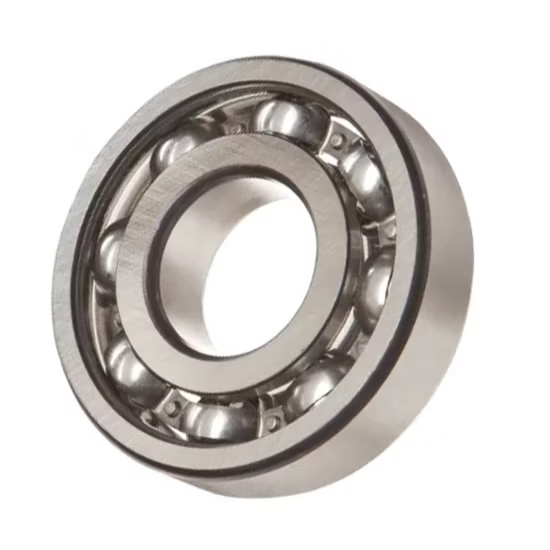
6013 6014 6015 6016 6017 6018 Deep Groove Ball Bearing P4 P5 P6 — Chrome steel construction with P4, P5, and P6 precision classes ensures exact running accuracy for printing presses.
Full Brand Authorization — Sourcing the 6013 6014 6015 6016 6017 6018 deep groove ball bearing across multiple origin facilities in a single purchase order eliminates multi-vendor coordination.
| Parameter | Value |
|---|---|
| Designation | 6013 6014 6015 6016 6017 6018 |
| Bearing Type | Deep Groove Ball Bearing |
| Material | Chrome Steel |
| Precision Class | P4, P5, P6 |
| Seal or Shield Type | Open, Rubber Seals (2RS), Iron Seals (ZZ) |
| Noise and Vibration Level | Z1V1, Z2V2, Z3V3, Z4V4 |
| Origin | Germany, Japan, Sweden, Malaysia, China |
| Industry | Typical Applications |
|---|---|
| Printing & Packaging | Printing press impression cylinders, paper feed rollers, ink transfer mechanisms |
| Industrial Power | Electric motor rotors, pump shafts, industrial gearbox input/output stages |
| Material Handling | Conveyor drive pulleys, belt tensioner idlers, automated sorting rollers |
Suffix accuracy dictates whether a bearing survives the first week of continuous web tension.
Procurement teams often approve purchase orders based solely on the base designation, assuming the internal construction is universally standardized. In reality, installing an iron-shielded variant where a rubber-sealed unit was specified allows paper dust and ink mist to infiltrate the raceway, causing premature cage failure. Similarly, ignoring precision grades leads to unacceptable radial runout on impression cylinders, resulting in blurred prints and unplanned downtime . Selecting the correct 6013 6014 6015 6016 6017 6018 deep groove ball bearing requires strict alignment of sealing and precision suffixes with the actual operating environment.
The operating environment inside a printing facility demands strict contamination control. Rubber seals provide excellent exclusion of paper dust and aerosolized ink, while iron shields offer lower friction for high-speed roller applications. By evaluating the specific contamination profile of each machine station, we ensure the selected sealing configuration prevents ingress without generating excess thermal buildup.
Printing press rollers and electric motor shafts subject bearings to continuous radial loads and moderate thermal fluctuations. While the standard radial internal clearance accommodates typical pressroom temperatures, high-speed ink transfer mechanisms may require careful thermal management to prevent internal binding. Proper lubrication selection, combined with the appropriate noise and vibration grading, ensures smooth rotation and minimizes harmonic resonance across the machine frame .
The distinction between P4, P5, and P6 precision classes directly impacts the dimensional and running accuracy of the bearing. For high-speed electric motors and sensitive printing press spindles, P4 precision minimizes radial runout, ensuring consistent web tension. Furthermore, selecting the correct Z1V1 through Z4V4 noise and vibration level prevents micro-vibrations from transferring to the printed substrate, which is critical for maintaining high-resolution print quality in modern packaging machinery.
Substituting a standard precision bearing for a P4 requirement in a high-speed spindle leads to accelerated fatigue and catastrophic cage failure. When internal clearances or sealing types are mismatched during cross-referencing, the resulting thermal binding voids equipment warranties and forces emergency line shutdowns. These hidden costs far exceed the initial unit price, making exact suffix verification a mandatory step in the procurement process .
We verify every cross-reference against clearance, cage material, and precision suffixes, not just the base number. For the 6013 6014 6015 6016 6017 6018 deep groove ball bearing range, this means confirming that a requested 2RS seal is not accidentally swapped for a ZZ shield during substitution. Our technical team reviews application parameters to prevent the installation of P6 grade components in P4 spindle applications, ensuring exact OEM equivalence.
To ensure optimal performance, provide our technical team with your specific radial and axial load profiles, operating speeds, and ambient temperature ranges. Sharing the exact OEM equipment number allows us to perform a comprehensive cross-reference review, verifying that the selected precision class and sealing configuration perfectly match your machinery requirements.
Q: How do I verify the authenticity of these bearings upon delivery?
A: Every unit features a unique QR code that can be scanned using the manufacturer's official mobile application. This digital verification confirms the bearing's origin, production batch, and technical specifications, effectively eliminating the risk of installing counterfeit components with compromised inner ring hardness into your critical printing press machinery.
Q: Why is matching the exact suffix critical during cross-referencing?
A: A base number match does not guarantee internal equivalence. Substituting a ZZ iron shield for a 2RS rubber seal in a dusty pressroom allows contaminants to enter the raceway, while ignoring precision suffixes causes excessive runout. Exact suffix alignment ensures the bearing handles the specific thermal and contamination challenges of your application.
Q: What are the practical differences between P4, P5, and P6 precision classes?
A: These classes define the dimensional and running accuracy tolerances of the bearing. P6 is suitable for general industrial gearboxes, P5 is often used in standard electric motors, while P4 provides the strict radial runout control required for high-speed printing press impression cylinders and precision spindles where micro-vibrations must be eliminated.
Q: How should I choose between Open, ZZ, and 2RS sealing options?
A: Open bearings require external lubrication systems and are used in clean environments. ZZ iron shields provide non-contact protection against large debris with minimal friction, ideal for high-speed applications. 2RS rubber seals offer contact sealing that effectively excludes fine paper dust and ink mist, making them the preferred choice for contaminated pressroom environments.
Q: What documentation proves the material traceability of my order?
A: We provide a comprehensive documentation package including a Certificate of Conformity, material test reports confirming the chrome steel composition, and dimensional inspection reports. Combined with batch traceability records and country-of-origin certificates, this ensures full compliance with your quality management system and customs requirements.
Our 5-step process ensures every order is engineered, validated, and supported for optimal performance.
Technical needs assessment
Custom specifications
Free samples for $50k+
Pre-shipment inspection
On-site & predictive
Our certified engineers respond within 24 hours with detailed technical specifications, pricing, and lead time information.