01
Consultation
Technical needs assessment


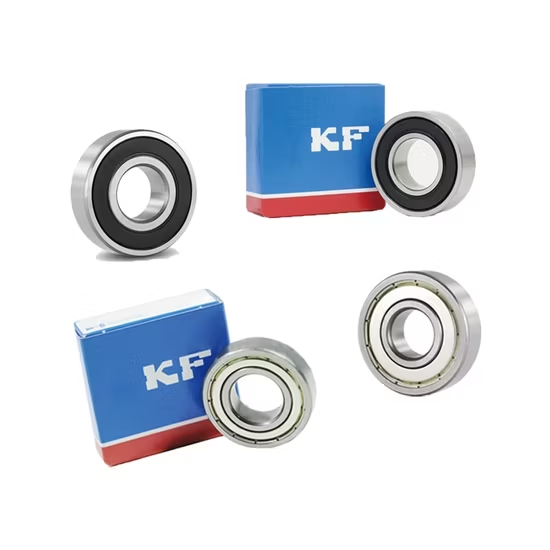


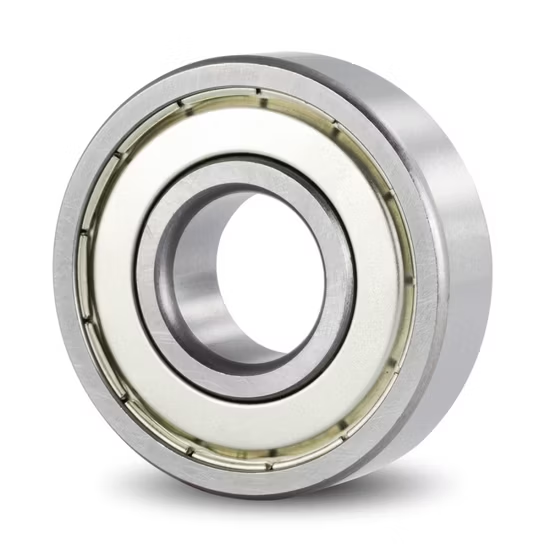
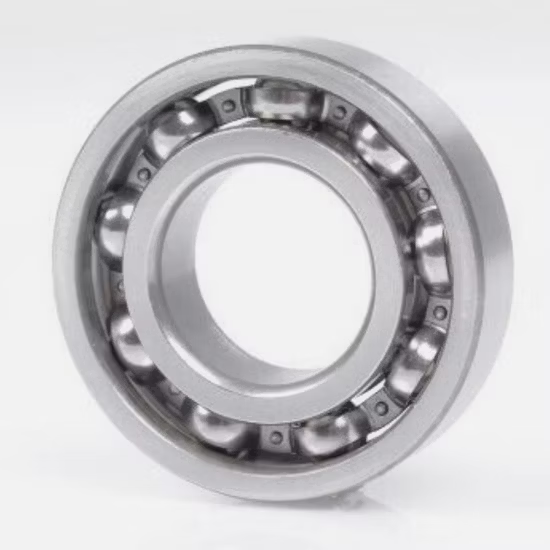
6005 Zz RS P4 P5 P6 Deep Groove Ball Bearing delivers versatile sealing and precision for printing press parts.
Multi-brand authorized coverage — One consolidated shipment handles mixed SKF, FAG, and NSK requirements for printing press maintenance without juggling multiple vendors.
| Parameter | Value |
|---|---|
| Designation | 6005 Zz RS P4 P5 P6 |
| Product Type | Deep Groove Ball Bearing |
| Bearing Style | Open, Rubber Seals (RS), Iron Seals (Zz) |
| Precision Class | P4, P5, P6 |
| Material | Chrome Steel |
| Quality Level | Z1V1, Z2V2, Z3V3, Z4V4 |
| Origin Options | Germany, Japan, Sweden, Malaysia, China |
| HS Code | 848210 |
| Industry | Typical Applications |
|---|---|
| Printing Machinery | Printing press parts, impression cylinder journals, ink roller shafts |
| Industrial Automation | High-speed electric motors, precision conveyor drive pulleys |
| Fluid Power | High-pressure pumps, hydraulic gearboxes requiring low-vibration operation |
Precision and sealing suffixes dictate operational survival in high-speed print environments.
Procurement teams often source a 6005 deep groove ball bearing for printing press parts based solely on the base designation, only to face catastrophic thermal binding on the shop floor. I have personally investigated numerous printing press failures in Ningbo where a standard P0 grade with incorrect internal clearance was installed into a high-speed impression cylinder. The resulting friction heat expanded the inner ring, locking the shaft and tearing the seal lips. Sourcing the exact 6005 Zz RS P4 P5 P6 configuration ensures the rotational accuracy and thermal expansion tolerances align with the demanding operational envelope of modern print machinery .
Selecting the correct 6005 deep groove ball bearing for printing press parts requires balancing contamination exclusion with rotational friction. In ink-rich environments, rubber seals provide tight contact to block particulate ingress, while iron shields offer lower friction for high-RPM applications. Pairing the correct seal type with P4 or P5 precision guarantees the shaft runs true, preventing the micro-vibrations that cause banding defects on printed materials.
Printing press journals experience rapid temperature fluctuations during continuous runs. If the internal clearance is not matched to the operating temperature, the bearing will preload itself into failure. Proper lubrication selection is equally critical; high-speed print cylinders demand low-viscosity oils or specialized greases that resist churning. Non-contact iron shields (Zz) are often preferred here to minimize friction heat, provided the housing design adequately manages external contamination .
The identifier 6005 Zz RS P4 P5 P6 encompasses multiple engineering choices. The Zz suffix denotes double iron shields, which restrict large debris without the friction penalty of rubbing seals. Conversely, the RS suffix indicates a single rubber seal, offering superior moisture and fine dust protection at the cost of slightly higher torque. The P4, P5, and P6 designations define the dimensional and running accuracy. P4 provides the ultra-precise runout required for main impression cylinders, while P5 and P6 serve auxiliary rollers where slight deviations are tolerable. Furthermore, the Z1V1 through Z4V4 quality levels dictate the strictness of vibration and acoustic testing, ensuring smooth operation in noise-sensitive print facilities.
Installing a standard precision bearing in a P4-required application leads to accelerated fatigue and unplanned downtime. When runout exceeds the tight tolerances of a printing press, the resulting vibration degrades the print quality and damages adjacent gears. According to ISO 281 frameworks, operating a bearing outside its intended precision and clearance envelope drastically reduces its calculated L10 life. This premature failure not only halts production but often causes catastrophic damage to the expensive cylinder shafts, voiding equipment warranties .
Our cross-brand interchange process verifies the exact seal type, clearance, and precision suffix, preventing the common error of supplying a P0 part when a P4 is required. We provide batch traceability to the manufacturer, ensuring the chrome steel metallurgy meets the fatigue limits necessary for continuous press operation. Every shipment includes dimensional and running accuracy inspection reports, confirming the claimed P4, P5, or P6 tolerances before the parts leave our facility. This rigorous validation eliminates the risk of installing counterfeit bearings with soft inner rings that inevitably seize under load.
To ensure optimal performance, share your specific radial and axial loads, operating speeds, and housing temperatures so we can verify the L10 life and internal clearance requirements. If you are replacing existing components, provide the OEM equipment number or the exact suffix string from the old bearing for a precise cross-reference check. Our technical team will review these parameters to confirm the optimal seal and precision combination for your specific printing press application.
Q: How do I choose between the Zz iron shields and RS rubber seals for printing press parts?
A: Iron shields (Zz) are ideal for high-speed cylinders where minimizing friction heat is critical, assuming the housing blocks heavy contamination. Rubber seals (RS) provide superior protection against fine ink dust and moisture but generate slightly more friction. We review your specific press environment to recommend the optimal balance between sealing efficiency and rotational torque.
Q: What is the practical difference between P4, P5, and P6 precision in these bearings?
A: P4 offers the tightest dimensional and running accuracy, essential for main impression cylinders where micro-vibrations cause print banding. P5 and P6 provide slightly wider tolerances suitable for auxiliary rollers and less critical drive shafts. Selecting the correct class ensures the shaft runs true without overpaying for unnecessary precision in low-demand positions.
Q: How do Z1V1 to Z4V4 quality levels affect high-speed printing machinery?
A: These levels classify the bearing's vibration and acoustic emissions, with Z4V4 being the quietest and smoothest. In high-speed printing presses, excessive vibration transfers to the print substrate, causing visible defects. Specifying a higher Z/V level ensures the internal geometry and surface finishes are optimized for ultra-smooth, low-vibration rotation.
Q: Why must the exact clearance and precision suffix match during cross-referencing?
A: A base number match is insufficient because internal clearance dictates how the bearing handles thermal expansion at high speeds. Installing a standard clearance bearing in a high-heat press cylinder causes thermal binding and seizure. Verifying the exact suffix ensures the internal geometry and tolerances align perfectly with the equipment's operational demands.
Q: What documentation proves the authenticity of multi-origin bearing batches?
A: We provide a Certificate of Conformity, material test reports, and dimensional inspection reports confirming the P4/P5/P6 grades. Crucially, every bearing features batch traceability and can be verified via the manufacturer's official app QR code. This comprehensive paper trail guarantees you receive genuine chrome steel bearings, eliminating the risk of counterfeit parts.
Our 5-step process ensures every order is engineered, validated, and supported for optimal performance.
Technical needs assessment
Custom specifications
Free samples for $50k+
Pre-shipment inspection
On-site & predictive
Our certified engineers respond within 24 hours with detailed technical specifications, pricing, and lead time information.