01
Consultation
Technical needs assessment



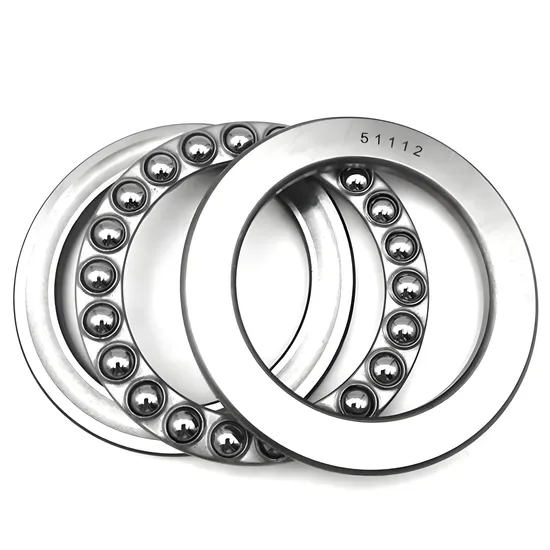
51219 Thrust Ball Bearing 95×140×40 mm — engineered to manage heavy axial loads in vertical shaft equipment such as crane hooks and water pumps.
Original Batch Traceability — Every 51219 thrust ball bearing we supply includes manufacturer lot documentation to verify heat treatment records and material origins.
| Parameter | Value |
|---|---|
| Designation | 51219 |
| Bearing Type | Thrust Ball Bearing |
| Bore Diameter (d) | 95 mm |
| Outside Diameter (D) | 140 mm |
| Width (T) | 40 mm |
| Cross Reference | 8219 |
| Origin Options | Germany, Japan, Sweden, Malaysia, China |
| Customization | OEM branding and packaging available |
| Industry | Typical Applications |
|---|---|
| Material Handling | Crane hook thrust washers and heavy-duty lifting block axial support |
| Fluid Management | Vertical water pump shaft thrust collars and impeller axial stabilization |
| Mining & Crushing | Hoist drum axial positioning and vertical conveyor drive shafts |
Inadequate quenching depth causes rapid raceway spalling when axial forces peak.
Walking the exhibition floors at Hanover and Chicago trade shows, I have inspected countless OEM-branded thrust bearings that appear flawless externally. However, metallurgical sectioning frequently reveals a soft sub-surface layer beneath a thinly hardened shell. When subjected to the continuous axial loads of crane hooks or vertical pumps, these improperly heat-treated components suffer catastrophic raceway spalling. We eliminate this risk by demanding full hardness penetration certificates and rejecting any batch that fails to meet the required depth profile .
The 95x140x40mm dimensions of this 51219 thrust ball bearing are engineered specifically to handle unidirectional axial loads in vertical orientations. Because thrust bearings cannot accommodate radial forces, the alignment of the housing washer against the mounting surface is critical. Our technical team reviews your housing bore tolerances and shaft shoulder squareness to ensure the 95 mm bore and 140 mm outer diameter seat perfectly, preventing localized stress concentrations that lead to premature fatigue.
Vertical applications like water pumps and crane hooks subject the bearing to continuous axial thrust, occasionally compounded by shock loads during lifting or startup. The primary vulnerability in these setups is housing misalignment; if the supporting surface lacks strict parallelism, the load distributes unevenly across the rolling elements. This localized overloading accelerates wear and compromises the lubricant film. Proper installation requires meticulous checking of the housing seat flatness and the use of spherical housing washers if minor misalignments are unavoidable .
While the legacy designation 8219 is frequently used in older equipment manuals, it maps directly to the modern 51219 nomenclature. However, matching the base number is only the first step. Procurement teams must verify the cage material and clearance suffixes. A standard pressed steel cage suits moderate speeds, whereas a machined brass cage is necessary for high-vibration crane applications to resist cage fatigue. Similarly, selecting the correct clearance class ensures the bearing accommodates thermal expansion from the vertical pump motor without binding the rolling elements.
Purchasing unverified replacements often leads to severe operational disruptions. Bearings with soft inner rings or cloned authenticity markers might pass a casual visual check, but they fail rapidly under load. According to ISO 15243 frameworks, subsurface fatigue initiated by poor material quality results in unpredictable spalling. This unplanned downtime in a mining hoist or municipal water pump far exceeds the initial savings, triggering secondary damage to adjacent shafts and voiding equipment warranties .
We address the specific vulnerabilities of thrust bearings by validating more than just the outer dimensions. While many suppliers match the 95x140x40mm size, we verify the internal geometry and raceway hardness to ensure it withstands vertical axial thrust. Our cross-reference process checks the 8219 legacy equivalence while confirming that the cage material and precision grades match your specific crane or pump requirements. Furthermore, we provide multi-origin options, allowing you to balance project budgets with strict compliance needs without sacrificing metallurgical integrity.
To ensure optimal performance, please provide the specific axial load magnitude, operating speed, and continuous running temperature of your vertical equipment. Sharing the OEM equipment number allows our engineering team to verify the 8219 cross-reference and confirm the exact cage and clearance requirements. This technical review guarantees the selected bearing aligns perfectly with your mechanical design and maintenance intervals.
Q: What installation differences exist when replacing an old 8219 with a modern 51219?
A: While the 8219 and 51219 share the same 95x140x40mm envelope dimensions, modern manufacturing tolerances might be tighter. It is crucial to verify the shaft shoulder fillet radius and housing seat flatness. Any deviation in the mounting surface parallelism will cause uneven load distribution, leading to rapid raceway wear in vertical applications.
Q: How do I choose the right cage material for crane hook applications?
A: Crane hooks experience significant vibration and shock loads during lifting operations. While pressed steel cages are cost-effective for steady loads, a machined brass cage is highly recommended for crane hooks. Brass offers superior resistance to vibration-induced fatigue and handles the intermittent shock loads typical of heavy lifting environments much more effectively.
Q: What are the lubrication requirements for this bearing in vertical water pumps?
A: Vertical water pumps require consistent lubrication to manage axial thrust and dissipate heat. Depending on the pump speed, either oil bath or grease lubrication is used. If grease is selected, ensure it has high mechanical stability and anti-wear properties. Establish a relubrication schedule based on operating temperature to prevent the grease from degrading and leaving the raceways unprotected.
Q: How can I verify the authenticity of the bearing before installation?
A: You can verify authenticity by scanning the QR code on the packaging using the manufacturer's official mobile application. Additionally, we provide batch traceability documents and material test reports. Cross-checking the laser-etched markings on the bearing washer against the Certificate of Conformity ensures you have received a genuine, fully traceable product.
Q: What are the lead time and compliance differences between the multi-origin options?
A: Origin selection impacts both lead times and regional compliance. European and Japanese origins typically involve longer transit times but offer specific regional certifications required for certain municipal or infrastructure projects. Asian origins often provide faster availability and competitive pricing for general industrial applications. We align the origin choice with your project deadlines and documentation needs.
Our 5-step process ensures every order is engineered, validated, and supported for optimal performance.
Technical needs assessment
Custom specifications
Free samples for $50k+
Pre-shipment inspection
On-site & predictive
Our certified engineers respond within 24 hours with detailed technical specifications, pricing, and lead time information.