01
Consultation
Technical needs assessment

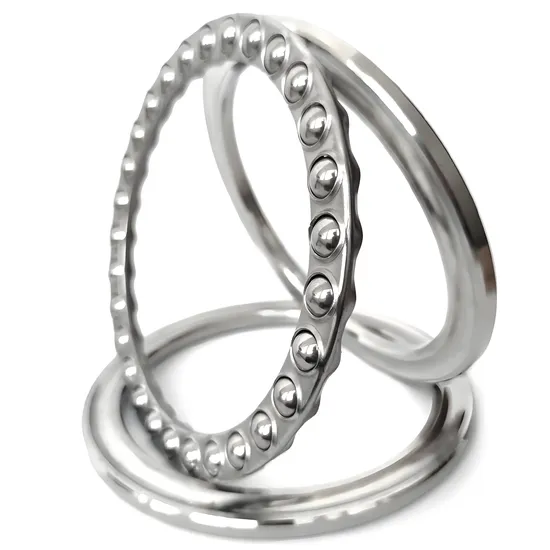
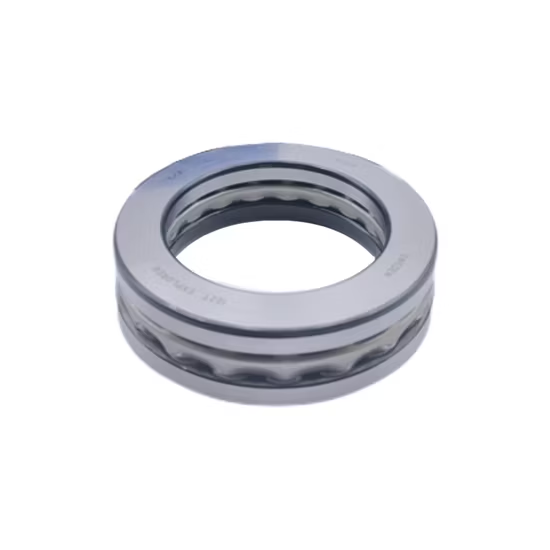
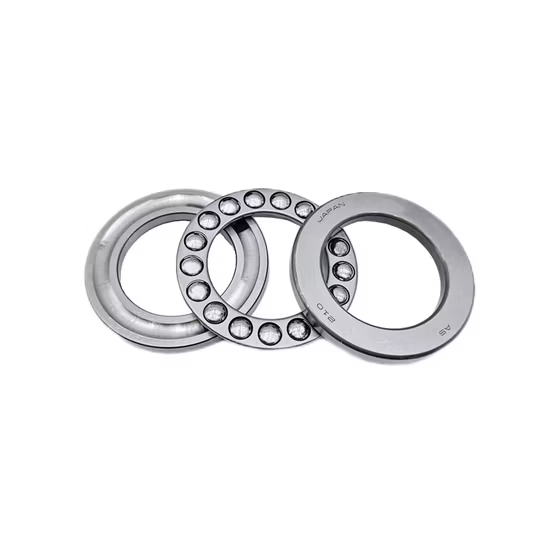
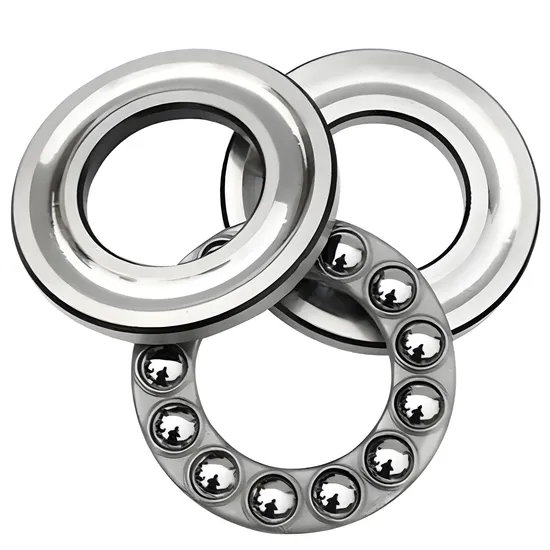


51117 Thrust Ball Bearing 85×110×19 mm — engineered to sustain heavy unidirectional axial loads in crane hooks and vertical water pumps.
Original Batch Traceability — Every 51117 thrust ball bearing ships with manufacturer lot records verifying its exact production run and material origin.
| Parameter | Value |
|---|---|
| Designation | 51117 |
| Bearing Type | Thrust Ball Bearing |
| Bore Diameter (d) | 85 mm |
| Outside Diameter (D) | 110 mm |
| Width (T) | 19 mm |
| Cage Material | Pressed steel or machined brass options |
| Precision Class | Standard P0 or higher precision options |
| Origin | Germany / Japan / Sweden / Malaysia / China |
| Industry | Typical Applications |
|---|---|
| Material Handling | Crane hook thrust collars and heavy lifting swivels |
| Fluid Management | Vertical water pump impeller shaft supports |
| Machine Tools | Vertical spindle orientations and rotary table bases |
| Automotive Repair | Heavy vehicle steering mechanisms and transmission shafts |
Mismatched internal clearances and cage materials silently destroy axial load capacity under thermal stress.
I have seen repair shops in the Pearl River Delta substitute standard clearance units where C3 was required for thermal expansion in gearboxes. The result is predictable: the cage shatters at elevated temperatures, locking the transmission completely. Sourcing a genuine 51117 thrust ball bearing requires verifying not just the base dimensions, but the exact internal geometry and cage specification to prevent catastrophic binding.
When supporting heavy vertical loads in crane hooks or pump shafts, the 51117 thrust ball bearing must handle pure axial forces without radial interference. Our cross-reference verification ensures that replacement units match the OEM equipment number, confirming the internal contact angles and raceway profiles are optimized for单向 thrust. This prevents uneven load distribution that typically accelerates raceway spalling in vertical applications.
Vertical pump shafts and automotive steering columns generate significant friction heat during continuous operation. If the internal clearance is not specified correctly to accommodate thermal expansion, the rolling elements will skid rather than roll, rapidly degrading the lubricant film. Proper selection requires matching the cage material and clearance class to the operating temperature range, ensuring the grease maintains its viscosity and structural integrity.
The strict 85 mm bore, 110 mm outside diameter, and 19 mm width define the physical envelope, but the internal design dictates performance. While the legacy designation 8117 is frequently used as a cross-reference, buyers must verify that the replacement matches the original equipment manufacturer's exact precision and cage requirements. A base number match is insufficient if the internal design or pairing arrangement differs from what the specific vertical machinery demands.
Installing a standard precision unit in a high-speed machine tool spindle or using a pressed steel cage in a high-vibration crane hook leads to premature failure. These mismatches cause unplanned downtime and catastrophic damage to adjacent shaft components, often voiding equipment warranties. Following ISO 281 life calculation principles requires exact specification alignment, not just approximate dimensional swaps.
Mixed-brand procurement often results in cross-reference errors that overlook critical suffixes, causing thermal binding in the field. We provide authorized coverage across major brands, ensuring your 51117 thrust ball bearing order includes exact cross-brand interchange matched on clearance and cage material. Every batch is traceable to the manufacturer, eliminating the risk of soft inner rings and cloned QR codes that pass casual visual inspection but fail under load.
To ensure precise application matching, provide your specific axial load values, operating speeds, and thermal conditions for L10 life verification. If replacing an existing unit, share the OEM equipment number or the exact suffix markings from the original nameplate. Our engineering team will review these parameters to confirm the optimal cage material and clearance class for your machinery.
Q: What internal differences exist between the 51117 and the legacy 8117 cross-reference?
A: While both share the 85x110x19mm dimensions, the legacy 8117 may lack modern precision grades or specific cage materials required for high-speed applications. Verifying the exact internal clearance and precision class ensures the replacement handles the specific axial loads and thermal expansion of your equipment without premature binding.
Q: How can I verify the authenticity of the thrust ball bearing upon delivery?
A: Each unit ships with batch traceability documentation and a unique QR code. Scanning this code through the manufacturer's official application confirms the production facility, material lot, and original distribution channel, effectively filtering out counterfeits with soft inner rings or cloned visual markers.
Q: What causes cage failure in vertical water pump applications?
A: In vertical pumps, inadequate internal clearance prevents the bearing from accommodating thermal expansion, causing the rolling elements to skid. This generates excessive friction heat that degrades t*g the correct clearance class and high-temperature grease is critical for these specific axial load environments.
Q: How do I choose the right cage material for crane hook applications?
A: Crane hooks subject the bearing to heavy axial loads and potential shock vibrations. While pressed steel cages are suitable for standard duties, machined brass cages offer superior structural integrity and vibration damping under extreme load fluctuations. Providing your exact load profile allows us to recommend the most durable cage option.
Our 5-step process ensures every order is engineered, validated, and supported for optimal performance.
Technical needs assessment
Custom specifications
Free samples for $50k+
Pre-shipment inspection
On-site & predictive
Our certified engineers respond within 24 hours with detailed technical specifications, pricing, and lead time information.