01
Consultation
Technical needs assessment



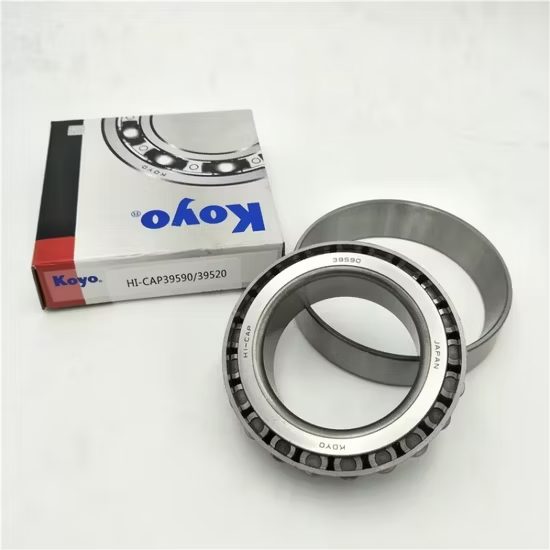
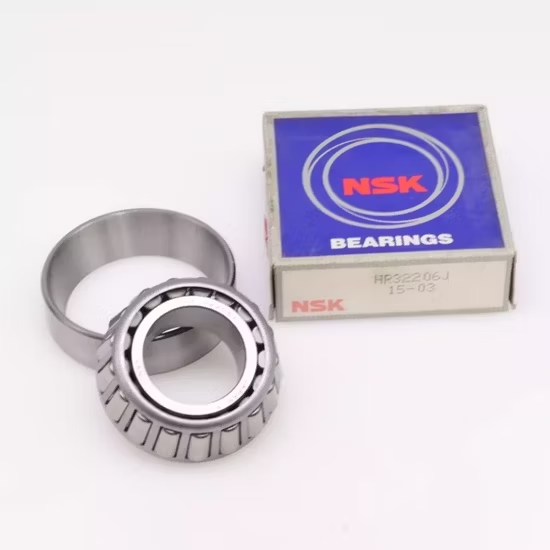
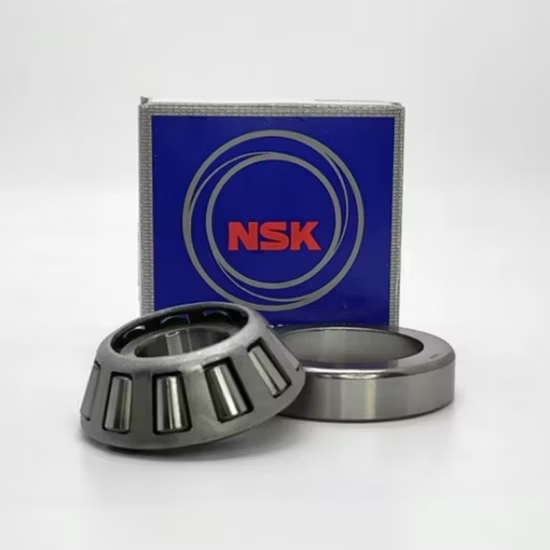

30202/30203/30204/P5 Tapered Roller Bearing — Single-row structure in GCr15 steel handles combined radial and axial loads.
Official App Verification — Scan the QR code on each 30202/30203/30204/P5 package to confirm batch authenticity directly through the manufacturer's system.
| Parameter | Value |
|---|---|
| Designation | 30202/30203/30204/P5 |
| Bearing Type | Tapered Roller Bearing |
| Number of Rows | Single Row |
| Precision Class | P5 |
| Cage Material | Nylon, Brass, or Iron options |
| Material | GCr15 Bearing Steel |
| Origin | Shanghai |
| HS Code | 8482500090 |
Note: Precision class P4 and specific cage materials are available as unverified source options; always confirm exact suffix requirements against the equipment manual before ordering.
| Industry | Typical Applications |
|---|---|
| Automotive & Heavy Vehicles | Wheel hub assemblies, truck axle differentials, and transmission shafts |
| Industrial Power Transmission | Heavy-duty gearbox pinion shafts and conveyor drive pulleys |
| Marine & Offshore | Propulsion marine drives and winch drum support journals |
| General Manufacturing | Spindle supports in building material processing machinery |
Base number matches do not guarantee field survival.
Sourcing teams frequently approve purchase orders based solely on the basic bearing designation, overlooking critical internal geometry and precision suffixes. When a standard clearance or lower precision class is installed in a high-load crusher or gearbox, the resulting thermal expansion causes internal binding. This misalignment between the ordered part and the actual operating environment is a primary driver of catastrophic cage failure and unplanned downtime . Procurement engineers must verify that the 30202/30203/30204/P5 tapered roller bearing aligns perfectly with the thermal and dynamic demands of the specific machinery.
Selecting the correct 30202/30203/30204/P5 tapered roller bearing requires looking past the basic dimensions to evaluate how precision impacts the entire assembly. Our technical team reviews your application parameters to ensure the P5 tolerance class provides the necessary running accuracy for your gearboxes or wheel hubs. By validating the cross-reference against OEM equipment numbers, we prevent the installation of components that might physically fit but functionally fail under operational stress.
Tapered roller bearings in heavy machinery must simultaneously manage substantial radial forces and axial thrust, often under severe shock loading conditions. Elevated operating temperatures can degrade standard lubricants and alter internal clearance, making the correct initial setup vital for longevity. Furthermore, exposure to abrasive dust in manufacturing plants or moisture in marine drives demands careful consideration of external sealing arrangements . Proper lubrication intervals and contamination control are just as critical as the bearing's internal metallurgy.
The P5 suffix indicates a higher precision class compared to standard P0 bearings, delivering tighter dimensional tolerances and improved running accuracy for demanding rotational applications. This enhanced precision minimizes vibration and ensures smoother load distribution across the GCr15 steel rollers and raceways. Depending on the specific speed and thermal requirements of your machinery, the bearing can be supplied with nylon cages for reduced friction and noise, brass cages for high-load durability, or iron cages for cost-effective standard operations.
Installing a component with mismatched precision or inappropriate cage material inevitably leads to premature wear and accelerated fatigue. When internal clearances bind under thermal load, the resulting friction generates excessive heat, ultimately causing catastrophic damage to the shaft and housing. This cascading failure not only voids equipment warranties but also triggers extensive unplanned downtime and expensive secondary repairs across the production line.
We maintain authorized distribution channels that guarantee the metallurgical integrity of every GCr15 component we supply. Our cross-reference process specifically checks for precision suffix alignment, ensuring you never receive a standard P0 part when a P5 is required for your spindle or gearbox. Every shipment includes full batch traceability, eliminating the risk of counterfeit products with soft inner rings that plague the open market. Furthermore, our technical support extends beyond the sale, offering post-delivery mounting guidance to prevent installation-induced failures.
To ensure optimal performance, please provide your specific radial and axial load calculations, operating speeds, and anticipated temperature ranges. Supplying the exact OEM equipment number or existing housing dimensions allows our engineering team to perform a comprehensive cross-reference and L10 life verification. Detailing the environmental exposure, such as heavy dust or moisture, helps us recommend the most appropriate cage material and external sealing configuration for your application.
Q: Why is the P5 precision class necessary for my industrial gearbox?
A: The P5 class provides tighter dimensional and running accuracy than standard bearings, which is critical for minimizing vibration and ensuring even load distribution in high-speed gearboxes. This precision reduces internal friction and heat generation, significantly extending the operational lifespan of both the bearing and the surrounding gear teeth under continuous heavy loads.
Q: How do I choose between nylon, brass, and iron cages for this application?
A: Nylon cages offer low friction and quiet operation for moderate speeds, while brass cages provide superior durability and heat dissipation for heavy-load, high-vibration environments like crushers. Iron cages serve as a robust, cost-effective solution for standard industrial applications. Your specific speed, load, and temperature parameters will dictate the optimal cage material.
Q: What is the risk of ignoring cross-reference suffix alignment?
A: Focusing only on the base designation while ignoring precision and internal design suffixes often results in thermal binding or premature cage failure. A component might physically fit the housing, but if it lacks the required P5 precision or correct internal geometry for the specific load profile, it will rapidly degrade and cause catastrophic secondary damage to the machinery.
Q: How can I verify the authenticity of the delivered components?
A: Every unit features a unique QR code that can be scanned using the manufacturer's official mobile application. This digital verification confirms the batch origin, production date, and authenticity, effectively protecting your operation from counterfeit products that utilize soft inner rings and cloned visual markers to bypass casual inspections.
Our 5-step process ensures every order is engineered, validated, and supported for optimal performance.
Technical needs assessment
Custom specifications
Free samples for $50k+
Pre-shipment inspection
On-site & predictive
Our certified engineers respond within 24 hours with detailed technical specifications, pricing, and lead time information.