01
Consultation
Technical needs assessment

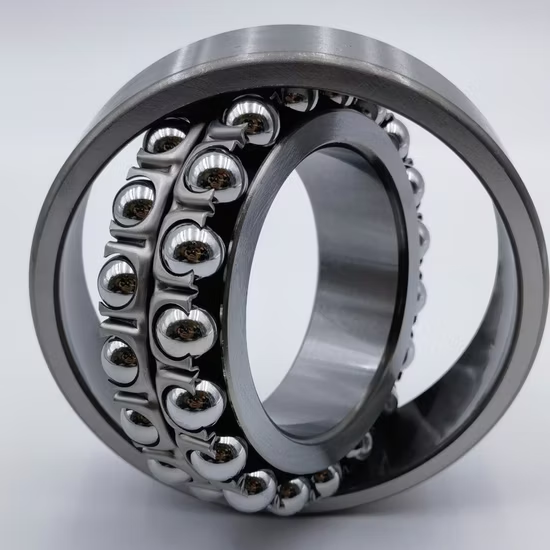


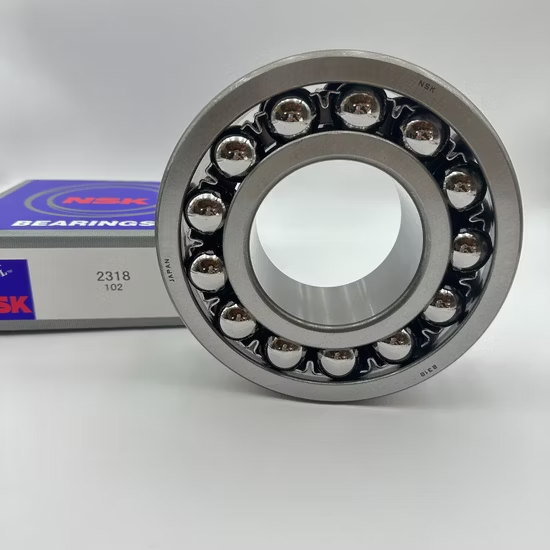
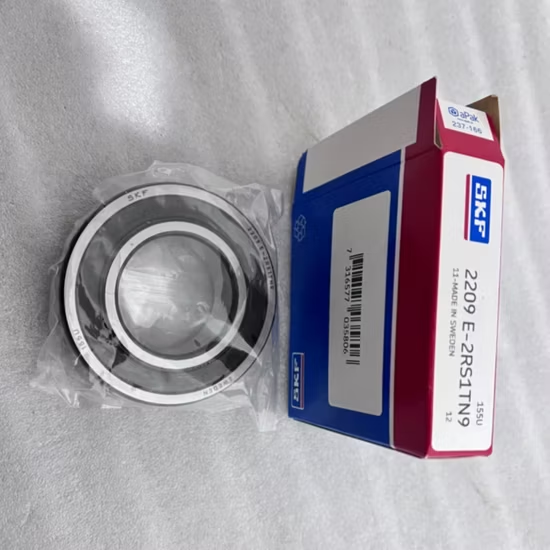
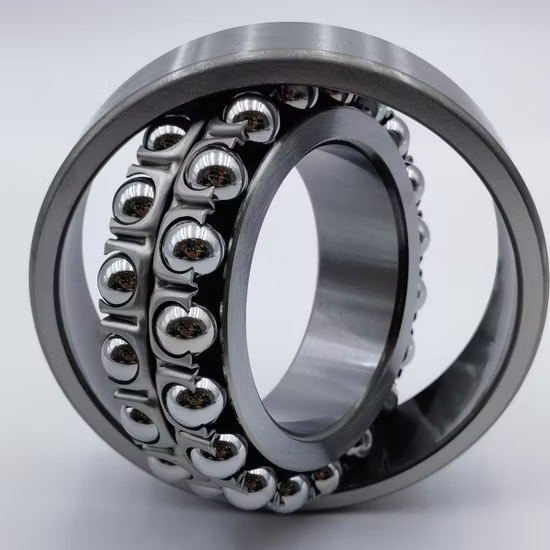
2308 ETN9/C3 Self-Aligning Ball Bearing — E enhanced internal design increases load capacity while TN9 glass fiber reinforced polyamide cage ensures high-speed, low-noise performance. C3 clearance provides adequate internal gap for thermal expansion under continuous duty in electric motors and agricultural machinery.
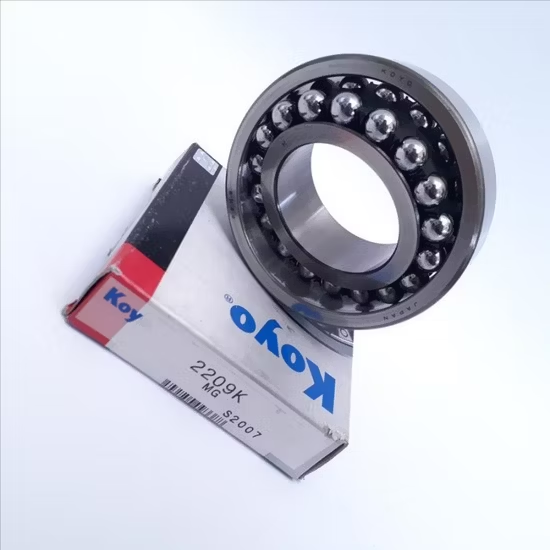
Multi-Brand Authorized Sourcing — Procure the 2308 ETN9/C3 self-aligning ball bearing alongside other major brand equivalents in a single consolidated order, eliminating the friction of coordinating multiple suppliers.
| Parameter | Value |
|---|---|
| Designation | 2308 ETN9/C3 |
| Bearing Type | Self-Aligning Ball Bearing |
| Bore Diameter (d) | 40 mm |
| Outside Diameter (D) | 90 mm |
| Width (B) | 33 mm |
| Cage Material | Glass fiber reinforced polyamide (TN9) |
| Internal Design | Enhanced (E) |
| Clearance Class | C3 |
| Seal or Shield Type | Open |
| Precision Class | P0 (Standard) |
| Industry | Typical Applications |
|---|---|
| Electric Motors | Rotor shafts subject to thermal expansion and minor housing misalignment |
| Agricultural Machinery | Conveyor drive shafts and harvesting equipment exposed to heavy vibration |
| Material Handling | Idler rolls and belt conveyor pulleys requiring continuous rotation under radial loads |
| Textile Machines | High-speed spinning spindles and yarn guide rollers demanding low friction |
Matching the base number while ignoring clearance and cage suffixes is a primary driver of field failures.
In the trading hubs of Dongguan, I have reviewed countless dismantled bearings where the basic designation matched perfectly, yet the machine failed prematurely. A standard CN clearance bearing installed in a high-temperature fan will quickly suffer from thermal binding as the inner ring expands, effectively eliminating the internal gap. When procurement teams rely on automated cross-references that strip away critical suffix data, they inadvertently specify components that cannot survive the actual operating environment . Ensuring the 2308 ETN9/C3 self-aligning ball bearing retains its exact suffix configuration is non-negotiable for reliable operation.
The 2308 ETN9/C3 self-aligning ball bearing is engineered specifically to accommodate static misalignment between the shaft and housing. By utilizing a spherical outer ring raceway, the bearing automatically adjusts to minor angular errors that commonly occur in long shafts or poorly machined housings. Our technical review process verifies that the selected unit provides the exact self-aligning capacity required for your specific equipment geometry, preventing edge loading on the raceways.
Industrial environments rarely operate at stable ambient temperatures. When shafts heat up during continuous operation, the thermal expansion differential between the steel shaft and the housing alters the internal geometry of the bearing. A C3 radial internal clearance provides the necessary extra space to prevent the rolling elements from binding under these elevated thermal conditions. Furthermore, high rotational speeds generate significant centrifugal forces and friction heat, demanding a cage material that maintains structural integrity without adding excessive weight or requiring continuous external lubrication .
The "E" suffix denotes an optimized internal design with larger and more numerous rolling elements, directly increasing the radial load-carrying capacity compared to standard configurations. The "TN9" cage is molded from glass fiber reinforced polyamide, a material chosen for its excellent balance of low weight, high strength, and inherent lubricity, which allows for smoother operation at higher speeds while reducing noise. Finally, the "C3" clearance class ensures the bearing operates with a larger-than-normal internal gap, a critical feature when the inner ring is mounted with a tight interference fit on a hot shaft.
Deploying a standard clearance bearing in an application that mandates C3 clearance inevitably leads to catastrophic internal preload. As the operating temperature rises, the internal gap vanishes, causing the rolling elements to skid rather than roll. This rapid degradation results in unplanned downtime, severe damage to the shaft journal, and voided equipment warranties. Following the failure analysis frameworks outlined in ISO 15243, these thermally induced seizures are entirely preventable through rigorous specification matching during the initial procurement phase .
The market is saturated with counterfeit bearings featuring soft inner rings and cloned packaging that easily deceive visual inspections. We source the 2308 ETN9/C3 self-aligning ball bearing exclusively through authorized manufacturer channels, ensuring every unit possesses genuine metallurgical properties. Our cross-reference protocol strictly aligns the base designation, the C3 clearance, and the TN9 polyamide cage, eliminating the risk of receiving a visually similar but technically inferior substitute. Furthermore, we accommodate mixed-brand orders, allowing you to fulfill diverse maintenance requirements without compromising on traceability.
To ensure the selected bearing perfectly matches your operational demands, please provide the specific radial and axial loads, operating speeds, and expected temperature ranges. Sharing the original OEM equipment numbers allows our engineering team to perform a rigorous cross-reference check, confirming that the internal geometry and clearance class are perfectly aligned with your machinery's design intent.
Q: Why is it critical to verify both the C3 and TN9 suffixes during cross-referencing?
A: Base numbers alone do not define operational limits. A standard clearance bearing will seize under thermal expansion, while a brass cage might fail at high speeds where the lighter TN9 polyamide cage excels. Verifying both ensures the replacement handles the specific thermal and dynamic loads of your application without premature failure.
Q: How does C3 clearance differ from standard CN in high-temperature environments?
A: Standard CN clearance is designed for ambient temperature operations with normal fits. C3 provides a larger internal gap, which is essential when the inner ring expands due to heat or tight shaft fits. This extra space prevents the rolling elements from binding and skidding, which would otherwise generate excessive friction and rapid wear.
Q: What are the limitations of the TN9 polyamide cage compared to brass alternatives?
A: The glass fiber reinforced TN9 cage offers excellent high-speed performance and low friction. However, it is not suitable for continuous operation at extremely elevated temperatures or in environments with aggressive chemical exposure. If your application involves severe heat, a machined brass cage designation would be required instead.
Q: How can I verify the authenticity of the received bearings?
A: Every genuine bearing features a unique traceability code. You can scan the QR code on the packaging using the manufacturer's official mobile application. This instantly verifies the production batch, origin, and authenticity, protecting your equipment from the severe risks associated with counterfeit components.
Q: What lubrication practices are recommended for this open-type bearing?
A: Since the bearing is open, it relies entirely on the housing's lubrication system. We recommend filling the housing with a high-quality grease compatible with polyamide cages, ensuring the fill volume covers the bearing without over-packing, which could cause churning and excessive heat generation during high-speed rotation.
Our 5-step process ensures every order is engineered, validated, and supported for optimal performance.
Technical needs assessment
Custom specifications
Free samples for $50k+
Pre-shipment inspection
On-site & predictive
Our certified engineers respond within 24 hours with detailed technical specifications, pricing, and lead time information.