01
Consultation
Technical needs assessment

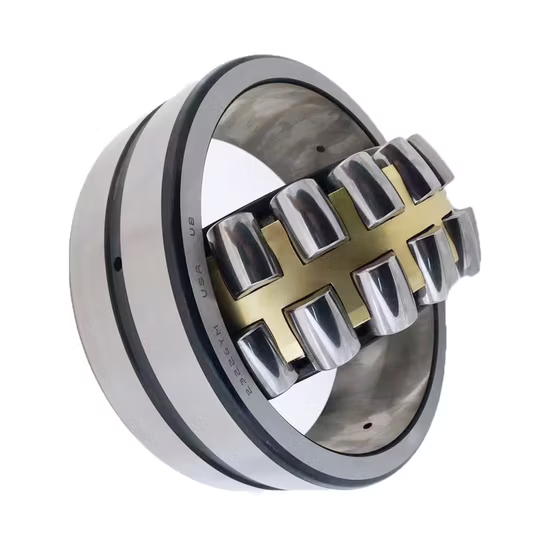


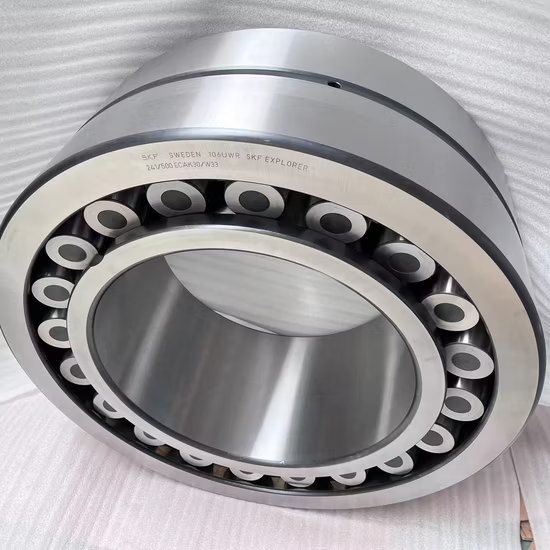
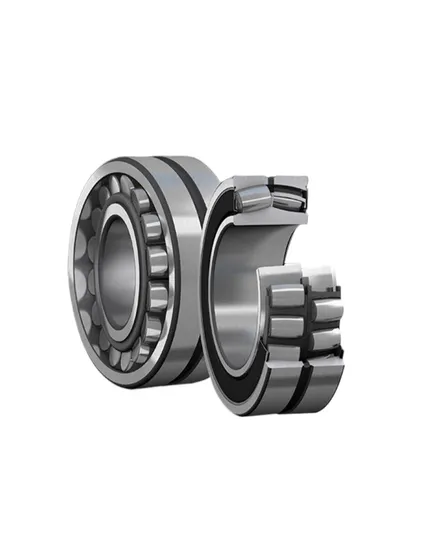
22317 Spherical Roller Bearing — 223-series heavy-duty design for combined radial and axial loads with self-aligning capability under shaft deflection.
Verify batch authenticity through each manufacturer's official QR scanning app before commissioning.
Traceable Factory Batches — Every 22317 spherical roller bearing we dispatch includes verifiable lot documentation linking directly to the manufacturer's production facilities.
| Parameter | Value |
|---|---|
| Designation | 22317 |
| Bearing Type | Spherical Roller Bearing |
| Origin | Germany / Japan / Sweden / Malaysia / China |
| HS Code | 8482500090 |
| Certification | ISO 9001 compliant supply chain |
| Industry | Typical Applications |
|---|---|
| Mining and Crushing | Jaw crusher toggle plates, vibrating screen exciter mechanisms |
| Steel and Metallurgy | Continuous caster roll segments, hot strip mill gear drives |
| Industrial Gearboxes | Heavy-duty reduction gear intermediate shafts, extruder drives |
| Pulp and Paper | Paper machine dryer cylinder journal supports, press roll bearings |
Assuming base designation matching is sufficient guarantees thermal seizure under heavy oscillating loads.
Procurement teams often source the 22317 spherical roller bearing by checking only the base number, ignoring that vibrating screens and crushers generate intense frictional heat. When standard internal clearance is installed in these high-temperature environments, the thermal expansion eliminates the operational gap, leading to catastrophic cage failure . I have personally inspected dismantled exciter assemblies in Indonesian cement plants where this exact oversight caused the brass cage to fracture, halting the entire crushing line for days.
Selecting the correct 22317 spherical roller bearing requires looking beyond the basic dimension set to evaluate the specific vibrational frequency and shock loads of the equipment. Our technical review process ensures that the internal geometry and cage design align perfectly with the demanding kinematics of mining and crushing machinery. We validate the application parameters to prevent premature fatigue in heavy-duty industrial gearboxes and vibrating screens.
Vibrating screens and crushers subject bearings to severe combined loads, continuous shock impacts, and significant shaft misalignment. The elevated operating temperatures in these environments drastically reduce the effectiveness of standard lubricants, demanding rigorous attention to relubrication intervals and contamination ingress. Furthermore, the abrasive dust prevalent in mining operations requires robust sealing solutions or protective housings to prevent particle intrusion . Proper mounting practices are equally critical to maintain the necessary internal clearance during thermal expansion.
While the 22317 identifier defines the outer dimensions and basic load capacity, the internal configuration dictates its survival in harsh conditions. For high-vibration applications like vibrating screens, a machined brass cage is typically preferred over pressed steel due to its superior resistance to shock loads and oscillating accelerations. Internal clearance selection is equally vital; a C3 or C4 clearance class is frequently required to accommodate the thermal expansion generated by continuous friction, whereas standard CN clearance would lead to binding. Understanding these internal design variations ensures the bearing can handle the specific radial and axial forces of steel mill equipment without structural compromise.
Overlooking internal design variations when sourcing replacement parts inevitably results in unplanned downtime and catastrophic damage to the surrounding housing. Installing a standard clearance variant in a high-heat crusher application causes thermal binding, which rapidly degrades the lubricant and destroys the rolling elements. According to failure analysis frameworks, these premature failures are rarely due to material defects, but rather fundamental mismatches in application engineering . Such errors void equipment warranties and force expensive emergency replacements.
We maintain authorized distribution channels across major global brands, allowing a single purchase order to fulfill mixed-brand requirements for your entire plant. Our cross-reference methodology for the 22317 strictly aligns internal clearance, cage material, and precision suffixes, preventing the dangerous mismatches that cause field failures. Every shipment includes batch traceability to the manufacturer, verified through official brand applications to eliminate the risk of counterfeit components with cloned markings. Additionally, our engineering team reviews your specific load, speed, and temperature parameters to validate the selection before dispatch.
To ensure optimal performance and longevity, please provide your specific operating parameters, including radial and axial loads, rotational speed, and ambient temperature. Sharing the original OEM equipment number allows our engineering team to perform a precise cross-reference check and verify the required internal clearance and cage design. This technical validation guarantees that the supplied components perfectly match the mechanical demands of your vibrating screens or crushers.
Q: Why is it critical to verify both clearance and cage suffixes during cross-referencing?
A: Matching only the base 22317 number ignores vital internal design differences. A standard clearance bearing will seize in high-heat vibrating screens, while a pressed steel cage may fracture under heavy shock loads where a machined brass cage is required. We verify all internal parameters to ensure exact functional equivalence across different manufacturers.
Q: What are the common failure modes for this bearing in vibrating screens?
A: In vibrating screens, the most frequent failures involve cage fatigue due to high oscillating accelerations and thermal seizure from inadequate internal clearance. Abrasive dust ingress also rapidly degrades the raceways. Proper selection of a robust cage material and appropriate clearance class, combined with effective housing seals, mitigates these specific operational risks.
Q: How can we verify the authenticity and batch origin of the delivered components?
A: Every unit we supply features a unique traceability code that can be scanned using the manufacturer's official mobile application. This digital verification confirms the production facility, original batch number, and authenticity, effectively eliminating the risk of installing counterfeit parts with soft inner rings or cloned markings into your critical machinery.
Q: How do we choose between CN, C3, and C4 internal clearances for high-temperature applications?
A: Standard CN clearance is suitable for normal operating temperatures, but high-heat environments like crushers require C3 or C4 clearance to compensate for thermal expansion of the shaft and rings. If the operational gap closes due to heat, the bearing will bind and fail. We calculate the thermal expansion based on your specific temperature data to recommend the correct class.
Q: What information is needed to safely substitute an unavailable brand with an equivalent?
A: To execute a safe cross-brand substitution, we require the exact operating conditions, including load profiles, speeds, and temperatures, alongside the OEM equipment designation. This allows our engineers to match not just the outer dimensions, but the internal geometry, cage design, and clearance, ensuring the alternative brand performs identically in your specific application.
Our 5-step process ensures every order is engineered, validated, and supported for optimal performance.
Technical needs assessment
Custom specifications
Free samples for $50k+
Pre-shipment inspection
On-site & predictive
Our certified engineers respond within 24 hours with detailed technical specifications, pricing, and lead time information.