01
Consultation
Technical needs assessment

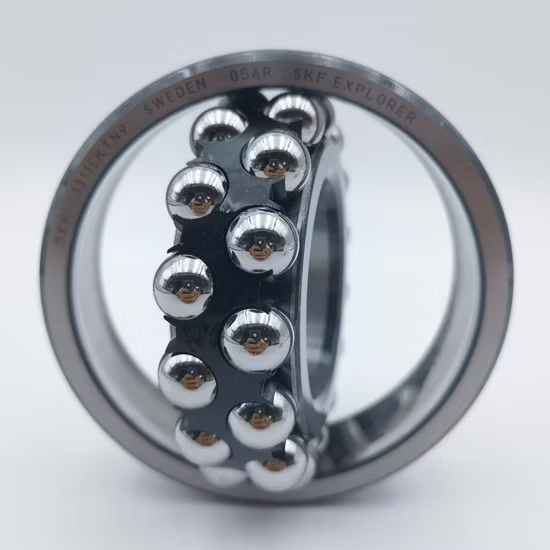
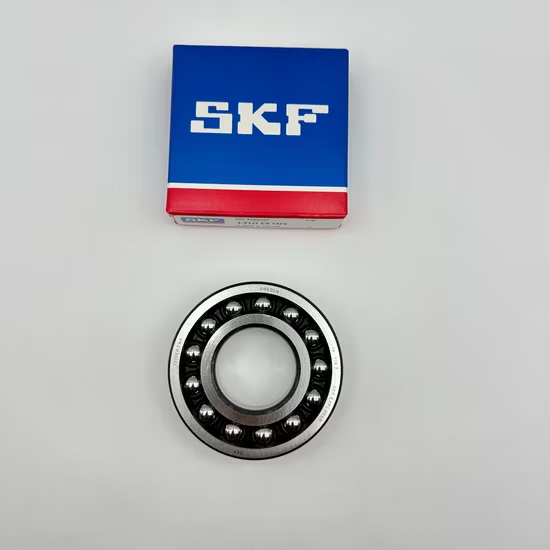


2200 Double Row Self-Aligning Ball Bearing — double row construction accommodates shaft misalignment to reduce edge loading in electric motors and gearboxes.
Unified Multi-Brand Sourcing — Procure your 2200 double row self-aligning ball bearing alongside mixed SKF, FAG, and NSK requirements through a single authorized channel with consolidated traceability.
| Parameter | Value |
|---|---|
| Designation | 2200 |
| Bearing Type | Double Row Self-Aligning Ball Bearing |
| Number of Rows | Double Row |
| Seal or Shield Type | Open, Rubber Seals, Iron Seals |
| Material Options | Standard bearing steel or ceramic variants available |
| Origin | Germany, Japan, Sweden, Malaysia, China |
| HS Code | 848210 |
| Industry | Typical Applications |
|---|---|
| Electric Motors | Rotor shaft support accommodating minor housing misalignment |
| Agricultural Machinery | Conveyor drive shafts exposed to heavy dust and crop debris |
| Textile Machines | High-speed spindles and yarn guide rollers requiring low friction |
| Industrial Gearboxes | Intermediate shafts where thermal expansion alters bearing seats |
Matching the base designation is only the first step; ignoring internal design variations leads to catastrophic field failures.
A matching base number often masks critical differences in internal clearance, cage materials, and seal configurations. When a standard steel cage is deployed in high-temperature, dust-heavy environments without verifying these suffixes, the result is rapid thermal binding and cage fragmentation . Sourcing a 2200 double row self-aligning ball bearing requires strict validation of every parameter to ensure the internal geometry actually survives the intended operating environment.
The self-aligning capability of this model inherently compensates for static shaft misalignment and housing machining tolerances, reducing edge loading on the raceways. By validating the exact seal type and internal clearance class before dispatch, we ensure the bearing integrates flawlessly into electric motors and gearboxes. This meticulous cross-referencing prevents the subtle mismatches that typically trigger premature warranty claims.
Agricultural and textile environments subject bearings to severe particulate ingress and fluctuating thermal loads. Inadequate sealing allows abrasive dust to contaminate the grease, while insufficient internal clearance causes the rolling elements to skid when the shaft expands under heat . Selecting the correct seal variant—whether non-contact iron shields for high-speed textile spindles or robust rubber seals for dusty conveyors—is critical to maintaining lubrication integrity and preventing friction-induced overheating.
The double row configuration provides enhanced radial load capacity compared to single row alternatives, while the spherical outer ring raceway permits angular misalignment. For applications involving extreme heat or electrical insulation requirements, ceramic variants are available to prevent current arcing and resist thermal degradation. Selecting the appropriate internal clearance, such as C3 for applications with significant temperature differentials between the inner and outer rings, ensures the bearing does not seize during thermal expansion .
Relying solely on base number interchangeability without verifying cage materials or seal types frequently results in unplanned downtime and secondary shaft damage. When a bearing fails prematurely due to an unverified cross-reference, the resulting production halt and emergency freight costs far exceed the initial component price. Adhering to ISO 281 life calculation standards requires precise input data, which is impossible if the installed bearing deviates from the engineered specification .
We maintain authorized distribution across all major international brands, allowing you to consolidate mixed-brand orders like SKF, FAG, and NSK into a single shipment. Every 2200 double row self-aligning ball bearing is cross-referenced not just by base number, but by verifying the exact cage material and seal type required for your specific machinery. Our batch traceability links directly to the manufacturer, providing QR verification that eliminates the risk of counterfeit components with soft inner rings. Furthermore, our application-based selection review evaluates your load, speed, and temperature parameters to recommend the optimal clearance class before the order is finalized.
To ensure the selected bearing matches your exact operational demands, please provide detailed radial and axial load figures, operating speeds, and ambient temperature ranges. Supplying the specific OEM equipment number allows our engineering team to perform a comprehensive cross-reference check, verifying that the internal clearance and seal configuration align perfectly with the original design. This technical review guarantees you receive a component engineered for your specific machinery, eliminating guesswork and preventing premature failures.
Q: How do I verify the authenticity of the received bearings?
A: Every unit is supplied with batch traceability documentation and a unique QR code. You can scan this code using the official mobile applications provided by the respective manufacturers to instantly verify the production date, origin, and authenticity, ensuring you have received genuine components rather than high-quality counterfeits.
Q: Why is cross-referencing more than just matching the base number?
A: Matching the base number ignores critical internal variations like cage materials and seal types. A standard steel cage might fail rapidly in high-temperature environments where a specialized cage is required. We validate every parameter to ensure the internal geometry and clearance class perfectly match your equipment's operational demands.
Q: How do I choose between open, rubber sealed, and iron sealed styles?
A: Open bearings are ideal for enclosed gearboxes with continuous oil lubrication. Iron sealed variants offer low-friction protection for high-speed electric motors, while rubber sealed styles provide superior exclusion of moisture and abrasive dust, making them the preferred choice for agricultural machinery and outdoor conveyors.
Q: What documentation is provided to prove the country of origin?
A: We provide a comprehensive documentation package that includes a Certificate of Conformity, detailed country-of-origin certificates, and material test reports. These documents are essential for customs clearance and ensure full compliance with your project's strict procurement and traceability specifications.
Our 5-step process ensures every order is engineered, validated, and supported for optimal performance.
Technical needs assessment
Custom specifications
Free samples for $50k+
Pre-shipment inspection
On-site & predictive
Our certified engineers respond within 24 hours with detailed technical specifications, pricing, and lead time information.