01
Consultation
Technical needs assessment



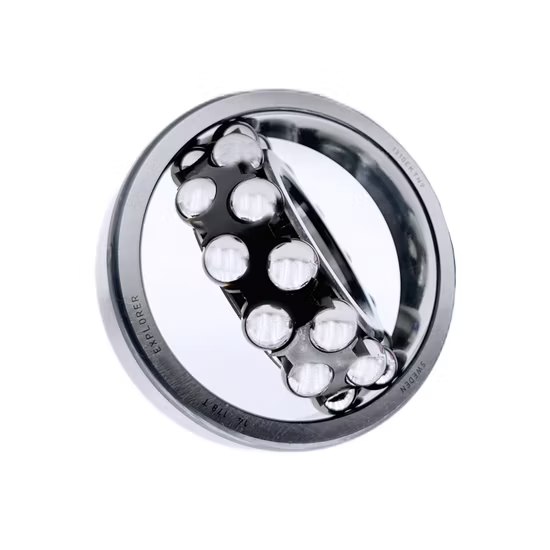


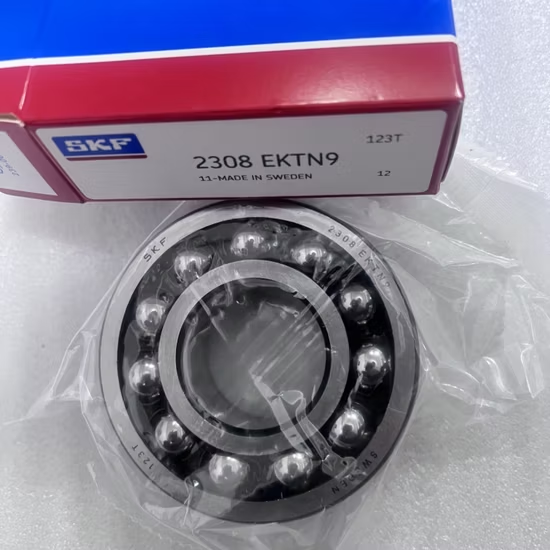
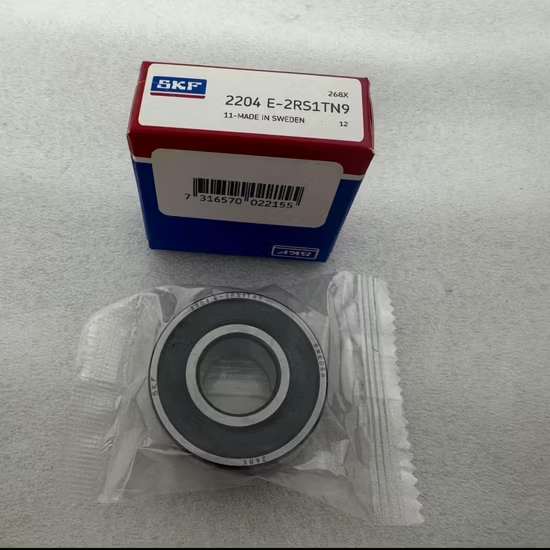
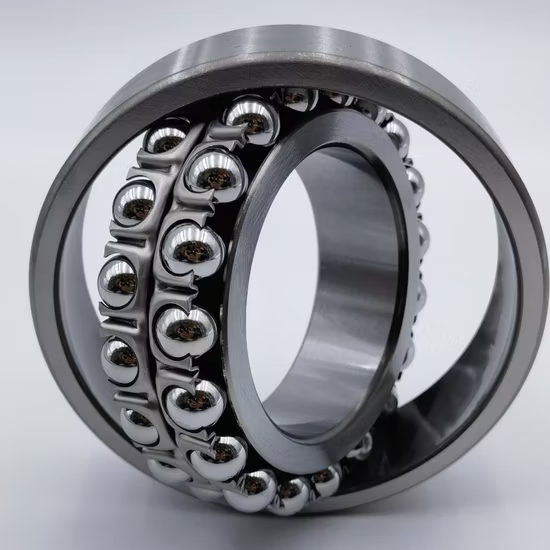
1300 Self-Aligning Ball Bearing — accommodates shaft deflection with low friction design, offered in open, rubber-sealed, and iron-sealed variants for customized contamination protection.
Multi-Brand Authorized Sourcing — Procure genuine 1300 self-aligning ball bearing units from SKF, FAG, or NSK within a single consolidated shipment.
| Parameter | Value |
|---|---|
| Designation | 1300 |
| Bearing Type | Self-Aligning Ball Bearing |
| Seal or Shield Type | Open, Rubber Seals, Iron Seals |
| Material | Standard bearing steel, with stainless steel variants available |
| Origin | Germany, Japan, Sweden, Malaysia, China |
| Certification | ISO 9001, ISO 14001 |
| Customization | Application-specific clearance and sealing configurations |
| Industry | Typical Applications |
|---|---|
| Material Handling | Conveyor belt idler rollers and tensioner pulleys |
| Agriculture | Combine harvester rotor shafts and auger bearings |
| Electric Motors | Small to medium motor shafts with minor housing deflection |
Assuming identical internal geometry from a matching base number is the primary cause of thermal binding in misaligned shafts.
I once troubleshooted a conveyor drive in Dubai where a batch of 1300 series bearings seized completely under high ambient heat. The procurement team matched the base designation perfectly but overlooked the internal clearance requirement, installing standard CN clearance where C3 was mandatory for thermal expansion. When cross-reference errors ignore seal friction and internal design variations, the resulting heat buildup destroys the cage . Sourcing a 1300 self-aligning ball bearing requires verifying the exact operational envelope, not just the stamped numbers on the outer ring.
The primary value of this component lies in its ability to accommodate angular misalignment between the shaft and housing. When sourcing a 1300 self-aligning ball bearing for agricultural or conveyor applications, our technical team reviews the expected shaft deflection to ensure the outer ring sphered raceway can compensate without inducing edge loading on the balls.
In material handling and agricultural machinery, radial loads are often combined with severe particulate contamination. Selecting between open, rubber-sealed, or iron-sealed configurations dictates the balance between friction heat generation and contamination exclusion. Elevated ambient temperatures severely restrict the operational envelope of standard grease, making correct initial clearance selection vital to prevent internal binding .
For the 1300 designation, the absence of a suffix typically implies standard CN clearance and an open design, but equipment builders frequently require specific modifications. Rubber seals provide excellent moisture exclusion but introduce contact friction, whereas iron shields offer non-contact protection suitable for higher-speed motor applications. Matching the correct clearance class ensures the bearing maintains optimal internal geometry once operating temperatures stabilize.
Substituting a bearing based solely on dimensional equivalence often leads to catastrophic cage failure when the internal geometry differs. A mismatched seal type increases rotational drag, rapidly degrading the lubricant and leading to unplanned downtime. According to ISO 15243, surface fatigue and smearing from inadequate internal clearance account for a significant share of premature failures in misaligned shafts .
Mixed-brand requirements are handled seamlessly since we hold authorized distribution across all major international manufacturers. We prevent the exact Dubai-style clearance failures by verifying cross-references against seal friction and thermal expansion needs, not just base dimensions. Every 1300 self-aligning ball bearing order includes batch traceability to the manufacturer, verified via official brand apps. Our application-based selection review ensures the chosen configuration withstands your specific load and misalignment conditions.
To ensure the selected configuration matches your equipment, please provide the radial and axial loads, operating speed, and expected shaft deflection angles. Sharing the OEM equipment number allows our engineering team to perform a precise cross-reference check, verifying that the internal clearance and sealing arrangement align with your specific thermal and contamination environment.
Q: How do I choose between open, rubber-sealed, and iron-sealed variants?
A: Open designs require external sealing mechanisms and allow for relubrication, ideal for heavy-load agricultural gear. Rubber seals offer maximum moisture protection but increase friction, suiting slower conveyors. Iron shields provide non-contact dust exclusion for higher-speed electric motors where friction heat must be minimized.
Q: What are the cross-reference pitfalls for this base designation?
A: Matching only the base number often ignores critical internal differences. A standard clearance unit installed in a high-heat environment will bind and fail. We verify that the replacement matches the required thermal expansion clearance and seal friction characteristics, preventing premature cage failure.
Q: How is authenticity and batch traceability verified upon delivery?
A: Every shipment includes a Certificate of Conformity and manufacturer batch codes. Procurement teams can scan the QR codes using official brand applications to confirm the metallurgical origin and production date, eliminating the risk of counterfeit rings with cloned visual markers.
Q: What mounting practices maintain the self-aligning capability?
A: The outer ring must remain free to rotate within the housing to accommodate shaft deflection. Ensure the housing bore is machined to the correct tolerance and avoid clamping the outer ring. Use induction heating for the inner ring to prevent damaging the sphered raceway during installation.
Our 5-step process ensures every order is engineered, validated, and supported for optimal performance.
Technical needs assessment
Custom specifications
Free samples for $50k+
Pre-shipment inspection
On-site & predictive
Our certified engineers respond within 24 hours with detailed technical specifications, pricing, and lead time information.